
Audi A8 workshop · Al Quoz 4, Dubai
Audi A8 Repair and Service in Dubai
Restore your A8’s ride, performance and comfort. We handle air suspension, engine, gearbox, AC and electrical repairs, with a written estimate before work and easy pickup from your location.
A8 minor service from AED 850
AED 892.50 including VAT for listed 2.8–3.2 petrol models. Other engines have separate package prices below.
- Free workshop inspection
- Free pickup and delivery
- Approve the price first
Audi A8 service prices by engine
These starting prices cover the named service package with parts and standard labor, before 5% VAT. Match the package to the work due. A warning, leak or unusual noise needs a repair assessment alongside any scheduled service.
A8 2.8–3.2 petrol
Minor service from AED 850
Interval service from AED 1,200
Major service from AED 3,250
Minor service from AED 892.50 including VAT.
A8 4.0–4.2 petrol
Minor service from AED 1,000
Interval service from AED 1,450
Major service from AED 3,900
Minor service from AED 1,050 including VAT.
A8 W12
Minor service from AED 1,450
Interval service from AED 2,050
Major service from AED 5,650
Minor service from AED 1,522.50 including VAT.
Get a better Audi A8 service price
Send your service requirement or another quote. We will compare the included work and offer our best available price.
Minor service inclusions
Engine oil of the required approval and quantity, oil filter, basic inspection and service reminder reset. Repairs, other filters and additional fluid changes are outside this package unless listed.
Interval service inclusions
The minor-service items plus engine air and cabin filters. Brake fluid, spark plugs and gearbox servicing are assessed separately against the service history and what is due.
Major service inclusions
The interval items plus petrol spark plugs and applicable transmission-fluid servicing when due. The quote specifies the gearbox, fluid and filter work. Other driveline fluids and damaged components are separate.
Diesel, hybrid, S8 and unlisted applications receive their own prices. Routine service does not include air-suspension repairs, tires, brake replacement or electrical fault finding. You can compare the packages with our Audi service cost guide.
Audi A8 repair costs and parts choices
Use these estimates to understand the likely spend before inspection. Figures exclude VAT and apply to the stated unit and normal fitting access. The selected part and the confirmed cause determine your written total.
| Work or part choice | Estimated AED | Included work and important limits |
|---|---|---|
| Air-suspension leak testing | 300–800 | Initial agreed test block. Replacement parts, dismantling beyond that block and calibration are separate. |
| Rebuilt air strut | 1,800–3,500 each | Suitable rebuilt unit and normal fitting, when available and requested. Related leaks and calibration must be listed. |
| OE-supplier air strut | 3,800–6,000 each | Named supplier unit and fitting. Compatibility, calibration and additional system repairs are checked. |
| Audi Genuine air strut | 5,500–7,500+ each | Correct Genuine unit and fitting. Special equipment and related repairs can increase the total. |
| Air-suspension compressor | 1,500–4,000 | One confirmed compressor and fitting. Leak repairs, relay, valve block and calibration are separate where needed. |
| Tiptronic transmission service | 900–2,200 | Specified fluid and agreed filter or sump work. Internal faults, valve-body repairs and overhaul are excluded. |
| Genuine brake pads | 850–1,600+ per axle | Compatible pad set and standard fitting. Discs, wear sensors and specialist brake packages cost extra. |
Free workshop inspection is separate from the chargeable leak testing above. Air-strut prices are not prices for predictive active-suspension actuators. Genuine Audi parts are our normal choice; alternatives are discussed with you before ordering.
What will your A8 repair cost?
Describe the problem or share an estimate. We will explain the inspection needed and the complete repair options.
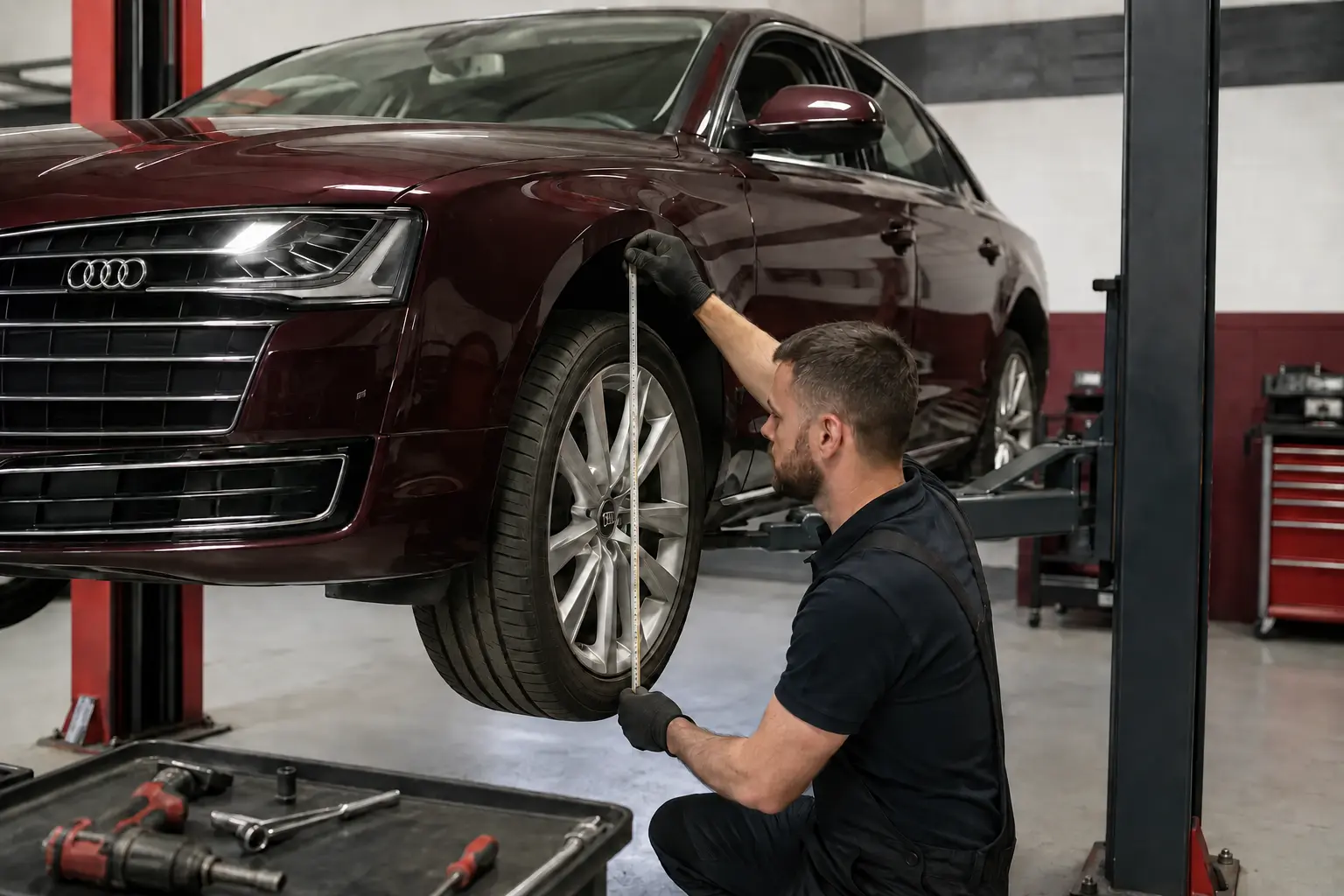
Audi A8 air suspension repair
Does one corner drop overnight, does the car rise slowly, or has the ride become hard? We check leakage, compressor operation, valve control, height information and electrical supply. Replacing a strut because the car looks low can miss a different fault.
A leaking air spring may overwork the compressor. The estimate should address both the failed component and any consequential damage, without automatically replacing the complete suspension. A line, connection or control problem may need a smaller repair.
On A8 models with predictive active suspension, electromechanical equipment adds another layer to ride control. We identify that equipment before applying ordinary air-suspension pricing. A calibration is performed when required after the underlying fault has been corrected.
Repair the confirmed fault
A serviceable pipe, fitting or electrical fault can justify a contained repair. We explain whether the part is repairable and which checks will show that pressure and ride height remain stable.
Compare replacement parts
For a failed strut, compare Genuine, named OE-supplier and suitable rebuilt options by the complete fitted price. The condition of a rebuilt unit and its written coverage should be clear.
Check the rest of the car
Knocking, steering vibration and tire wear can also involve arms, bushings, wheels or alignment. We keep those findings separate from an air leak and explain which work is necessary now.
See our Audi suspension repair service for the wider repair choices. Avoid driving if the body is extremely low, a tire rubs or steering and handling are affected.
Audi A8 electrical and battery problems
Several warnings at once do not necessarily mean several failed modules. We check starting and charging condition, connections and the timing of the faults before moving to individual circuits. Battery replacement alone will not stop a separate drain from returning.
For an A8 that goes flat after parking, we assess how the car shuts down and which circuit remains active. Intermittent faults can require observation time, so diagnostic time is agreed before extended testing. A recent battery, accessory or body repair can provide useful context.
Where fitted, the 48-volt or hybrid equipment is assessed using the appropriate procedures. We distinguish a low-voltage problem from a fault in those systems, then explain repair, coding or programming requirements.
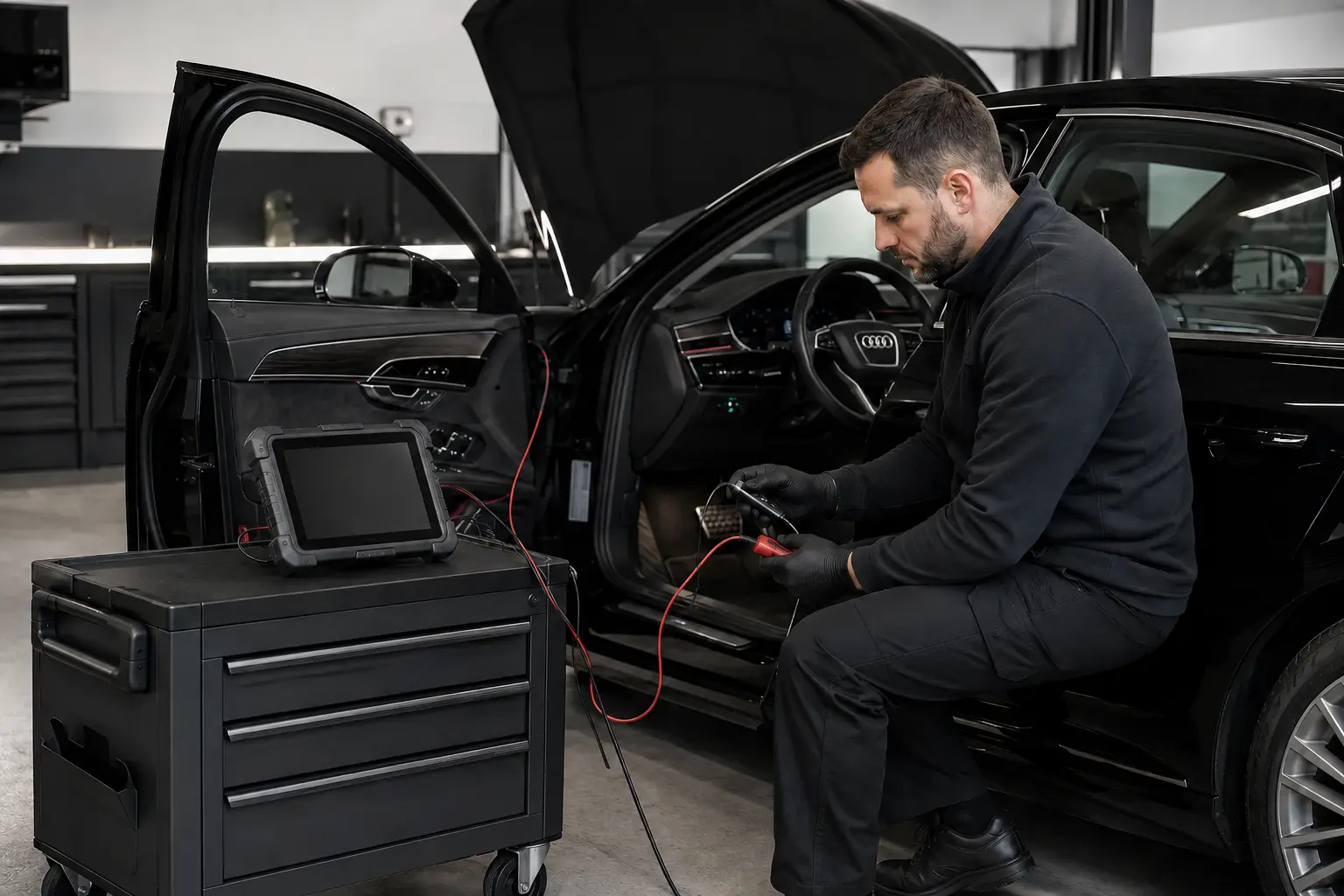
A used control unit is not always a direct replacement. Compatibility, component protection and programming can affect whether it works and what the installed repair costs. Our Audi electrical repair service covers the checks needed before an expensive module is ordered.
Audi A8 engine, cooling and gearbox repairs
Coolant loss and overheating
A disappearing coolant level needs its source traced, even when there is no puddle. We check for residue, pressure loss, fan operation and temperature behavior. The cooling quote identifies the affected pump, thermostat, hose or other component and the coolant needed.
Oil leaks and rough running
We separate external leakage, ignition or air problems from internal engine wear. A misfire or warning code does not prove the engine needs rebuilding. Deeper mechanical tests are proposed only when the symptoms and initial findings justify them.
Tiptronic shifting problems
Delayed engagement, shudder and harsh changes need a road test where safe, fault review and physical checks. A due fluid service can maintain a healthy transmission; it is not a guaranteed cure for clutch, hydraulic or internal damage.
Quattro vibration and noise
Speed-related vibration can involve tires, mounts, shafts or joints. We inspect those causes alongside the transmission rather than pricing a gearbox from the location of the noise. Leaks are traced before choosing seals or fluid work.
A specific repair is preferable when the fault is contained and the remaining assembly is sound. An overhaul or compatible replacement becomes worth comparing when damage is extensive. Include removal, installation, fluids, programming and written coverage in the comparison, and consider the car’s other repair needs before committing.
Explore Audi engine repair or gearbox repair and replacement for more detail on larger jobs.
Audi A8 brakes, AC and cabin repairs
Braking confidence
We measure pads and discs and check the cause of pulling, judder or noise. Pad replacement alone is appropriate only when the disc and caliper condition support it. Electronic parking-brake work and special brake packages need the correct procedure and parts.
Front and rear AC
Uneven cabin temperature may come from airflow, flap control, refrigerant loss or another component. We compare the affected zones and operating conditions. A rear comfort complaint should not automatically lead to a front compressor replacement.
Seats, doors and displays
Soft-close doors, seat functions, screens, cameras and parking aids are checked according to the equipment installed. We test power and connections before selecting an actuator or module. Damp carpet or water entry also needs its source repaired.
For cooling that fades in traffic, book an Audi AC inspection and repair. Tell us which vents or seats are affected; you do not need to identify the failed part.
Estimated Audi A8 repair totals
These are cost scenarios, not completed customer jobs. They show how the selected part and VAT affect a quote after the fault is confirmed.
Estimated repair · 2015 A8 air strut
One suitable rebuilt front air strut with normal fitting could total AED 2,800 before VAT, or AED 2,940 including VAT. The estimate assumes no additional compressor, valve-block or line repair. Calibration and coverage must be stated on the actual quote.
Estimated repair · 2018 A8 brake pads
A compatible Genuine front pad set and standard fitting could total AED 1,400 before VAT, or AED 1,470 including VAT. This assumes serviceable discs and calipers. Separate sensors, damaged hardware and specialist brake specifications are excluded.
A8, A8L and S8 service requirements
We work from the car’s actual engine, generation and equipment, including imported and long-wheelbase versions. You can start with “Audi A8” and the problem. The workshop handles the identification needed for parts and procedures.
Older D3 and D4 cars
Service history, aging seals, suspension condition and previous repairs can matter more than mileage alone. We separate overdue maintenance from current faults so you can plan the spending rather than approve a blanket replacement list.
D5 and newer equipment
Ride control, assistance systems and connected cabin functions can add calibration or programming to a repair. Windshield, bumper or suspension work may affect fitted cameras and sensors. The quote should include those steps when the procedure requires them.
S8 and hybrid variants
S8, earlier hybrid and TFSI e applications need their own parts and service scope. Petrol engine maintenance and high-voltage concerns are separate jobs. Performance brakes, additional cooling and specialized components can change the budget substantially.
For routine maintenance, we compare time and mileage requirements with available invoices. Low annual mileage does not cancel time-based servicing. Conversely, recently completed plugs or transmission work should not be sold again simply because the car is booked for a major service.
If you are buying a used A8, a pre-purchase inspection helps assess the suspension, powertrain, underbody and cabin functions together. A clean dashboard cannot show every developing leak or intermittent fault. The findings should distinguish urgent work, near-term costs and items that could not be tested.
When your Audi A8 should not be driven
Stop safely for overheating, a red oil-pressure warning, serious brake loss, heavy mechanical noise, fuel leakage or loss of drive. A collapsed suspension corner, tire rubbing or an electrical burning smell also needs immediate attention. Call for recovery guidance rather than continuing to the workshop.
Do not open a hot coolant tank or work beneath a car supported by its air suspension. For an intermittent warning with otherwise normal behavior, a photo can help us advise on the next step. Never recreate an unsafe fault to record it.
Book Audi A8 repair in Al Quoz 4
Tell us the service you need or what has changed in the car. We arrange a workshop visit or pickup, inspect the concern and explain the proposed work. Any chargeable diagnostic stage and repair total are agreed before proceeding.
Expected completion depends on access, testing and parts availability. At handover, we explain the work completed, relevant checks and anything still worth monitoring. Keep the itemized invoice and written parts and labor coverage so you know what applies if a concern returns.
Open Monday to Saturday, 9 AM to 7 PM, in Al Quoz 4, Dubai. Looking for Audi A8 repair near you? Free pickup and delivery can simplify the visit. See workshop directions or contact us to arrange collection.
Audi A8 repair and service FAQs
How much does an Audi A8 service cost in Dubai?
Minor service starts at AED 850 before VAT for listed 2.8–3.2 petrol A8 models, AED 1,000 for 4.0–4.2 petrol and AED 1,450 for W12. The respective starting totals with VAT are AED 892.50, AED 1,050 and AED 1,522.50. Other applications receive a separate quote.
Is an A8 suspension warning always a failed air strut?
No. Air leaks, compressor supply, valves, height sensors, wiring or calibration can cause similar warnings. We check the fitted suspension and the actual fault before pricing parts. Predictive active suspension, where fitted, requires additional system-specific checks.
Can you repair an A8 gearbox instead of replacing it?
A targeted repair or overhaul may be suitable after testing. The choice depends on the damaged components, overall condition, parts availability and complete installed cost. A fluid service is maintenance and cannot be promised to fix internal damage.
Do you repair A8L and S8 models?
Contact us for A8L and S8 servicing or repairs. Wheelbase, engine, brakes and fitted equipment are checked by the workshop. S8 pricing is separate from the A8 packages shown, and an S line badge alone does not make a car an S8.
Are inspection and pickup free?
The workshop inspection and pickup and delivery are free. Detailed electrical testing, leak isolation, dismantling or other chargeable diagnosis is explained for approval first. A car that cannot move safely may need recovery, which is arranged separately.
Will an Audi A8 repair be finished the same day?
Timing depends on the diagnosis, work required and parts supply. We give you a completion estimate once those are known. Programming, intermittent faults, major mechanical work or special-order parts can take longer than routine service.
Can you help with an A8 TFSI e charging problem?
Tell us about the warning or charging symptom. We identify the fitted hybrid system and arrange the appropriate assessment. High-voltage testing and repair are quoted separately from petrol service packages; do not touch orange cables or damaged charging equipment.
What parts and warranty come with the repair?
Genuine Audi parts are normally used, with suitable OEM or aftermarket alternatives discussed on request. A rebuilt component is identified as rebuilt. Your written quote should state the selected part, labor, applicable coverage and exclusions for that repair.
Model context: Audi suspension technology. Refer to the Audi owner’s manual for your vehicle. Workshop images are illustrations and do not document the estimated repairs above.