
Audi roadside triage and recovery in Dubai
Audi Roadside Assistance and Recovery in Dubai
Call for roadside triage when your Audi is stranded. A safely parked car with a simple battery, spare-wheel, fuel or access problem may suit controlled on-location help. Accident damage, a locked or displaced wheel, leakage, overheating, steering or transmission uncertainty, missing keys, very low clearance or an unclear fault should normally move by a correctly planned flatbed.
- Live location
- Model and year
- Dashboard warning
- Wheel and steering state
- Keys and destination
The first goal is a safe response route, not a remote promise that one part or one roadside action will solve the fault.
- 01Live locationPin, road exposure and access
- 02Audi stateWarning, wheels, steering and keys
- 03Loading routeSupport, skates or low-angle flatbed
- 04DestinationOne confirmed workshop or address
What best describes the Audi now?
Build the dispatch brief
Show the complete Audi state
A useful first message explains where the Audi is, what will and will not move, what the dashboard says and where the vehicle should go. Complete only what you know. The generated WhatsApp message remains visible before you open the app.
Can the Audi move safely
Let the highest risk decide
Select every statement that applies. The result uses the most cautious selected condition. It helps structure the call, but the dispatcher still needs the exact location and vehicle state.
Location, warnings, wheel position, steering, neutral, keys and clearance determine whether support or recovery is appropriate.
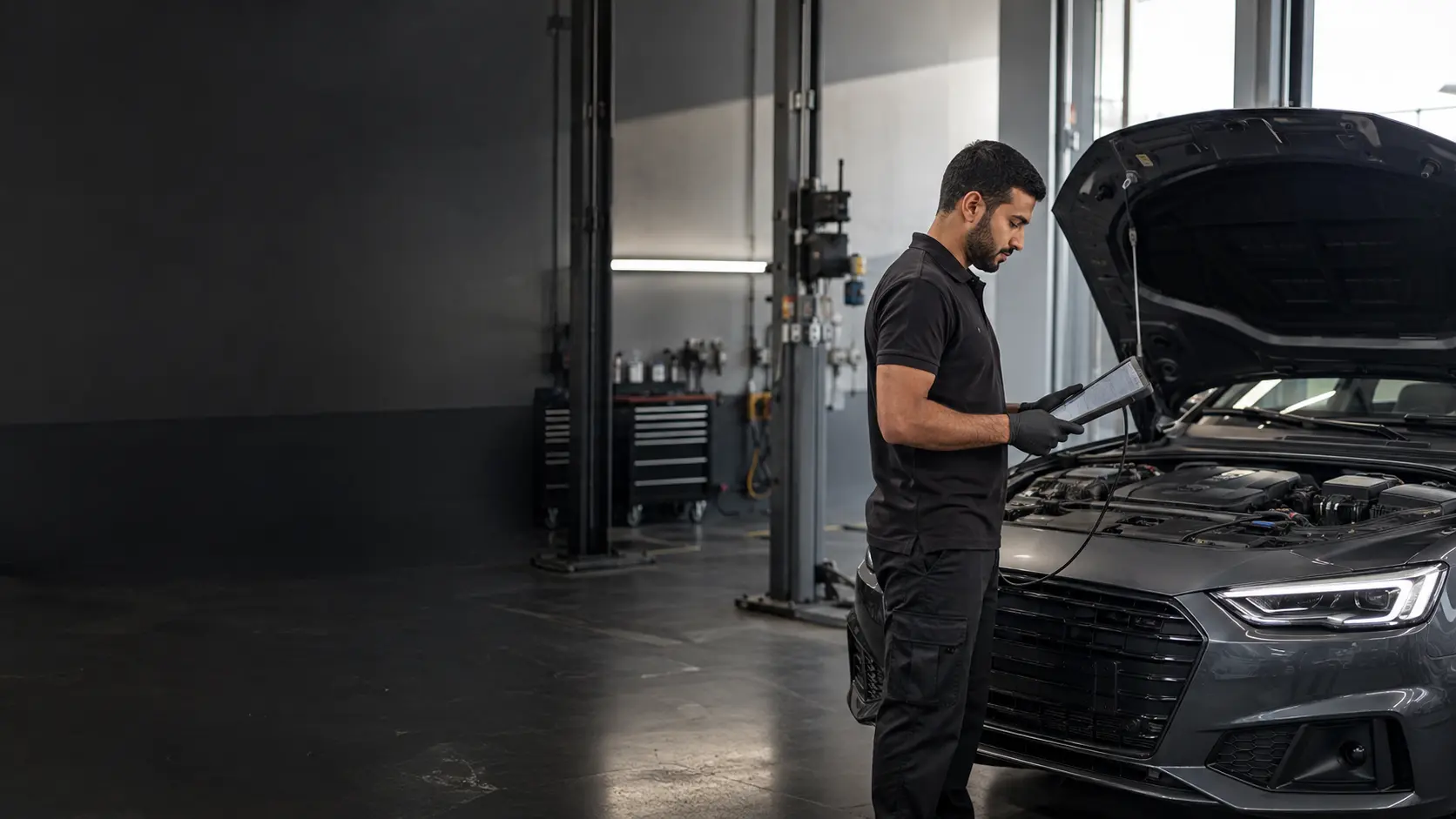
Three response routes
Match help to the condition
Roadside assistance is not one universal action. The first assessment should choose the least invasive route that remains safe for people, the Audi and surrounding traffic.
On-location support
Consider this when the Audi is protected from traffic and the issue appears limited to a discharged 12-volt battery, usable spare wheel, minor tyre inflation, access problem or small fuel shortage.
- Confirm the correct support point
- Check whether one action is safe
- Do not treat a temporary start as diagnosis
- Escalate when the condition changes
On-site assessment
Use this when the description is incomplete but the location is safe enough for a technician to inspect access, battery state, wheel condition, warning display or visible damage before deciding the next movement.
- Photograph the starting condition
- Identify loading obstacles
- Avoid forced selector or brake release
- Confirm a revised written scope
Flatbed recovery
This is the controlled route for accident damage, blocked wheels, steering or transmission uncertainty, severe tyre damage, leakage, overheating, low-clearance risk, missing keys or any fault that should enter workshop diagnosis.
- Support all four wheels
- Plan winching and securement
- Add skates or ramps when required
- Carry the complaint into handover
Roadside lookalike faults
Describe the behaviour before the part
A no-start is not automatically a battery. A car that will not roll is not automatically a gearbox. A flat-looking corner is not automatically a tyre. The observable state helps the dispatcher avoid sending an unsuitable vehicle or promising an unsupported repair.
Battery or supply
Report whether the dash wakes, the starter turns, the key is recognised and lights dim. A low 12-volt state, connection, charging problem or control fault can appear similar.
Tyre, rim or suspension
Show the full wheel. A shredded tyre, bent rim, dropped suspension or displaced arm changes whether fitting, inflation or flatbed loading is possible.
Steering and transmission
State whether the wheel turns, neutral selects and the electronic parking brake releases. Never force a selector or drag a locked wheel to simplify loading.
Heat, warning or leakage
Overheating, red pressure warnings, smoke, unusual odour and active fluid loss are recovery signals. Switching the warning off does not remove the underlying risk.
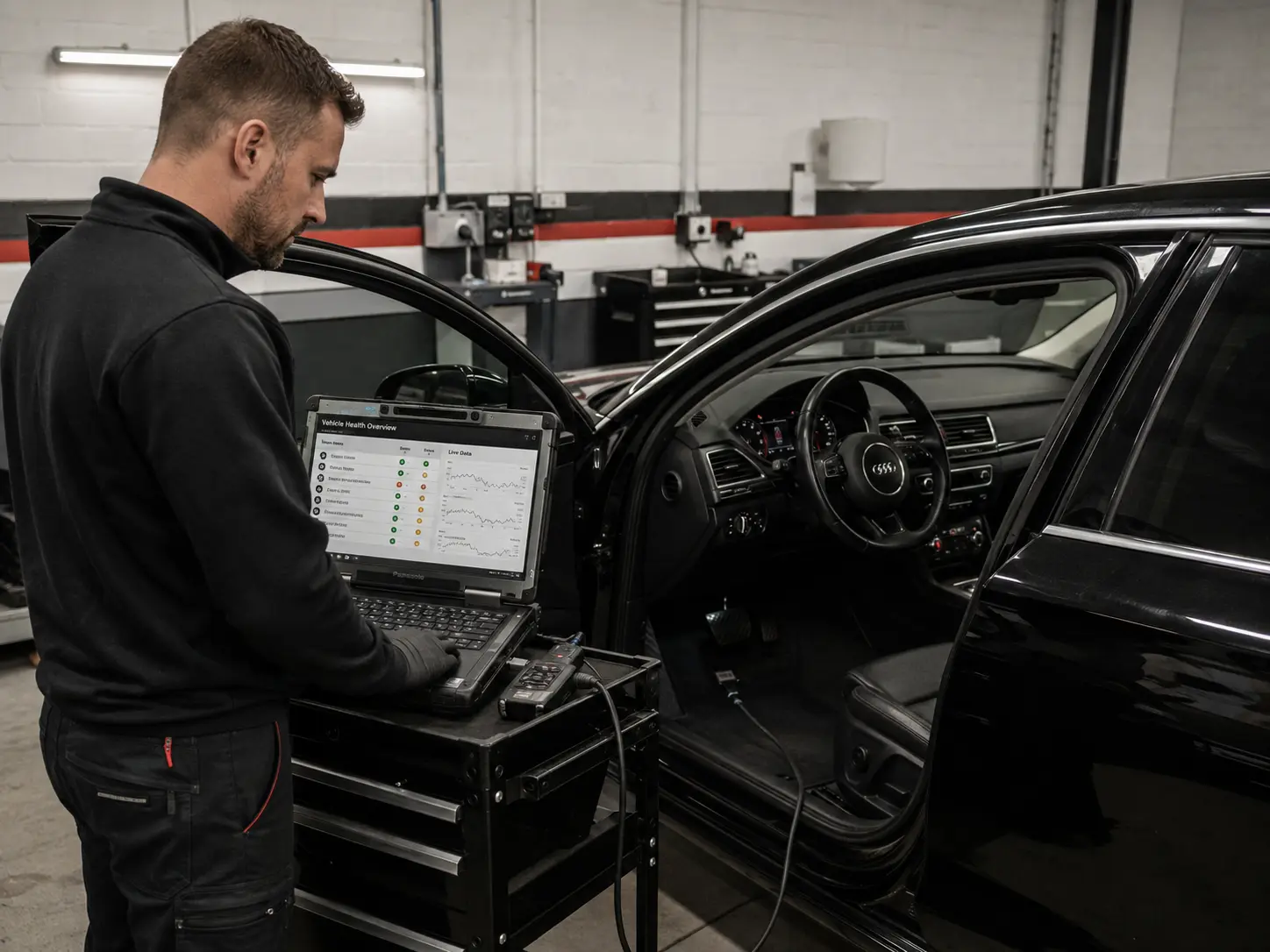
Once the Audi reaches the workshop, stored faults and physical tests can be organised through Audi diagnostics. Battery, supply and network concerns may also require the Audi electrical repair process rather than immediate parts replacement.
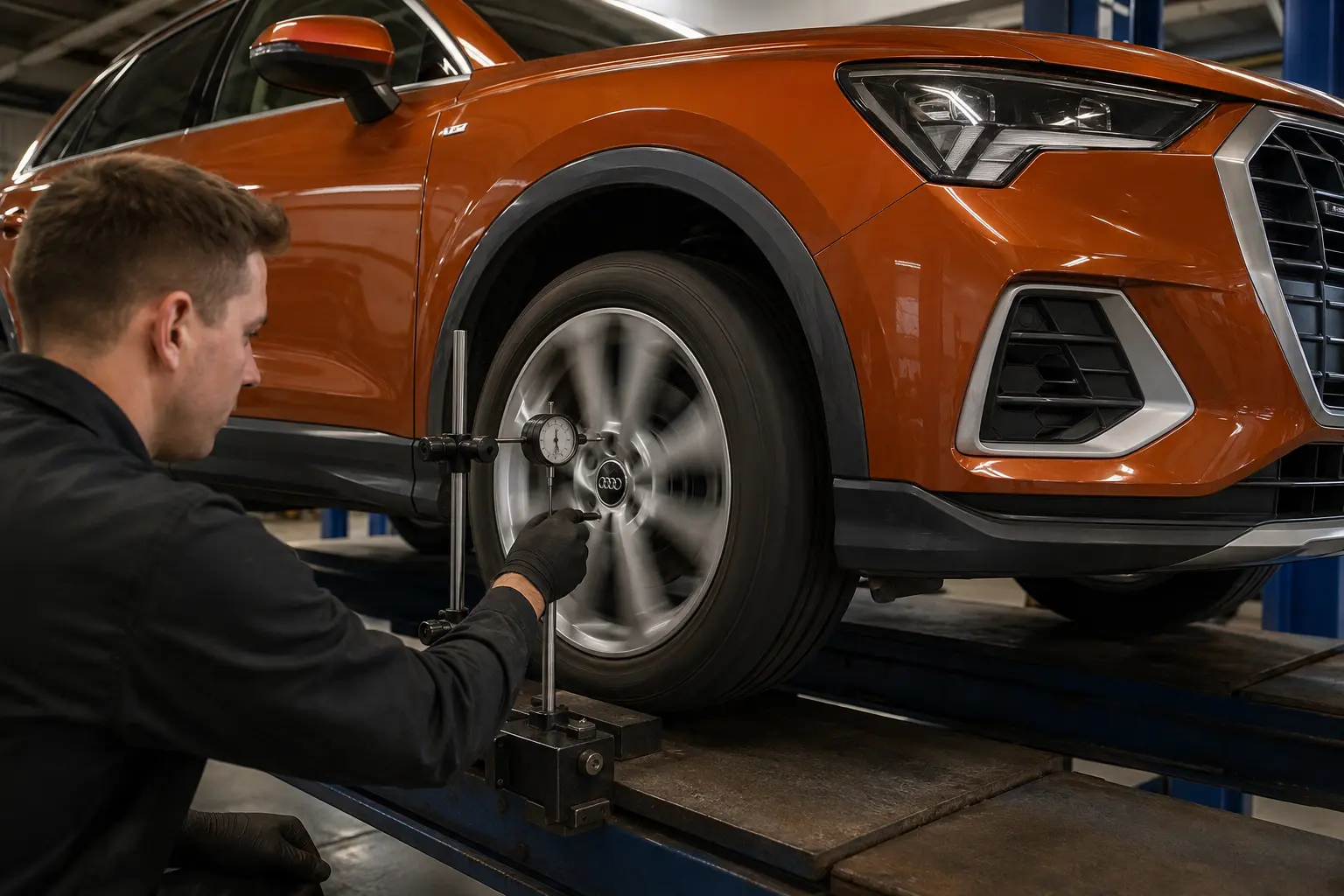
Audi-compatible loading
Plan the deck before the winch
The operator needs the exact model and its current state before approaching. quattro, low ride height, air suspension, a damaged wheel, locked steering, an unavailable neutral position or underbody contact can all change the ramp, skate, dolly and securement plan.
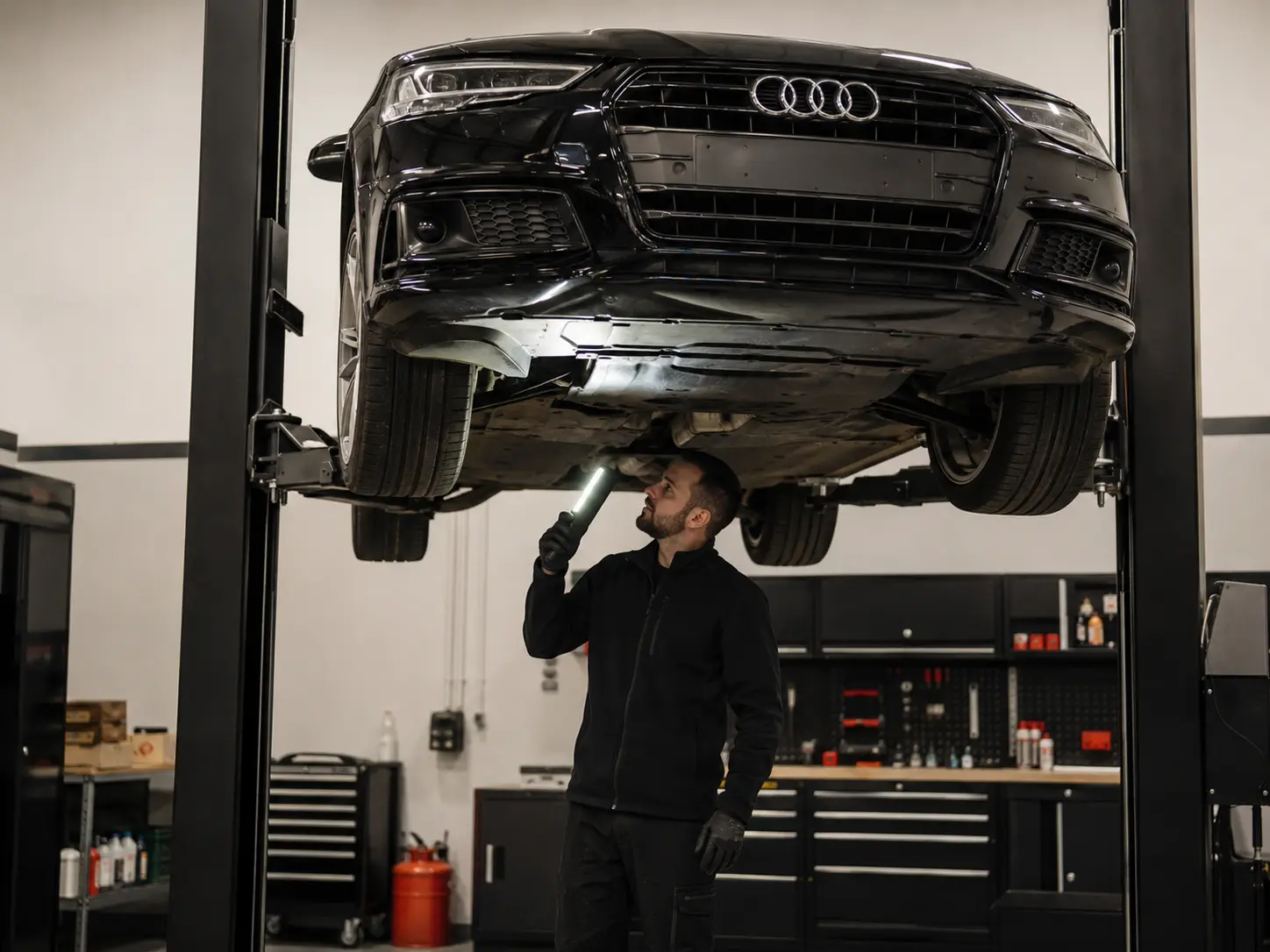
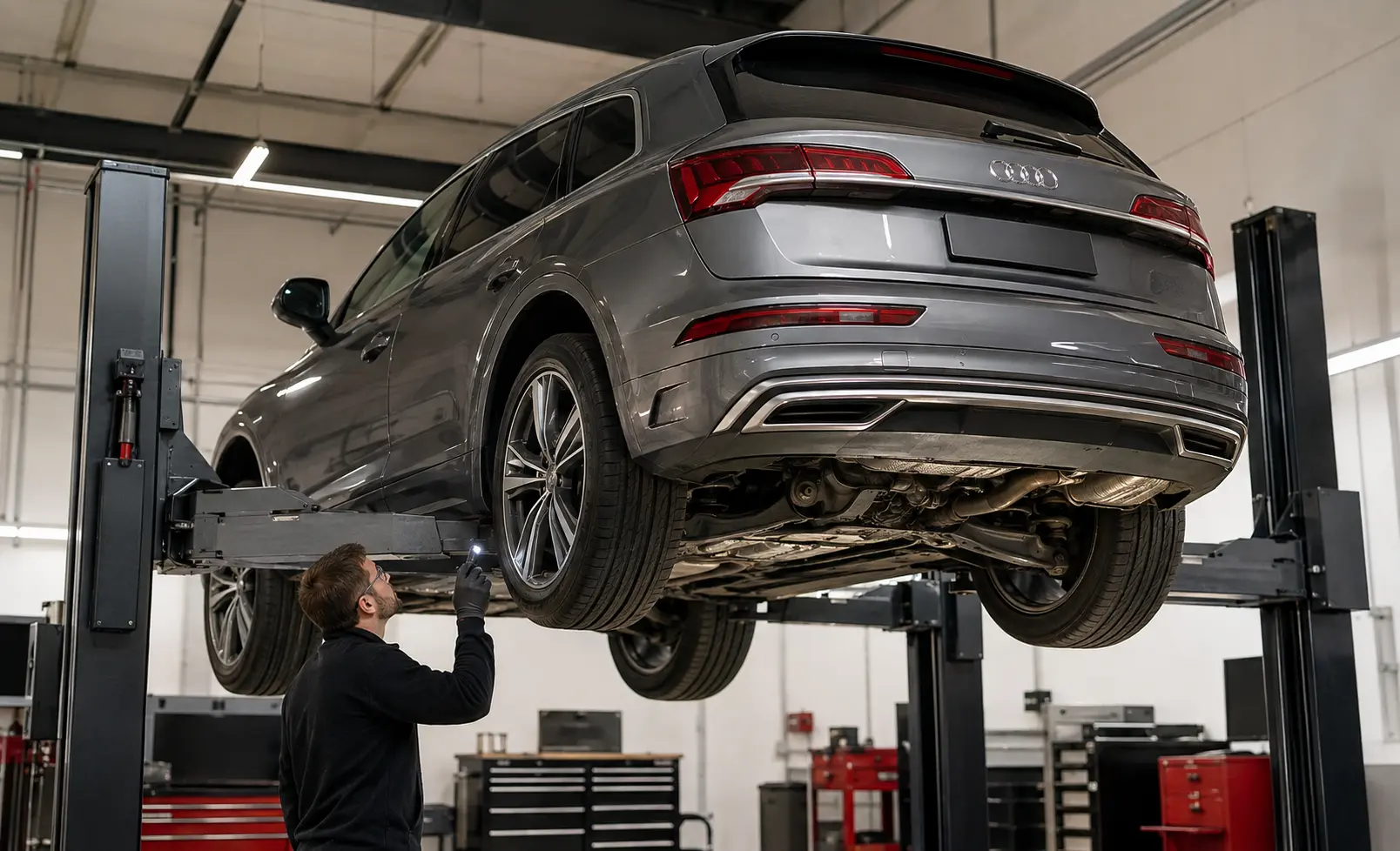
Do not invent a tow point
A recovery eye or loading point must suit the exact vehicle and condition. Do not loop a line around suspension, steering, axle or body parts. Accident deformation or underbody contact can make the normal approach unsuitable, so the operator should inspect before applying load.
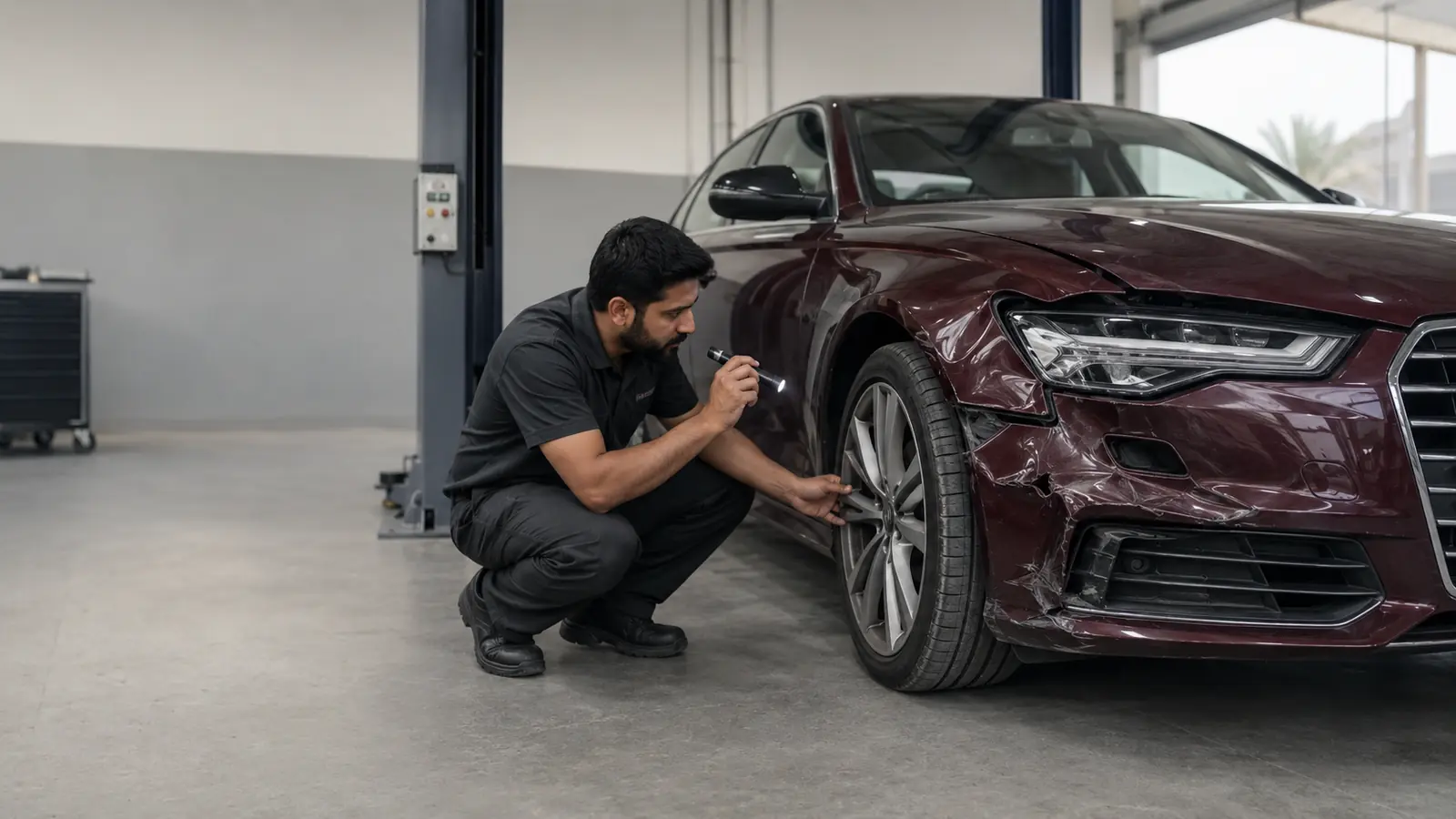
Accident and electrified Audi recovery
Inspect before ignition or movement
After an impact, photograph the complete position before touching the vehicle. Show each wheel, the underbody clearance, leaking material, broken glass, deployed restraints and any part touching the road. Tell dispatch whether police, building security or another authority controls access.
Collision damage can hide movement risk
A bumper may look minor while a wheel, cooler, steering part, sensor bracket or high-voltage enclosure has moved. Do not use paint damage alone to decide the Audi is driveable. If a wheel no longer sits normally, fluid is escaping or the underbody is grounded, plan recovery.
Identify e-tron and plug-in models early
The dispatcher should know the Audi is electrified before the truck is assigned. Do not touch exposed orange cabling, a damaged battery enclosure or leaked material. Heat, hissing, smoke, unusual odour, water exposure or a high-voltage warning requires distance, caution and an isolation-aware response.
Keep authorisation separate
Recovery authorises transport under the agreed dispatch scope. It does not authorise body repair, mechanical, electrical or high-voltage work. The workshop should inspect the vehicle, explain the diagnostic route and issue a separate estimate before repair work begins.
From location to workshop
Keep one continuous vehicle brief
A good recovery is more than moving the car. The location, observed symptoms, equipment choice, loading limits, destination and customer complaint should remain traceable from the first call to workshop intake.
Map the position
Confirm the live pin, traffic exposure, access surface, ramp, height restriction and safe meeting point.
Record the Audi state
Capture model, warning, engine response, keys, wheels, steering, neutral, brake and ride height.
Allocate equipment
Choose support, standard flatbed, low-angle setup, skates, dollies or added loading control.
Load and secure
Inspect approach points, control movement, protect clearance and secure the vehicle for the agreed route.
Handover the complaint
Pass warnings, photos and recovery observations into a separate workshop intake and test plan.
Workshop handover
Recovery ends where diagnosis begins
On arrival, identify the Audi and record its condition before further movement. The adviser should confirm the complaint, preserve useful warning information and explain the first diagnostic scope. A no-start may need battery and supply checks before scanning. Accident or underbody damage may need a physical inspection before the ignition is used.
Recovery observations can shorten the first conversation, but they do not prove which part failed. Testing, parts choices, labour, coding, calibration and repair authorisation remain separate. The customer should receive the initial findings and a defined estimate before work proceeds beyond the agreed assessment.
Tentative AED planning ledger
Price access and condition
These are tentative planning ranges for common Dubai scenarios, not automatic quotes. The confirmed amount depends on the Audi model, pickup, destination, access, loading state, equipment, labour, dispatch timing and route. Parts and workshop repairs are separate unless the written total names them.
It should identify pickup, destination, loading method, waiting allowance, equipment additions, fuel or parts, tolls or parking, and whether VAT is included or added. Clear photos are necessary when access or damage is unusual.
| Roadside or recovery scope | Tentative AED range | Main assumptions | Important exclusions and variables |
|---|---|---|---|
| Roadside attendance and first assessment | AED 180–300 | Safely accessible Dubai location and a short initial condition check. | Parts, extended diagnosis, parking, tolls and recovery are separate unless named. |
| 12-volt jump-start support | AED 150–250 | Safe access to the correct support points and no active heat, leakage or collision risk. | A successful start does not prove the battery or charging system is healthy. |
| Battery and charging condition check on location | AED 180–320 | Basic battery, voltage and charging checks can be completed safely where the Audi is parked. | Intermittent drain diagnosis and workshop access are not included. |
| Battery replacement labour and registration | AED 250–450 | Correct battery is available and the vehicle permits safe on-location replacement. | Battery price, difficult access and deeper electrical diagnosis are extra. |
| Tyre inflation and visible condition check | AED 120–220 | Tyre remains seated and has no obvious sidewall, wheel or suspension damage. | Inflation is not a repair for a damaged casing, cracked rim or active leak. |
| Spare-wheel fitment | AED 150–280 | Usable spare, tools and safe lifting position are available. | Replacement tyre, damaged wheel hardware and recovery are separate. |
| External puncture repair when suitable | AED 180–320 | Damage location and tyre condition permit a controlled temporary or standard repair. | Sidewall damage, run-flat damage and unsafe roadside position may require recovery. |
| Fuel-delivery attendance | AED 150–250 | Vehicle is safely positioned and the fuel requirement is clear. | Fuel cost, misfuelling, pump faults and no-start diagnosis are separate. |
| Vehicle lockout attendance | AED 250–450 | Ownership or authorised possession can be confirmed and a supported access route exists. | Key cutting, programming, damaged locks and security-module work are separate. |
| Nearby Dubai flatbed recovery | AED 350–550 | Vehicle rolls, steers and can be loaded from an ordinary accessible position. | Winching, skates, restricted access, waiting, tolls and a second destination can change the total. |
| Cross-Dubai flatbed recovery | AED 500–850 | One pickup and one agreed destination within Dubai. | Traffic, route distance, restricted access and loading complexity remain variables. |
| Accident-damaged Audi recovery | AED 650–1,200 | Collision position and access are known from photographs before dispatch. | Debris clearance, authority delays, crane work and specialist high-voltage handling are separate. |
| Basement or restricted-access recovery | AED 550–1,000 | Height, ramp, turning space and vehicle position are shared before equipment is allocated. | Additional transfer vehicles, manual repositioning and long access delays can increase the scope. |
| Winching or non-rolling vehicle addition | AED 250–550 | A controlled line and safe anchor route can be established. | Severe grounding, collision deformation and crane recovery are outside this range. |
| Wheel skates or dollies addition | AED 150–350 | One or more wheels cannot roll normally but the surface permits controlled use. | Broken suspension, collapsed wheel or inaccessible parking position may need a different plan. |
| Low-angle ramp or extra clearance handling | AED 180–400 | Low bumper, sill or underbody clearance can be protected with the allocated equipment. | Grounded suspension or accident deformation may require a revised quote. |
| Waiting beyond the included dispatch window | AED 75–150 per 30 minutes | Delay is outside the operator’s loading work and is communicated before charges continue. | Authority, building-access and customer delays should be separated in writing. |
| Additional destination leg | AED 200–500 | The route changes after the first destination has been agreed. | Distance, tolls, access and unloading conditions determine the confirmed addition. |
Ranges are planning figures for a defined scope. Ask whether VAT is included or added and confirm the complete total before dispatch. The vehicle state can move a request from a simple attendance range to a recovery range.
Hypothetical example 1
Flat battery with condition check
Safely parked Audi in central Dubai with clear battery access.
Roadside attendance AED 220 + battery and charging check AED 200Tentative total AED 420Battery supply, registration and workshop diagnosis are not included.
Hypothetical example 2
Spare-wheel fitment
Usable spare and safe roadside lifting position with no suspension damage.
Roadside attendance AED 200 + spare-wheel fitment AED 180Tentative total AED 380Replacement tyre, wheel repair and recovery are not included.
Hypothetical example 3
Cross-Dubai low-clearance recovery
Audi rolls and steers but requires a lower deck angle and added ramp control.
Cross-Dubai flatbed AED 650 + low-angle handling AED 250Tentative total AED 900Waiting, parking and a second destination remain separate.
Hypothetical example 4
Accident recovery with locked wheel
One damaged wheel cannot roll and controlled winching plus skates are required.
Accident recovery AED 850 + winching AED 300 + skates AED 200Tentative total AED 1,350Crane work, authority delay and workshop repair are not included.
Roadside questions
Before support or recovery starts
The useful answer depends on the exact Audi, location and movement state. These questions define the first dispatch scope without pretending to diagnose the fault remotely.
What should I send first?
Send the live location, Audi model and year, exact dashboard warning, whether the engine starts, whether the wheels roll, whether steering and neutral are available, whether the keys are present, any visible leak or accident damage, the ground-clearance condition and the preferred destination.
Should I call or use WhatsApp?
Call first when the Audi is in traffic, overheating, leaking, making a severe noise, involved in an accident or unable to move normally. WhatsApp is useful for the live pin, warning photo, wheel photographs and the written vehicle state. A requested visit or recovery is confirmed only when the workshop or dispatcher replies.
Can a jump start solve an Audi no-start?
It may restore power when the 12-volt battery is discharged and the vehicle is otherwise safe, but it does not prove the battery, charging system, cables or control systems are healthy. Stop if there is heat, hissing, leakage, collision damage or an electrified-system warning.
Is flatbed recovery safer for quattro?
When drivetrain condition is unknown, a flatbed that supports all four wheels avoids dragging the Audi with part of the driveline on the road. The exact loading route still depends on neutral availability, wheel movement, steering, ride height and accident damage.
What if the Audi will not select neutral?
Tell dispatch before the truck is allocated. Do not force a selector or use an undocumented release method. Skates, dollies, a model-specific supported procedure or additional loading control may be required.
What if one wheel is locked or displaced?
Show the complete wheel and surrounding suspension from a safe position. A locked brake, damaged tyre, bent rim or displaced suspension component changes the loading equipment. The vehicle should not be dragged simply to make it easier to reach the deck.
Can a very low Audi or an air-suspension fault be loaded?
Often, but the deck angle, ramp extensions, skates and approach must be planned from the actual clearance. Send front, rear, sill and underbody photographs and state whether the suspension can raise itself. Do not place a jack or line under an unverified point.
Can roadside tyre help avoid recovery?
Possibly when the car is safely positioned and the issue is limited to inflation, a usable spare or a repairable tread puncture. Sidewall damage, a cracked or bent rim, a displaced wheel, damaged suspension or an unsafe location normally changes the route to recovery.
Does fuel delivery confirm the car will start?
No. Fuel delivery addresses a confirmed fuel shortage only. A no-start after refuelling may involve the battery, supply, a fuel-pump fault, immobiliser, engine management or another condition that requires diagnosis.
Can a lockout be handled on location?
Only after ownership or authorised possession is confirmed and a supported non-destructive route is available for the exact vehicle. Key cutting and programming, damaged locks, lost-all-keys work and security-module faults are different scopes.
What changes the recovery price?
Pickup and destination distance, traffic, basement or height restrictions, whether the Audi rolls and steers, neutral and parking-brake state, wheel damage, low clearance, winching, skates or dollies, waiting, tolls, parking and a second destination can all change the confirmed total.
Are VAT, tolls and parking included?
Do not assume they are included. Ask for one written dispatch total that states whether VAT is included or added and identifies tolls, parking, waiting, fuel, parts and equipment additions separately.
Can you recover an accident-damaged Audi?
Yes, subject to the exact position, access and equipment required. Send wide photographs, every wheel, the underbody clearance, visible leakage, broken glass, deployed restraints and anything touching the road. Authority or building access may need to be cleared before loading.
What changes for an e-tron or plug-in hybrid?
Identify the vehicle as electrified before dispatch. Do not touch exposed orange cabling, a damaged battery enclosure or leaked material. Heat, hissing, smoke, unusual odour, water exposure or a high-voltage warning requires distance and an isolation-aware response.
Does recovery authorise workshop repair?
No. Recovery authorises the agreed transport scope. Diagnosis, dismantling, parts, coding, calibration and repair require a separate workshop assessment and customer approval.
Send the exact vehicle state
Choose the safest Audi response route
Call when the Audi is exposed to traffic, overheating, leaking, accident-damaged or unable to roll, steer or select neutral normally. For a planned request, send the live pin, model, warning, wheel state, keys, clearance and destination in one WhatsApp brief.