
Audi timing chain diagnosis and repair in Dubai
Audi timing-chain repair in Dubai is a diagnostic and mechanical service for a cold-start rattle, cam/crank correlation fault or timing-related performance change. We identify the engine, reproduce the symptom, review control data and confirm the mechanical scope before any timing parts are approved. Not every Audi engine uses a chain; when vehicle data confirms a belt, use the separate Audi timing-belt replacement route.
- Cold-start observation
- Cam and crank data review
- Engine-specific repair scope

A rattle or code is a starting point
Audi timing chain repair in Dubai should not begin with a kit chosen from the registration alone. The same symptom can sit on several diagnostic paths. A brief sound after a long rest can involve oil drain-back, oil pressure behaviour, a tensioner, a guide, a cam adjuster or another rotating component. A correlation fault can reflect mechanical timing, but it can also require checks of a camshaft sensor, crankshaft sensor, wiring, control valve or variable-valve-timing operation. The useful first visit records the conditions, identifies the exact engine and builds enough evidence to decide whether the chain system must be opened.
The workshop treats a returned warning, persistent metallic noise, difficult starting, rough running, misfire or reduced performance more urgently than an unrecorded one-off sound. If the engine is running badly, the noise is continuing, an oil-pressure warning appears or the car has lost normal drivability, avoid repeated starts and unnecessary driving. Call so the safest inspection route can be arranged.
Brief cold-start rattle
Capture a clear video after a true overnight rest, note the duration and book a cold-start-focused visit. Do not warm the car before the agreed observation when practical.
Warning or repeat fault
Preserve the warning message and avoid clearing codes. A complete scan with freeze-frame and engine-specific live values is more useful than a generic code description.
Persistent noise or poor running
Stop repeated driving when metallic noise persists or starting, idle and performance have changed. Contact the workshop before another journey or restart.
Build the next test from what is known
Select every lane already observed. The summary shows what that combination supports and what is still needed before a timing-system repair decision.
Observed evidence
Choose one or more. These are evidence lanes, not a remote diagnosis.
Begin with a reproducible complaint
Noise alone does not prove chain stretch. A true cold-start observation, engine identity and a complete scan establish the next sensible test.
- Next sensible step
- Record the conditions, reproduce the sound and localise it before the engine warms.
- Evidence still needed
- Engine code, fault memory, relevant live values and mechanical confirmation where the path requires it.
The VIN helps establish the production configuration before parts or labour are estimated.
The engine code selects the chain layout, access method, timing information and diagnostic functions.
Chain count, position, locking fixtures, adjusters, fasteners and sealing work can differ substantially.
Audi A, Q, S and RS models can use very different TFSI, FSI and TDI engines across generations. One procedure cannot credibly cover them all. When a concern reaches beyond the timing drive, the Audi engine repair service provides the wider mechanical route without turning this page into a general engine guide.

Localise the sound before labelling it
A useful cold-start record begins before the key is turned. The technician notes how long the vehicle has been resting, ambient conditions, oil level, recent service work and whether the driver has supplied a repeatable video. The first start is observed from outside the cabin and at the engine bay. The sound is timed, localised and compared with accessory-drive, high-pressure fuel, cam-adjuster and other engine-specific sources.
A noise that disappears in a moment is recorded differently from a metallic rattle that continues, returns on a second start or arrives with rough running. This does not create a verdict by sound alone. It creates a repeatable complaint that can be compared with scan information, oil-system context and mechanical findings.
- Conditions checked
- Rest time, first start, oil level, warning state and recent work.
- Sound location
- Timing-cover area, cylinder-head area, accessory drive or another source.
- Repeatability
- Duration, frequency, restart behaviour and any change in engine operation.
From symptom to timing evidence
The sequence protects the repair decision. It also prevents one fault name or warm-engine visit from replacing a complete diagnosis.
Record the owner’s conditions
The workshop asks when the sound or warning occurs, what changed, whether work was recently completed and which oil and service history can be documented. Videos and previous invoices can reveal conditions that are absent at arrival.
Reproduce a true cold start
Where possible, the car rests long enough to reproduce the complaint. The noise is localised instead of being judged after the engine has warmed and oil pressure has stabilised.
Check oil-system context
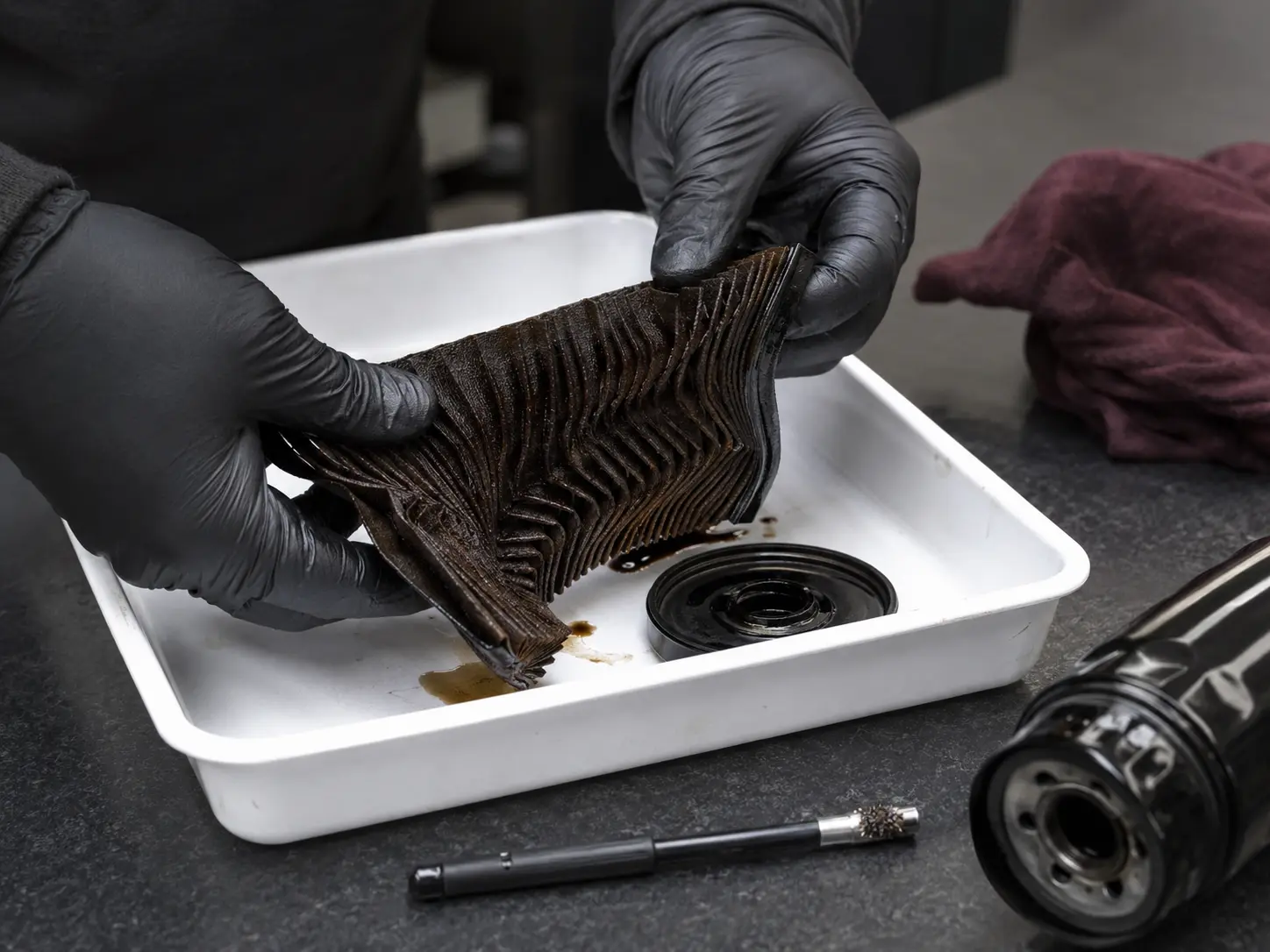
Oil level, condition and the engine-specific approved specification are checked. Pressure, supply behaviour, filter media or debris inspection is added only when the evidence makes it relevant.
Run a complete fault scan
Stored, pending and related faults are read across the vehicle. Freeze-frame is preserved because engine speed, temperature and operating conditions can change how a timing-related fault is interpreted.
Review cam and crank behaviour
The available engine functions are used to compare specified and actual camshaft adjustment, phase or adaptation information and cam-crank synchronisation. The relevant values and limits come from the identified engine, not an internet rule of thumb.
Test related controls
Sensors, wiring, cam-control valves, oil-control paths and actuators are tested when the fault path points there. A correlation code does not remove the need to prove the electrical and hydraulic parts of the system.
Inspect accessible evidence
The timing-cover area, filter media, debris, adjuster response and accessible components are checked as appropriate. Mechanical alignment or tensioner position is confirmed only through the correct engine-specific procedure.
Define the exact repair work
When evidence supports opening the timing system, the workshop selects the chain or chains, guides, tensioners, seals, fluids, filters and required fasteners for that engine. Condition-dependent hardware remains separate until inspection supports it.
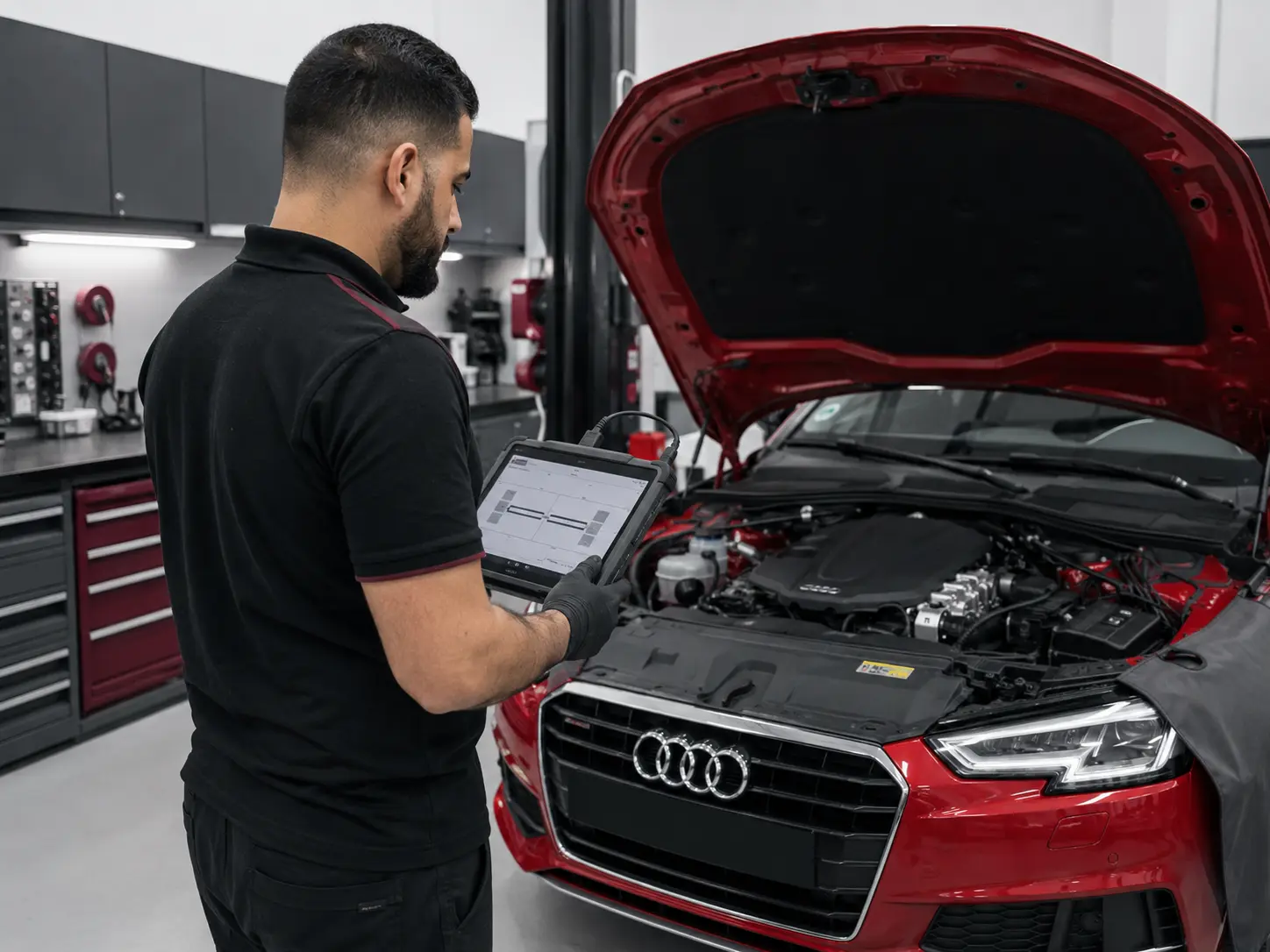
Use codes as clues, not conclusions
P0016, P0017, P0018 and P0019 are examples of cam and crank correlation-related faults. The exact bank and sensor wording matters, but the code label does not identify a failed chain by itself.
What the scan record should preserve
A complete scan connects the fault to operating conditions and companion faults. Freeze-frame may show whether the event occurred on a cold start, at idle or under another condition. Specified-versus-actual values, phase or adaptation data and output tests are reviewed only through the functions available for the identified engine.
The workshop also checks whether a sensor signal is plausible, whether a control valve responds and whether oil supply could affect cam adjustment. For wider electrical and control-system investigation, the Audi diagnostics service explains the site’s measured testing approach.
- Fault memory
- Stored and pending faults, status and affected bank
- Freeze-frame
- Temperature, speed, load and occurrence conditions
- Requested versus actual
- Engine-specific cam-adjustment response
- Signal path
- Sensor plausibility, wiring and control activation
- Mechanical decision
- Supported only after combined evidence
No universal phase value is published here. Acceptable data depends on the engine, software and approved procedure.
Oil-system condition changes the tests
Timing-chain tensioners and variable camshaft systems can depend on correct oil supply. That makes oil level, condition, service history and the approved specification relevant, but it does not make old oil an automatic explanation for every rattle.
When the evidence points toward pressure, drainage or debris, the workshop adds the appropriate checks before deciding scope.
- Verify level and look for dilution, contamination or obvious leakage
- Confirm the engine-specific Audi or VW oil approval context
- Inspect filter media or supply behaviour when relevant
- Keep maintenance evidence with the diagnostic record
The finding determines the repair
The useful outcome is not always a timing-chain replacement. It is a documented next step matched to the evidence.
Continue diagnosis
A brief sound without repeatable conditions, incomplete fault history or unclear engine identity may need a cold-start booking, deeper scan or targeted mechanical check before any parts discussion.
Repair a related cause
A confirmed sensor, wiring, control-valve, adjuster-control or oil-supply problem can lead to a focused repair and verification without assuming that every chain component is defective.
Open the timing system
Abnormal mechanical alignment, supported phase behaviour, guide or tensioner evidence, debris or other engine-specific confirmation can justify a chain-system scope.
What mechanical confirmation can include
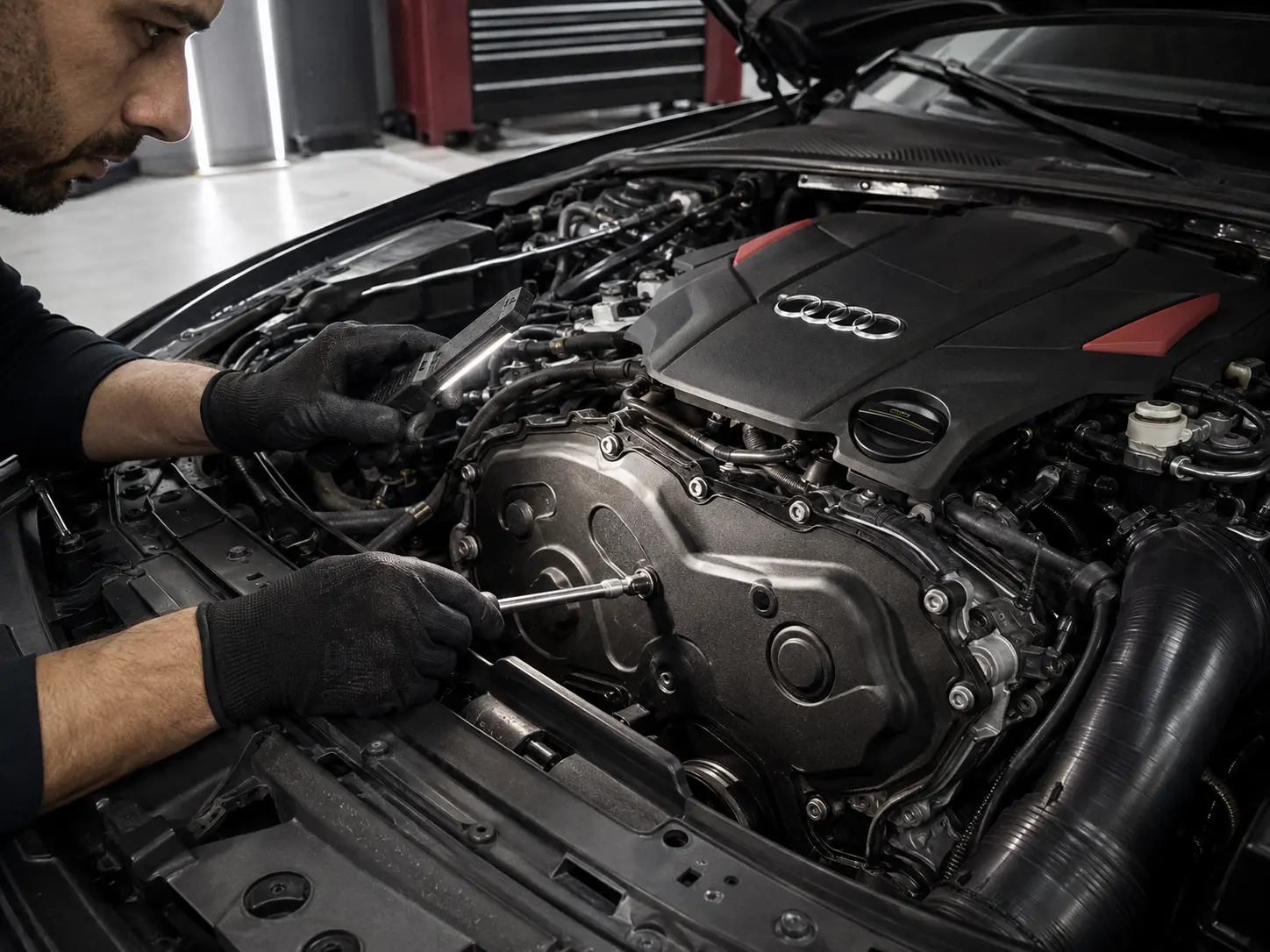
Depending on access and engine design, the workshop may inspect alignment at the approved reference position, tensioner extension or position, guide condition, sprocket and adjuster behaviour, sealing areas and evidence in the oil circuit. The engine is not opened merely to make the page’s diagnosis sound decisive.
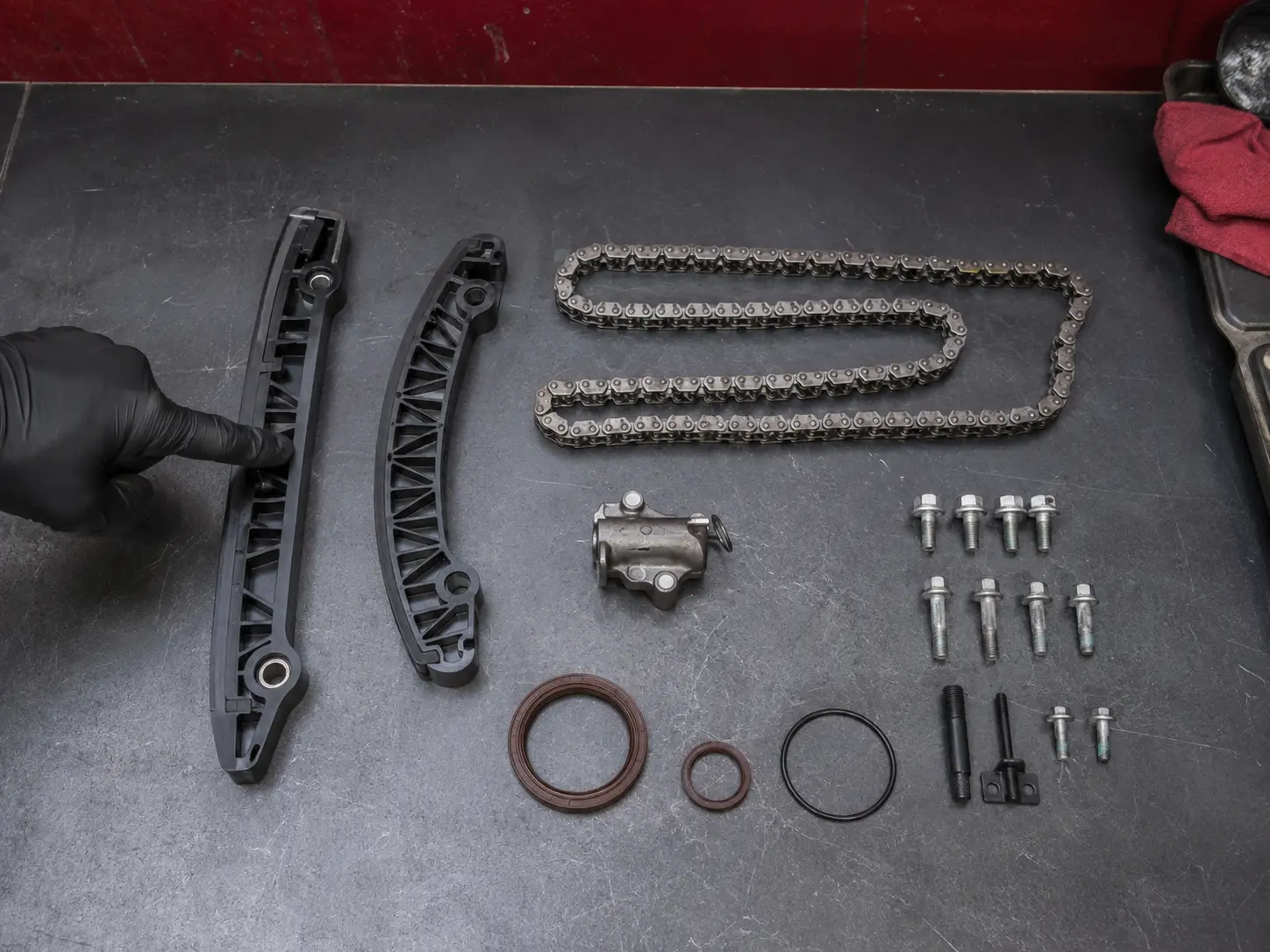
A chain quote needs a defined kit
Some engines use one primary chain, while others use several chains or place the timing drive where access changes dramatically. A credible quote identifies what is included and what remains conditional after inspection.
- Usually scoped together
- Confirmed chain or chains, relevant guides and tensioners for the approved repair route.
- Sealing and service items
- Required gaskets, seals, filters, approved fluids and sealant specified for the job.
- Single-use hardware
- Stretch bolts, angle-tightened fasteners and other replacement hardware required by the procedure.
- Condition-dependent parts
- Cam adjusters, sprockets, bridges, control valves or related hardware only when findings support inclusion.
- Additional damage
- Cylinder-head, valve or wider engine work is assessed separately if timing loss has caused damage.
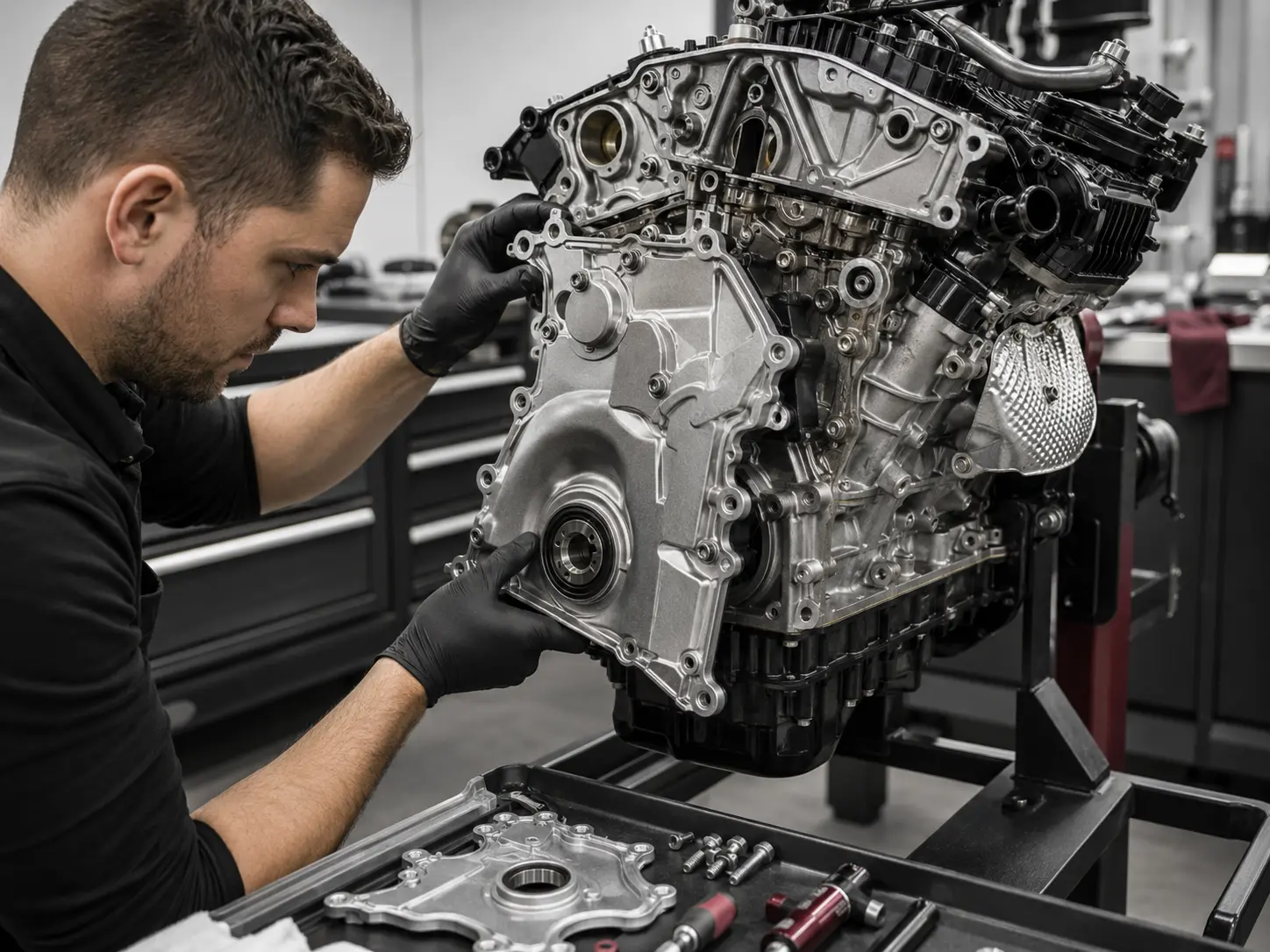
Timing work is more than replacement
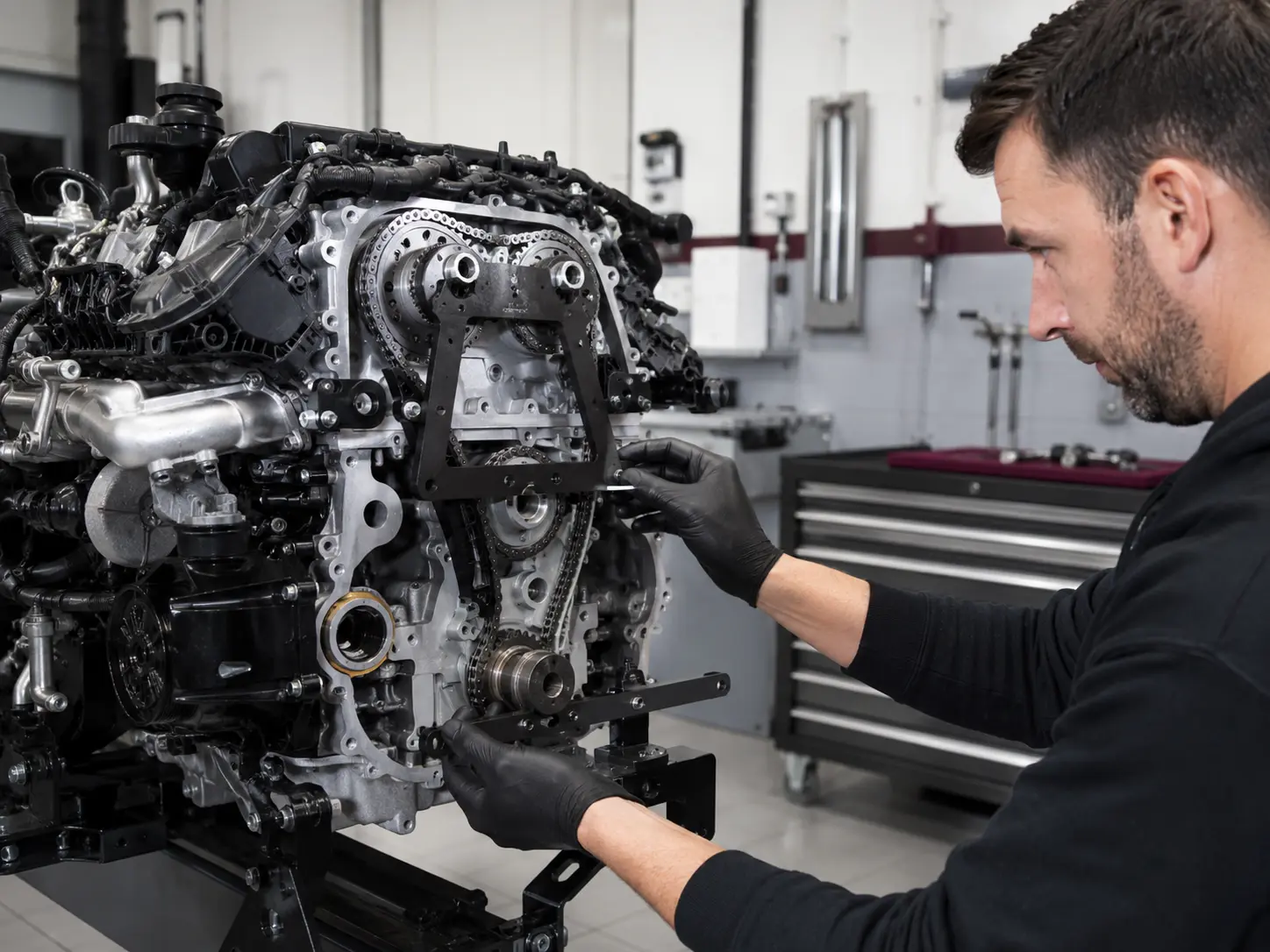
Major timing work begins with controlled access and correct engine support. Components are removed in the engine-specific sequence, connectors and lines are protected, and the work area is kept clean. Approved locking fixtures hold the crankshaft and camshafts at their references while alignment is established.
Sealing surfaces are prepared without damage. New fasteners are used where specified, and tightening sequence, torque and angle steps follow the procedure for that engine. Chain tension, guide placement, adjuster position and free rotation are checked before closure. Fluids and filters are restored, oil-sensitive components are primed where the procedure requires it, and the first start is controlled rather than rushed.
- Correct support and access for the engine layout
- Engine-specific locking fixtures and reference positions
- Clean sealing surfaces and disciplined sealant application
- Specified tightening sequence, torque and angle procedures
- Controlled first start, leak check and final diagnostics
Price follows engine, access and proof
There is no honest universal Audi timing-chain price. The quote sequence starts with engine identity and diagnosis, then separates confirmed parts, labour and condition-dependent work.
Engine layout
Chain position, chain count, engine support and the amount of front, top or transmission-side access can change labour substantially.
Confirmed components
Chains, guides, tensioners, seals, filters, fluids and required fasteners are priced against the exact engine and approved scope.
Adjuster findings
Cam adjusters, control hardware, bridges or sprockets are included only when testing or inspection supports them.
Oil-system findings
Pressure, supply, contamination or debris evidence may add diagnosis, cleaning or related repair before a new timing system is protected.
Additional damage
If timing loss has affected valves, the cylinder head or other engine components, that work is documented and approved separately.
Verification time
Cold restart, scan review, live-value checks, leak inspection and road verification belong in the job rather than being treated as optional extras.
The Audi service cost guide explains how diagnosis, access, parts and approval shape a workshop estimate. A timing-system quote is finalised only after the vehicle identity and repair scope are checked.
What to send for a faster initial estimate
- Registration or VIN
- Model, year and engine size
- Current mileage
- Exact warning message
- Cold-start video
- Recent oil and repair history
Complaint to verification without invented readings
No complete customer record is being presented here. This walkthrough shows the evidence a genuine timing-system diagnosis should produce and where the repair decision changes.
Record the cold-start pattern
Record the rest period, sound duration, warning message, drivability change, recent work and supplied cold-start video. The vehicle and VIN-derived engine identity are attached to the job before technical assumptions are made.
Observe and localise
Reproduce the start-up condition where possible and establish whether the sound is concentrated at the timing area, cylinder head, accessory drive or another source. Record whether it repeats and whether the engine operation changes.
Preserve diagnostic evidence
Save the complete fault record and freeze-frame, then review the relevant specified-versus-actual cam response, phase or adaptation data and synchronisation functions available for that engine.
Test competing causes
Check the related sensor, wiring, control-valve and oil-supply routes that could create the observed fault or adjustment behaviour. This step keeps a plausible alternative from being buried under a chain quote.
Confirm the mechanical work
Where the combined evidence supports it, inspect timing alignment, tensioner or guide evidence, adjuster condition and oil-circuit clues through the approved engine procedure. Define the exact parts and any conditional additions.
Verify after repair
Complete a controlled first start, cold restart when required, full rescan, live-value review, leak inspection and road test. The handover record states what was repaired and what the owner should monitor.

The finish line is a checked system
Replacing parts does not complete the job. The workshop checks that the original complaint has changed as expected and that the repaired system is dry, synchronised and free from returned relevant faults.
- Controlled first start and repeat cold restart when applicable
- Full fault rescan and review of relevant cam and crank values
- Oil, coolant and timing-cover leak inspection
- Idle, starting and road behaviour checked against the complaint
- Repair scope and monitoring advice recorded for handover
Protect the repair with the right routine
Good maintenance cannot guarantee that every timing-system problem will be avoided, but it gives oil-operated tensioners and cam-control hardware the correct operating context. Use the Audi or VW oil specification approved for the exact engine, keep the level within the proper range and retain invoices that identify the oil and filter used.
After collection, monitor the first starts, dashboard messages, oil level and any new leak or change in drivability. Do not repeatedly delay inspection if a start-up noise returns, a warning reappears or the engine begins to run differently. Contact the workshop with the repair record so the same vehicle identity and previous scope can be reviewed quickly.
For booking details, hours and location in Al Quoz 4, use the Audi Specialist contact page. It keeps the service conversation attached to the vehicle rather than relying on a generic timing-chain estimate.
Audi timing-chain repair questions
Does a cold-start rattle mean my Audi timing chain has stretched?
No. A cold-start rattle is useful evidence, but sound alone cannot identify chain stretch. Oil drain-back or pressure behaviour, a tensioner, guide, cam adjuster, variable-valve-timing component, accessory-drive part or another engine-specific source can sound similar. A true cold-start observation, scan and targeted tests are needed before scope is approved.
Can a timing correlation code be caused by a sensor?
Yes, depending on the exact code and engine. Camshaft and crankshaft sensors, wiring, control valves, oil supply and mechanical timing can all belong to the fault path. The workshop preserves freeze-frame, checks related faults and reviews signal and adjustment behaviour instead of treating the code description as a parts order.
Can the car still be driven with timing-chain noise?
That depends on the noise and how the engine is operating. Persistent metallic noise, difficult starting, rough running, loss of performance, a flashing warning or an oil-pressure warning should not be tested by continued driving. Stop unnecessary starts and call. A brief unconfirmed sound should still be recorded and booked for a focused cold-start inspection.
What is normally included in an Audi timing-chain repair?
The confirmed scope may include one or more chains, guides, tensioners, seals, gaskets, approved fluids, filters and required single-use fasteners. Cam adjusters, sprockets, bridges, control valves or additional engine parts are not automatic additions. They are included when engine-specific testing or inspection supports them.
Why does the engine code change the price?
The VIN-derived engine code identifies the chain layout, number and position of chains, approved locking fixtures, timing references, access route and required hardware. Two Audis with similar badges can require very different disassembly and parts. That is why the engine is identified before a credible labour and parts quote is prepared.
Is the tensioner replaced with the chain?
The relevant tensioner and guides are normally considered as a system when a chain repair is confirmed, but the exact kit follows the engine and repair procedure. The workshop does not promise one universal kit. It confirms which chains, rails, tensioners and fasteners belong to the approved scope.
How is the repair checked before collection?
Verification includes a controlled first start, relevant cold restart where required, full fault rescan, review of applicable cam and crank values, leak inspection and a road test suited to the original complaint. The workshop also checks idle, starting and warning behaviour and records the completed scope for handover.
What information helps with an initial estimate?
Send the registration or VIN, model and year, engine size, mileage, exact warning message, a clear cold-start video and recent oil or repair history. These details help identify the engine and prepare the diagnostic visit. They do not replace inspection or create a final repair price remotely.
Book the diagnosis before the parts decision
Share the Audi’s VIN or registration, model year, mileage, warning message and cold-start video. The workshop can prepare the right inspection route and explain what must be confirmed before a timing-system repair is approved.
For other Audi workshop needs, browse the Audi services hub.
Audi Timing Chain Repair
Timing system and maintenance
These pages extend the decision path without replacing diagnosis or repeating the same service intent.