
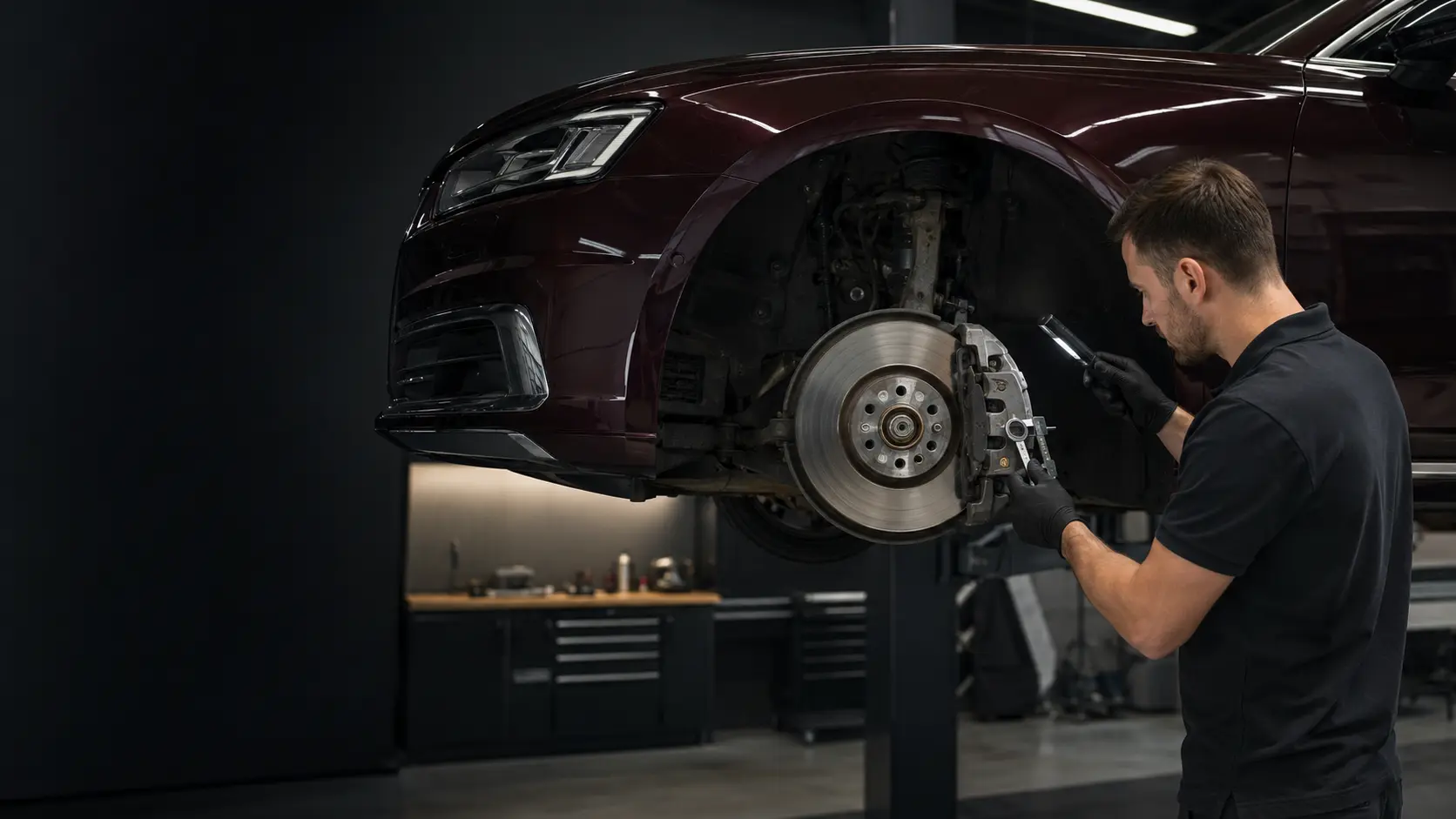
Brake choice bench
Audi Brake Pad Replacement in Dubai
Audi brake pad replacement in Dubai is a service that checks the exact model, front or rear position, brake package, pads, discs, hardware, caliper movement and wear sensor. We confirm whether pads alone are appropriate before pricing the complete front or rear brake-pad set in writing.
A red brake instruction, sinking pedal, visible fluid leak, smoke, severe wheel heat, major braking loss, severe pulling or sustained metal-on-metal grinding needs an immediate safety call, not a parts selection.
Driving decision before parts
Is this a safety call
A dashboard colour, noise or wear message is only part of the decision. Pedal feel, heat, leakage, braking response and the exact instruction displayed determine whether to stop and call, discuss the symptom before driving or schedule a measured inspection.
Stop safely
Arrange immediate help
A red brake-system instruction, a pedal that sinks or does not hold pressure, visible brake-fluid leakage, smoke or severe heat at a wheel, major loss of braking, severe pulling or sustained metal-on-metal grinding needs a call from a safe location. Follow the exact dashboard and owner-manual instruction. Recovery may be the appropriate route.
Ask first
Discuss before driving
A new amber brake warning combined with changed pedal feel, repeated strong vibration, a wheel that becomes unusually hot, a burning smell or a serious symptom immediately after brake work deserves workshop advice before setting off. The combination matters more than the colour alone.
Book promptly
Plan a measured inspection
A stable wear message, light squeal, gradual dust or feel change, or routine measured wear without the emergency signs should be booked promptly. Do not wait for the sound to become grinding. The inspection still determines whether the scope is pads only or includes discs, sensors, hardware or caliper work.
Stop if braking response changes. Follow the exact dashboard and owner-manual instruction. A red brake warning, sinking pedal, visible fluid leak, smoke, severe heat, major braking loss, severe pulling or sustained grinding may require recovery instead of a workshop drive.
Front or rear set quote
What determines an Audi brake-pad quote
A front brake-pad set covers both front wheels; a rear set covers both rear wheels. The written price is built after the exact Audi, brake position, brake package and supporting component condition are confirmed.
VIN or brake code, front or rear brakes, disc size, caliper system and sensor arrangement.
Exact brand, product line and part number, with Audi Genuine and aftermarket products identified clearly.
Pad wear at both relevant wheels, disc measurement and surface condition, caliper movement, fitting hardware, leakage and warning-circuit findings.
The complete front or rear pad set, labour, sensor and hardware treatment, required rear-brake procedure, closing checks and road test.
Any disc, caliper, hydraulic or hub-related work is itemised and returned for approval before it is added.
VAT treatment, stock position, lead time, quotation validity and the applicable written warranty or optional noise-programme terms.
The brake choice bench
Compare the four choices
There is no honest “best pad” without the exact brake package, use, ownership plan and supporting component condition. Compare each commercial route on the same questions. The choice is approved only after the part identity, front or rear scope, disc condition, hardware and sensor dependencies appear in writing.
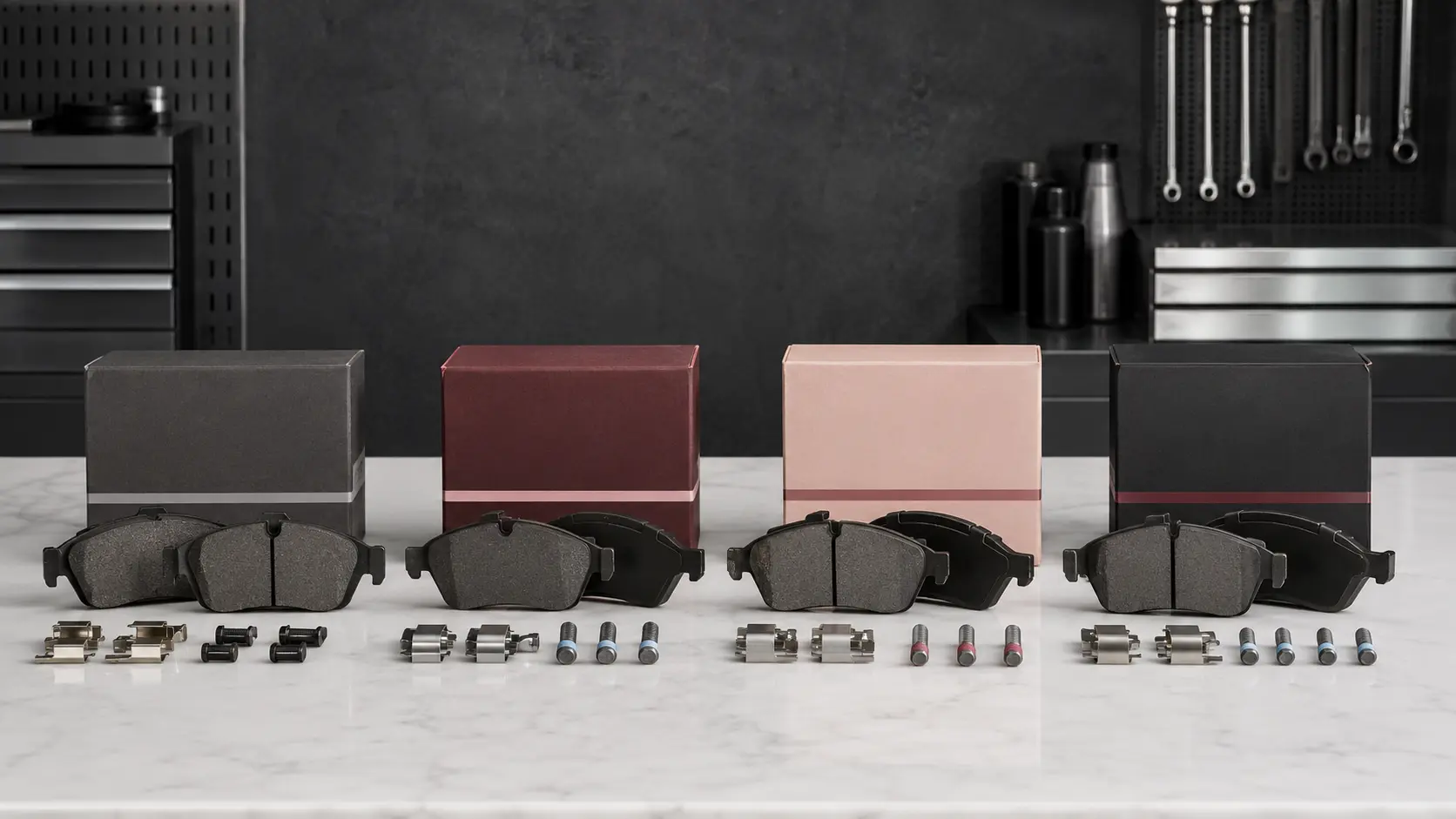
If you ask for “OEM”, clarify whether you mean an Audi Genuine part or a premium aftermarket pad from a manufacturer with original-equipment experience. Those are different commercial routes and should be described separately on the quotation.
Written before approval
Noise-programme terms
- Eligible pad line and brake position
- Mileage and calendar limit
- Inspection route, remedy and exclusions
Optional written terms
How the noise programme works
If an optional brake-pad noise programme is offered, it applies only when the approved quotation names the eligible pad line, front or rear brake position and Audi application. The same document states the mileage and calendar limits, inspection conditions, remedy, exclusions and labour treatment.
If noise returns, the inspection checks disc surface and runout, caliper movement, fitting hardware, contamination, corrosion, hub condition, installation, bedding and the friction material before the applicable remedy is decided.
- Pad wear, stopping distance and braking performance remain separate from a noise programme.
- A serious safety symptom is inspected immediately and is never treated as ordinary bedding noise.
- Specialist, modified and track-used brake systems require their own written assessment.
What the quotation records
The quotation states the product line, included front or rear brake position and application, starting mileage, mileage and calendar limits, inspection steps, remedy, labour treatment, supporting-component conditions and exclusions.
What happens if noise returns
Bring the invoice and current mileage and describe when the sound occurs. The workshop records the noise and related brake condition, then applies the written terms for the fitted pad line and approved scope.
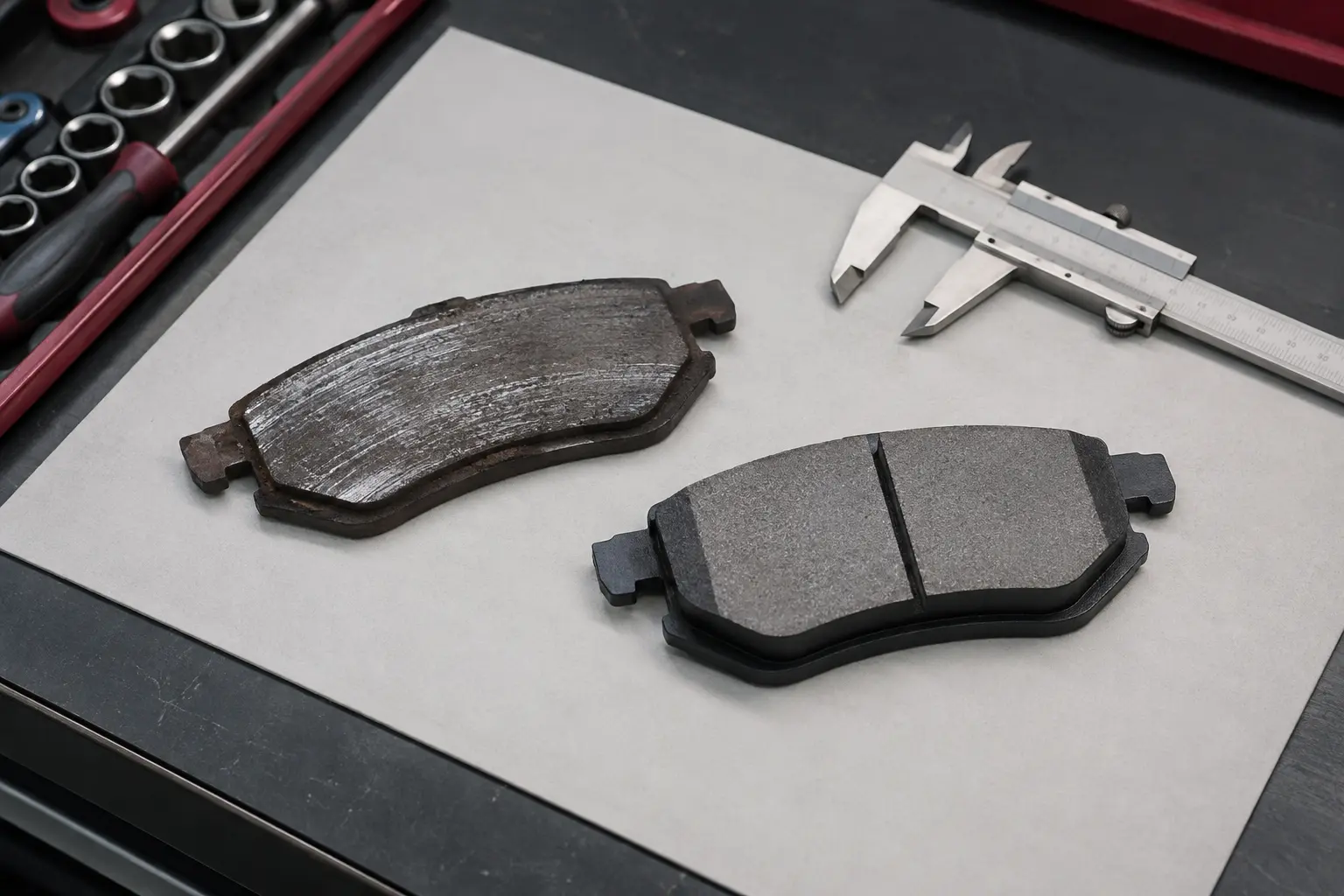
Parts identity
Parts checked by application
The quotation names the exact brand, product line and part number for the front or rear brakes. Catalogue fitment is checked against the VIN or brake code, disc size, caliper system and sensor arrangement before approval.
A premium aftermarket product remains aftermarket even when its manufacturer has original-equipment experience. Audi Genuine identifies the Audi-branded route. The two are described separately so the owner can compare part identity, installed scope and written terms.
Supplier availability and the quotation-validity period are confirmed before work. A brand name alone does not establish fitment, current stock or the complete installed price.
Friction language decoded
How friction material affects the choice
Organic or NAO, low-metallic, semi-metallic, ceramic-labelled and performance compounds describe broad formulation families. They are not four more sales levels and they do not create a universal quality ranking. One premium manufacturer may specify different formulations for different Audi brake packages.
A formulation intended for ordinary road use may prioritise predictable cold response and comfort. The actual behaviour still depends on the named product, disc pairing, brake design, climate, installation and bedding.
A compound intended for higher thermal demand may trade some cold comfort, dust or noise behaviour for heat capability. That does not make a track-orientated product the sensible choice for routine city driving.
Ceramic-labelled does not automatically mean quietest, cleanest or longest lasting. Semi-metallic does not automatically mean noisy. Product-line evidence matters more than a material word on its own.
Friction material and disc surface work as a pair. Disc condition, transfer layer, runout, contamination and hardware movement can affect contact, feel and sound regardless of the price tier.
Choose first by exact fitment, road use, comfort priority, heat demand and the written parts route. Material language can then refine the decision where the manufacturer documents meaningful characteristics for that exact line and application. Avoid buying a pad merely because one compound label sounds more advanced.
Fitment passport
The exact brake package matters
Model and year begin the search, but they may not finish it. Two examples of the same model and year can use different front or rear packages. Quoting only from “Audi A6 2020” can therefore produce the wrong pad, sensor or hardware.
- Vehicle identity
- VIN, model year and relevant PR or brake code
- Brake position
- Front brakes, rear brakes, both or unsure
- Disc
- Diameter, thickness, material and approved reference
- Caliper
- Maker, fixed or sliding design and piston arrangement
- Sensor
- Provision, count, integrated or separate configuration
- Hardware
- Orientation, clips, springs, bolts and superseded numbers
Details a badge cannot show
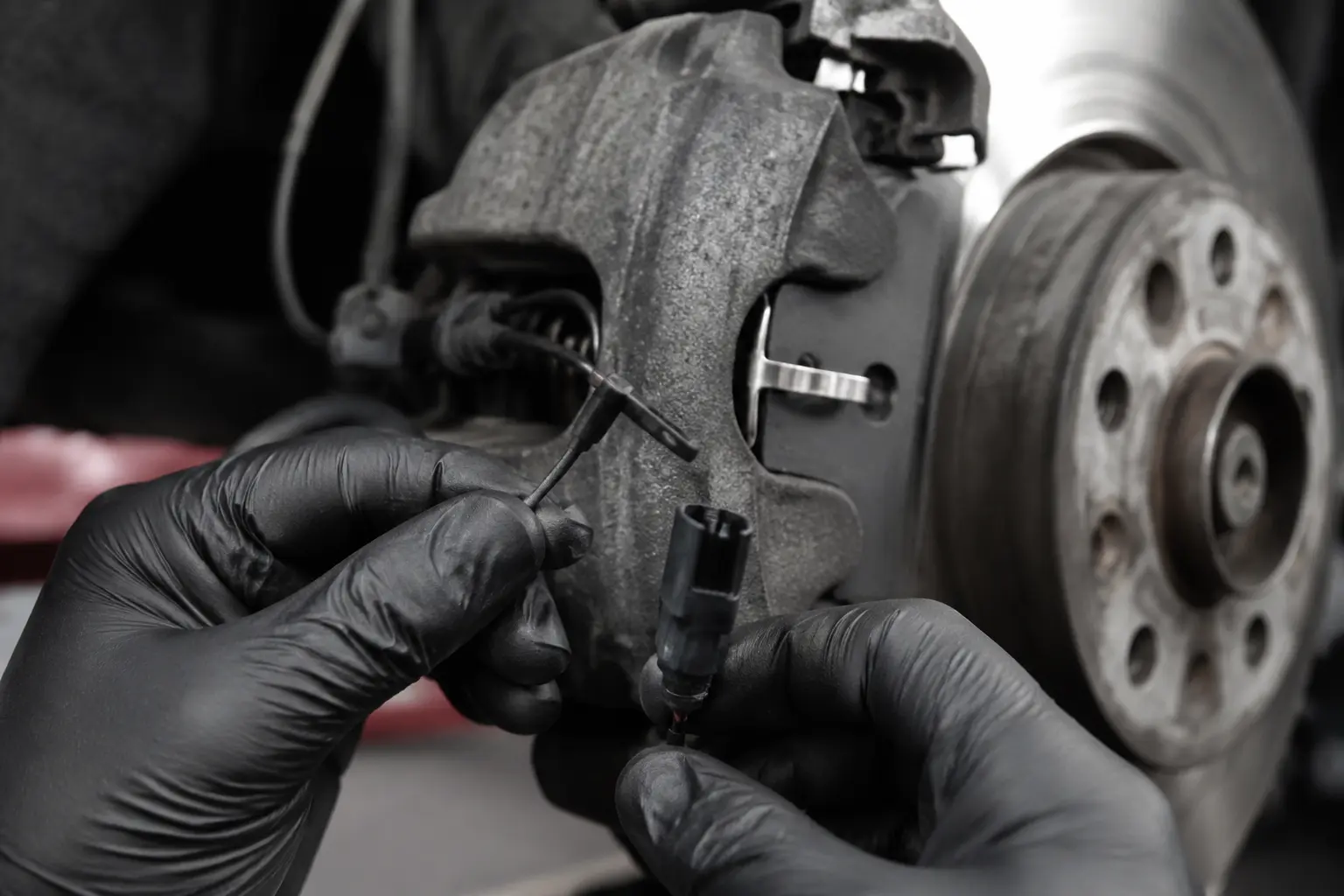
S line appearance does not prove the vehicle has an S or RS brake package. A conventional steel disc and a carbon-ceramic disc require very different parts and handling. Directional pads, inner and outer pad differences, wear-sensor provision, electronic parking brake on applicable rear systems and superseded part numbers can all change the order.
For e-tron and plug-in hybrid models, regenerative braking can change how often the friction brakes are used and what surface or corrosion findings appear. Acceptance and the safe procedure are confirmed for the specific vehicle. Any high-voltage inspection or repair is scoped separately from the brake quotation.
Owners of A, Q, TT, e-tron, S, RS and R8 models can start with the model family, but the quotation remains conditional until the installed hardware is identified. A model-by-model pad table would become misleading unless every variation were verified and maintained.
A measured decision
When pads alone make sense
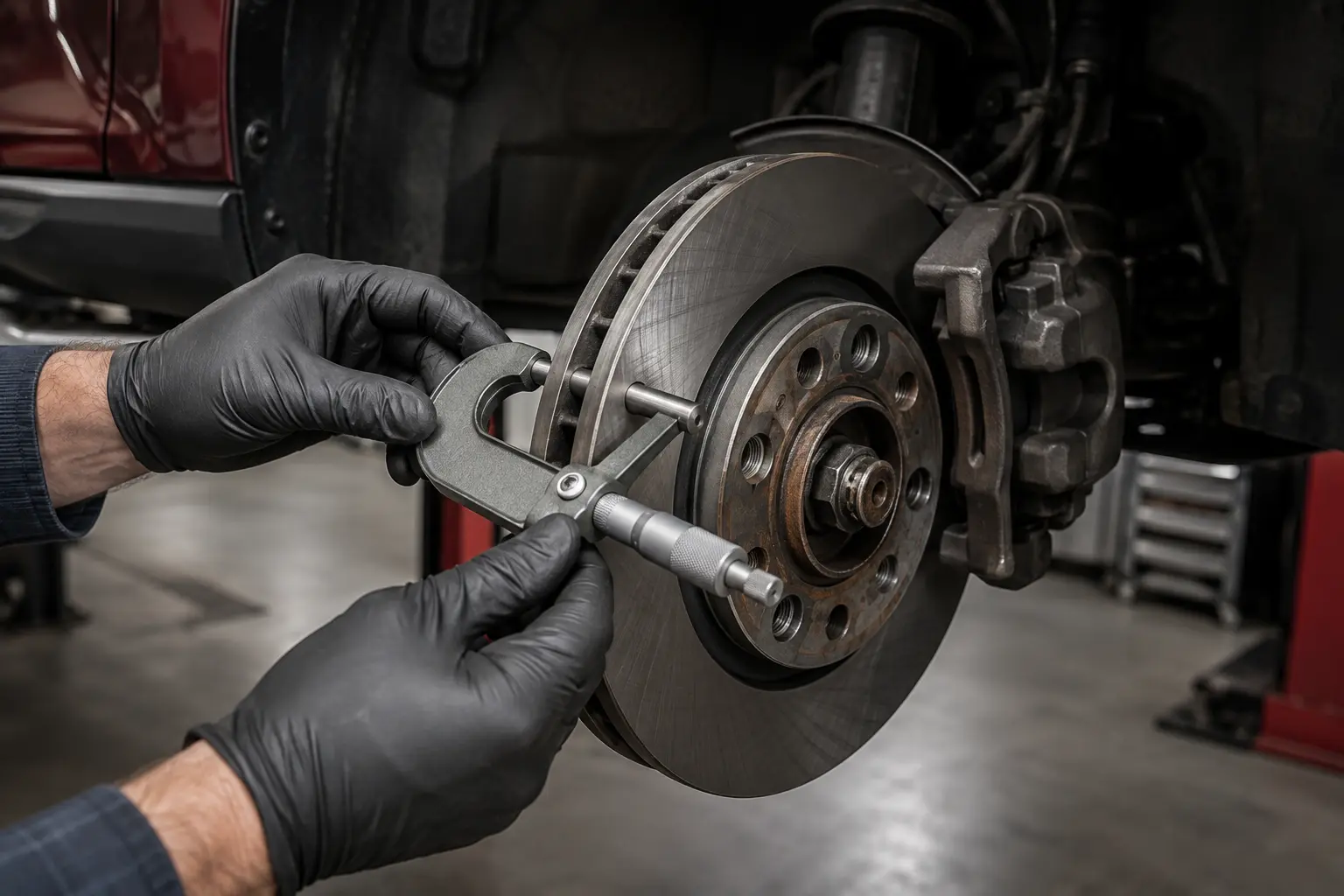
Pads-only work can be defensible when the correct front or rear brake-pad set has been identified, both relevant discs remain suitable under the vehicle-specific procedure, the calipers and required hardware operate correctly, the friction surfaces are uncontaminated and the warning or symptom agrees with the measured findings.
That does not require replacing every disc as a precaution. It does require checking for disqualifying cracks, deep scoring, heat damage, corrosion, problematic variation and other condition that would prevent the new pads from bedding and working as intended. There is no single honest millimetre limit for every Audi pad or disc. A number has meaning only with the exact technical reference and measurement conditions.
Brake pads are replaced as a complete front or rear set covering both wheels. A quotation should say “front brake-pad set” or “rear brake-pad set”, not “one pad replacement” when it means the pads at both wheels. Inner and outer pads on the same end of the vehicle also need inspection because uneven wear can expose a movement or hardware problem that the most visible pad does not show.
An older disc can affect initial contact, transfer layer and noise even when replacement is not automatically required. The decision should be explained from condition and measurement, not fear. If the existing disc remains suitable, the quotation should record that finding and any bedding advice attached to the selected product.
Measured findings routes
When pads are not enough
A pad quotation changes only when the evidence changes. Four supporting areas commonly determine whether pads alone complete the job. Each added scope needs a separate explanation and approval rather than appearing as a surprise on the invoice.
Discs
Check thickness against the exact permitted minimum, surface condition, cracks, deep grooves, heat spotting, corrosion and lip. Measure runout or disc-thickness variation when the complaint and procedure justify it. Skimming is considered only where permitted and where final dimensions and surface remain acceptable.
Wear sensor
Confirm whether the application uses a sensor, whether it is integrated or separate and whether the circuit or connector is damaged. A warning is not “reset away” while its cause remains. The quote should say whether the sensor is included, reused where permitted or priced separately.
Fitting hardware
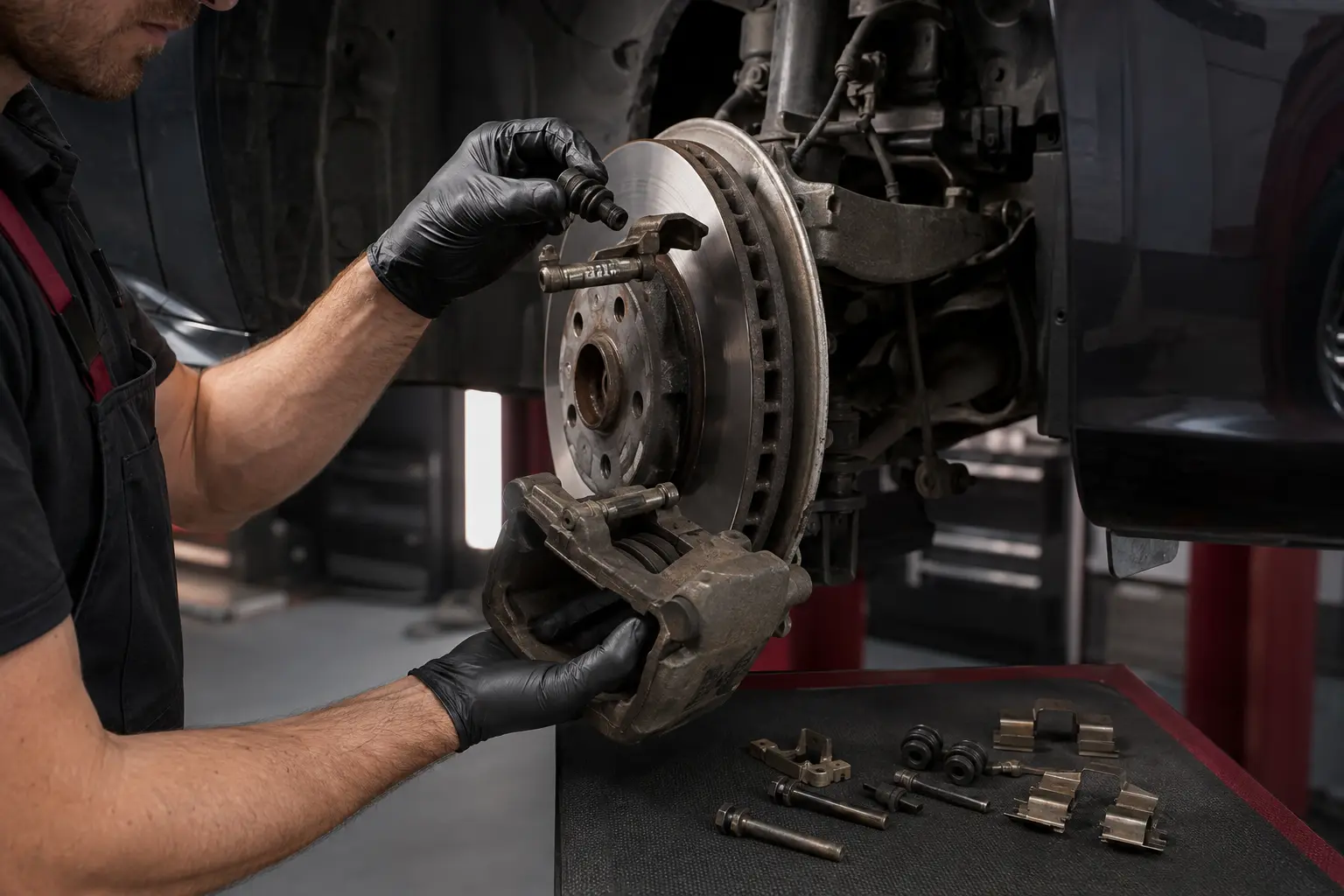
Clips, springs, shims, guide bolts, specified fasteners and other fitting items are checked against the pad and vehicle procedure. Missing, seized, damaged or single-use hardware can change contact and movement. The parts line should state what is renewed.
Caliper and hydraulics
Slide movement, piston operation, dust boots, leakage and flexible hose condition are reviewed for the affected area. Uneven wear or heat should not be answered with another pad set alone. Caliper or hydraulic repair receives a separate scope and approval.
Where added scope comes from
Added work is quoted when inspection finds a worn or damaged sensor, missing or seized fitting hardware, unsuitable discs, restricted caliper movement, leakage or another condition that prevents a pad-only repair.
The estimate identifies the exact additional part and labour before approval. Disc machining is considered only when the disc and workshop procedure permit it, the final size and surface remain compliant and machining addresses the measured complaint.
Brake inspection sequence
What we check before quoting
The inspection follows the reported symptom through the installed brake system: vehicle identity, pad wear at both relevant wheels, disc measurement, caliper movement, hardware, sensor configuration, fitment and closing checks.
Confirm the vehicle and complaint
Record the model, front or rear brake position, VIN or brake code, mileage, exact warning, operating conditions and driving use.
Inspect every pad in the set
Compare inner and outer pads at both relevant wheels for remaining material, taper, contamination and uneven wear.
Inspect and measure both discs
Use the correct vehicle-specific data and measure additional variation only where the complaint calls for it.
Check movement and leakage
Review caliper slides, piston and dust-boot condition, relevant hoses and visible leakage without calling it a full hydraulic overhaul.
Check fitting hardware
Review clips, springs, shims, guides and specified fasteners needed by the exact procedure.
Confirm sensor configuration
Identify the wear-sensor arrangement and relevant warning-circuit condition before promising a reset.
Use the correct rear procedure
On applicable rear systems, enter the approved electronic-parking-brake service process rather than forcing the mechanism.
Consider hub and wheel contact
Where vibration or runout is relevant, inspect the mating condition that can influence the measurement.
Confirm live fitment
Check the exact pad, sensor and hardware in a current manufacturer or supplier catalogue.
Present choices and exclusions
Show measured findings, relevant parts routes, added scope, VAT treatment and the written approval total.
Audi Brake Repair
Brake, suspension and inspection routes
These pages extend the decision path without replacing diagnosis or repeating the same service intent.