
Audi boost diagnosis in Dubai
Audi turbo repair in Dubai
Audi turbo repair in Dubai is a diagnostic and mechanical service for power loss, smoke, EPC warnings or boost faults. We test the charge-air tract, sensors, boost control, wastegate or actuator, oil supply and turbocharger before recommending repair or replacement.
- Warehouse 39, Al Quoz 4
- Monday to Saturday
- 9:00 AM to 7:00 PM

Boost trouble has more than one cause
An Audi can feel as if the turbo has stopped working when charge pressure is escaping through a hose or seal, when a sensor reports an implausible value, when a control valve does not respond, or when a wastegate or actuator cannot hold the requested position. Oil-feed, oil-return and crankcase-ventilation conditions can also create smoke or damage. The useful first step is a diagnosis that connects the driver’s symptom, stored fault context, live behaviour and a physical test. If the evidence points beyond boost control to internal engine condition, the investigation moves to Audi engine diagnosis rather than turning a turbo quote into guesswork.
Smoke, oil warning or severe noise
Switch off when safe for a red oil-pressure instruction, heavy smoke, rapid oil loss, harsh metallic or siren-like noise, or a major sudden loss of power. Avoid repeated restarts and ask whether recovery is appropriate.
Repeated limp mode or overboost
A recurring EPC or engine warning, P0299, P0234, inconsistent boost or strong hesitation needs testing under controlled conditions. Repeated heavy acceleration can make a developing leak or control problem harder on the system.
Gradual weakness or new whistle
Reduced response, a new whistle, small oil-use change or an intermittent warning can be booked for focused checks. Send the model, year, mileage and the condition in which it happens.
Boost Problem Pathfinder
Start with what the driver notices
Choose the closest symptom. The result shows plausible systems and the first useful evidence route. It does not diagnose the car remotely.
Choose one symptom
You can change the selection without losing the page.
Weak acceleration needs a pressure path
- Possible systems
- Charge-air leak, diverter valve, boost-control solenoid, wastegate or actuator, implausible MAP or MAF signal, exhaust restriction, or confirmed turbo damage.
- Evidence checked
- Freeze-frame context, requested and actual charge pressure, airflow and throttle behaviour, hose joints, oil tracks and actuator response.
- First useful test
- Inspect and pressure-test the charge tract, then compare live values in a controlled operating window.
- Repair paths
- Seal or hose repair, confirmed control-component replacement, actuator or wastegate work where supported, root-cause correction, or turbo replacement when physical evidence justifies it.
A warning needs its stored context
- Possible systems
- Boost deviation, sensor plausibility, actuator command, wiring, throttle control, charge leak, or another engine-management concern.
- Evidence checked
- Complete fault memory, occurrence count, freeze-frame conditions and faults in related systems rather than one isolated code label.
- First useful test
- Preserve the scan record and run the relevant test plan before clearing codes or fitting a part.
- Repair paths
- Electrical or sensor repair, leak correction, boost-control testing, software or basic-setting work when applicable, and mechanical inspection only where the path supports it.
Noise must be localised
- Possible systems
- Air leak, loose connection, wastegate linkage, compressor or turbine contact, exhaust leak, accessory drive or another rotating component.
- Evidence checked
- When the noise starts, whether it follows engine speed or load, its location, smoke or oil change, and physical play or contact where access allows.
- First useful test
- Reproduce the sound safely and localise it before the turbo is removed.
- Repair paths
- Connection repair, linkage or actuator route, exhaust-side correction, or turbo replacement after a credible physical finding.
Smoke colour is only a starting clue
- Possible systems
- Turbo oil leakage, crankcase ventilation, oil return restriction, engine wear, fuelling, intake restriction or residual oil in the charge tract.
- Evidence checked
- Smoke colour and timing, oil level trend, intake and exhaust-side oil pattern, PCV behaviour, charge-pipe contamination and engine condition.
- First useful test
- Record when smoke appears, inspect both sides of the turbo and check oil supply, return and crankcase pressure context.
- Repair paths
- PCV or oil-path correction, charge-system cleaning, engine testing, or turbo repair or replacement with the cause addressed.
Oil use needs a trend and a source
- Possible systems
- External leak, PCV fault, turbo oil seal or drainage problem, engine consumption, incorrect level or service-related issue.
- Evidence checked
- Measured oil level, distance covered, leak evidence, smoke conditions, oil in the charge tract and turbo feed and return condition.
- First useful test
- Verify the level correctly, inspect for external loss and map oil evidence before blaming the turbo.
- Repair paths
- Leak or ventilation repair, oil-line correction, engine diagnosis, or turbo work when the evidence identifies it.
A code describes behaviour, not the failed part
- Possible systems
- P0299 can accompany insufficient charge pressure; P0234 can accompany excessive pressure. The cause can sit in pipes, controls, sensors, actuator movement, exhaust flow or the turbocharger.
- Evidence checked
- Fault status, freeze-frame, commanded and actual pressure, control duty or position, airflow plausibility and mechanical movement.
- First useful test
- Follow the code with a targeted pressure, output or plausibility test selected for the engine.
- Repair paths
- Leak correction, wiring or sensor repair, control or actuator work, calibration where applicable, or mechanical turbo repair after confirmation.
Diagnosis before replacement
How the workshop narrows the fault
The sequence starts wide enough to avoid an unnecessary turbo, then becomes specific as the evidence removes alternative causes. A full Audi diagnostic investigation remains the right destination when warning lights or drivability faults extend beyond the boost system.
Record the operating condition
The technician notes whether the fault is cold or hot, at steady speed or acceleration, intermittent or constant, and whether smoke, noise, oil use or recent work appeared with it. Earlier codes and invoices are preserved because they may show what was already tested.
Read scan and freeze-frame context
Stored faults are checked with occurrence and operating information. P0299 or P0234 can identify an underboost or overboost condition on applicable vehicles, but neither code alone identifies a turbocharger as the failed component.
Compare requested and actual pressure
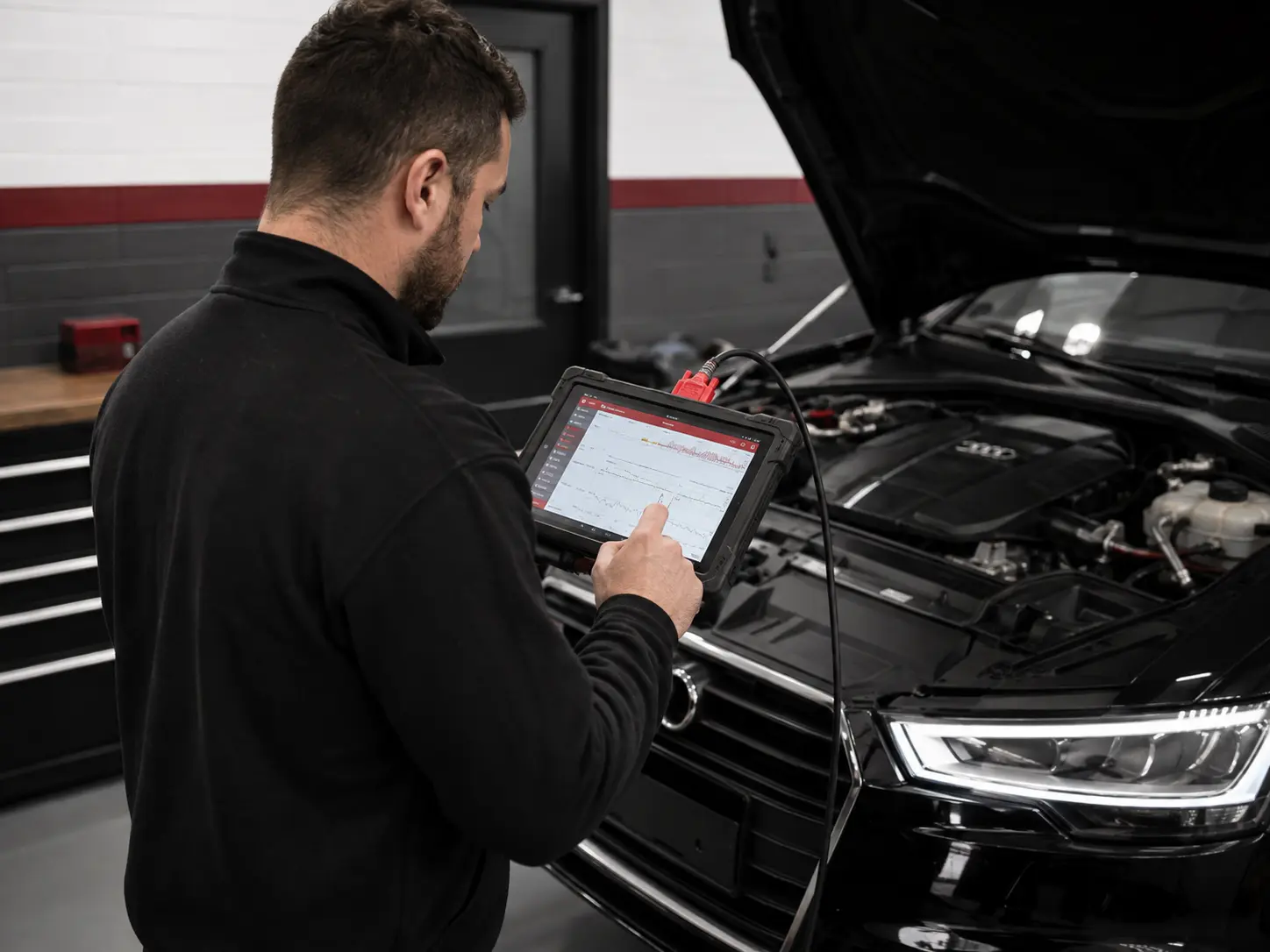
Charge pressure is reviewed in a repeatable RPM and load window together with airflow, throttle, pressure-sensor and actuator data relevant to that engine. The shape, timing and persistence of a deviation matter more than one screenshot without conditions.
Inspect and pressure-test the tract
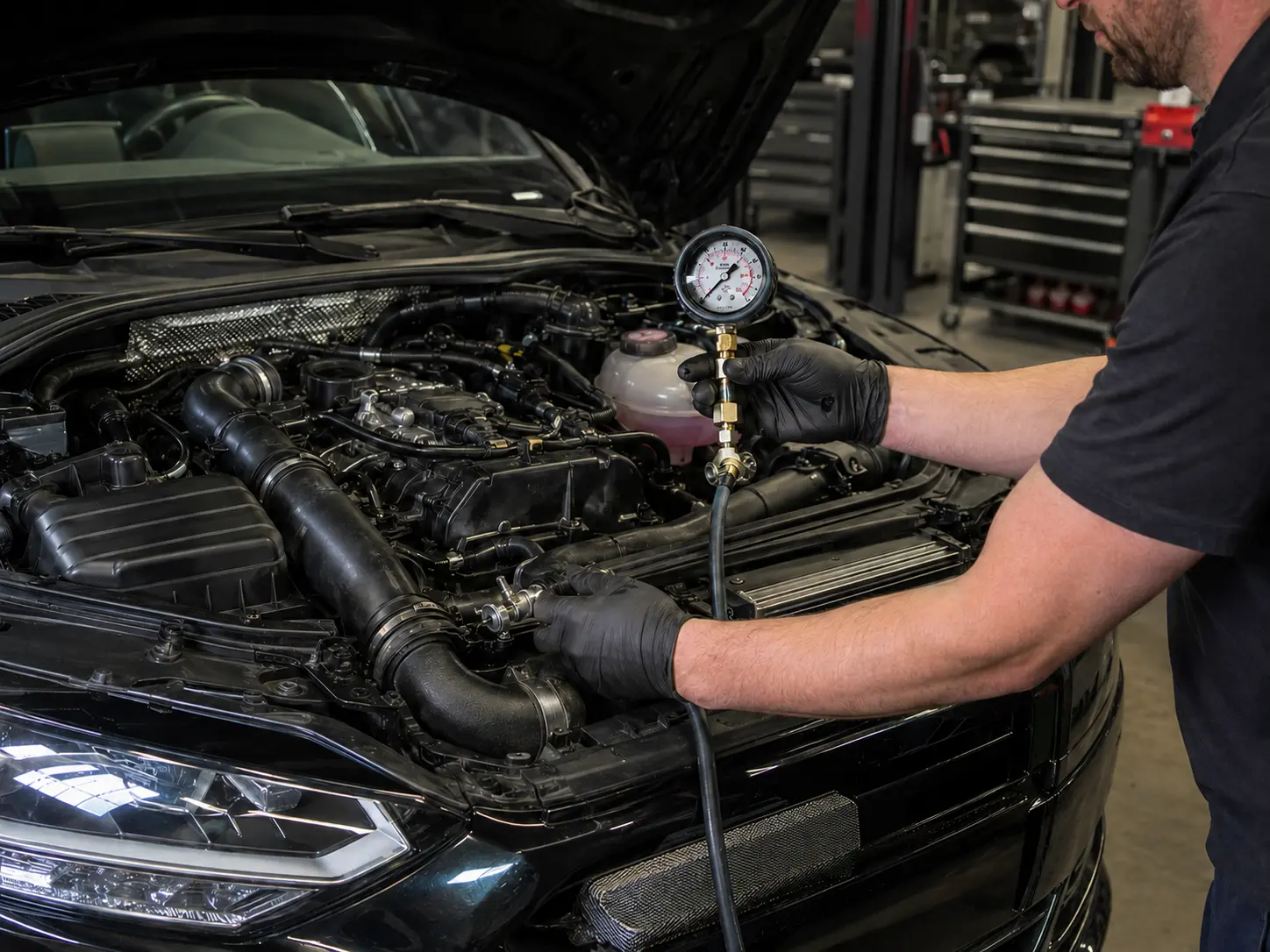
Intake and charge pipes, seals, clamps and intercooler connections are inspected for movement, splits and oil tracks. A regulated pressure or smoke test can expose a leak that remains hidden at idle.
Check sensor plausibility
MAP and MAF signals are compared with the operating condition and with related values. Wiring, reference supply and contamination are considered where the evidence supports them. Replacing a sensor because its name appears in a code is not a test.
Command boost control
The diverter valve and N75 boost-control solenoid are tested where fitted. Wastegate or electronic actuator command is compared with observed position and mechanical movement. The applicable basic setting or calibration is completed when the installed system requires it.
Inspect oil and ventilation paths
Oil feed, oil return, crankcase ventilation and relevant contamination are checked because a replacement turbo can fail again if the original supply, drainage or pressure problem remains. Upstream exhaust leakage, back pressure and engine condition are considered when evidence points away from a simple boost-control fault.
Confirm physical turbo condition
Where access and procedure allow, the inspection looks for compressor or turbine contact, blade or housing damage, abnormal movement and meaningful oil-leak patterns. The result is connected to the other tests rather than treated as an isolated visual opinion.
What a useful boost log records
A requested-versus-actual comparison needs enough context to be repeatable. The workshop uses the channels and units available for the exact engine and records the conditions that made the comparison meaningful.
No customer measurement is published here because a verified workshop log has not been supplied for this page.
- Requested pressure
- Engine-specific channel
- Actual pressure
- Same captured window
- Engine speed and load
- Test conditions preserved
- Actuator or control data
- Where the system exposes it
- Decision
- Deviation linked to a physical test
A graph becomes evidence only when its source, units, operating window and vehicle identity are known.
Evidence before replacement
The repair decision is earned
Different findings lead to different scopes. These modules show what separates a connection repair, a control repair and a confirmed turbocharger route.
Leak location
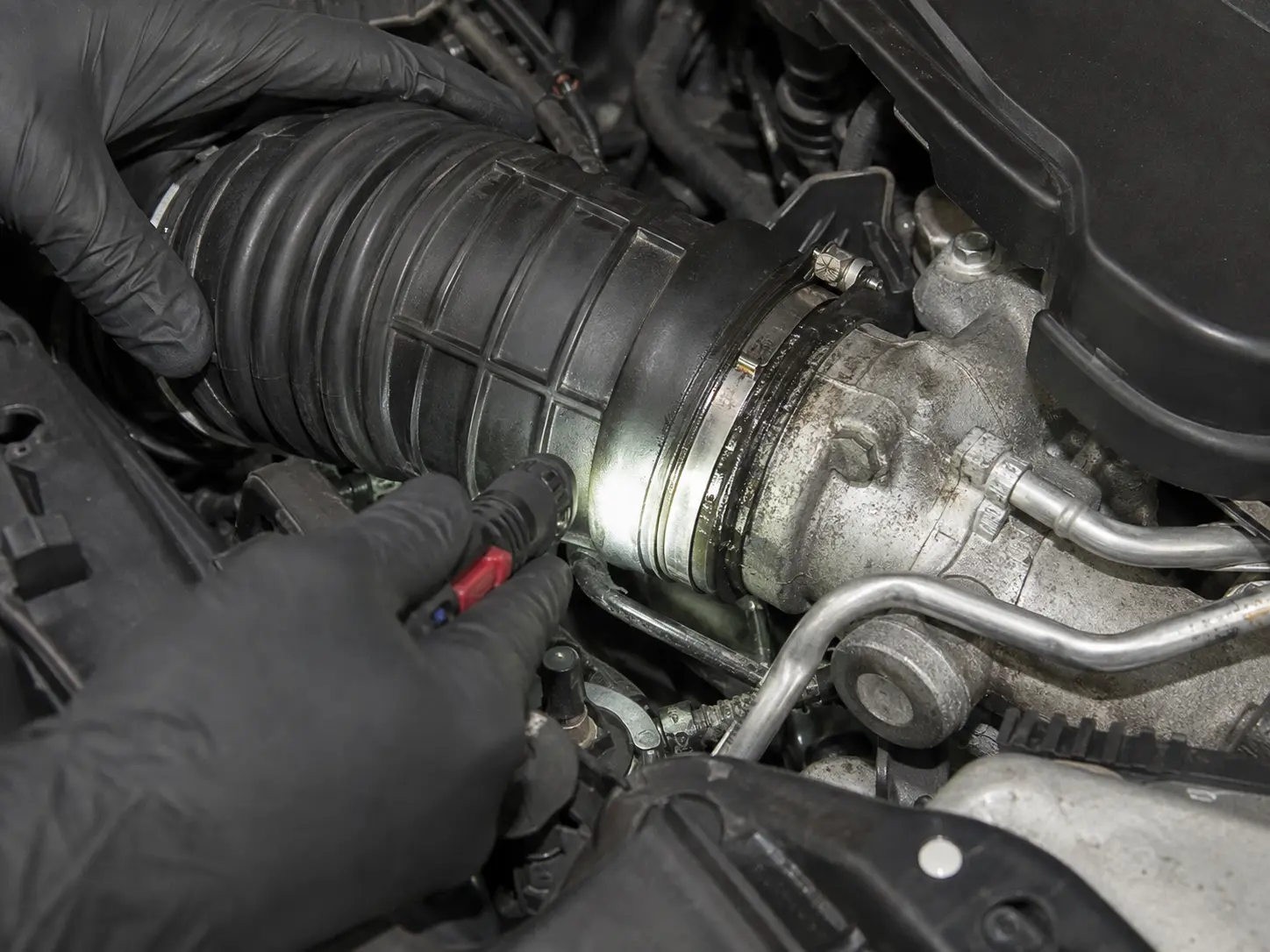
Pressure loss is traced to the joint, pipe, seal, clamp or intercooler connection that cannot hold the test condition. Repair is then checked with the same method instead of assuming the new part sealed the system.
Command and movement
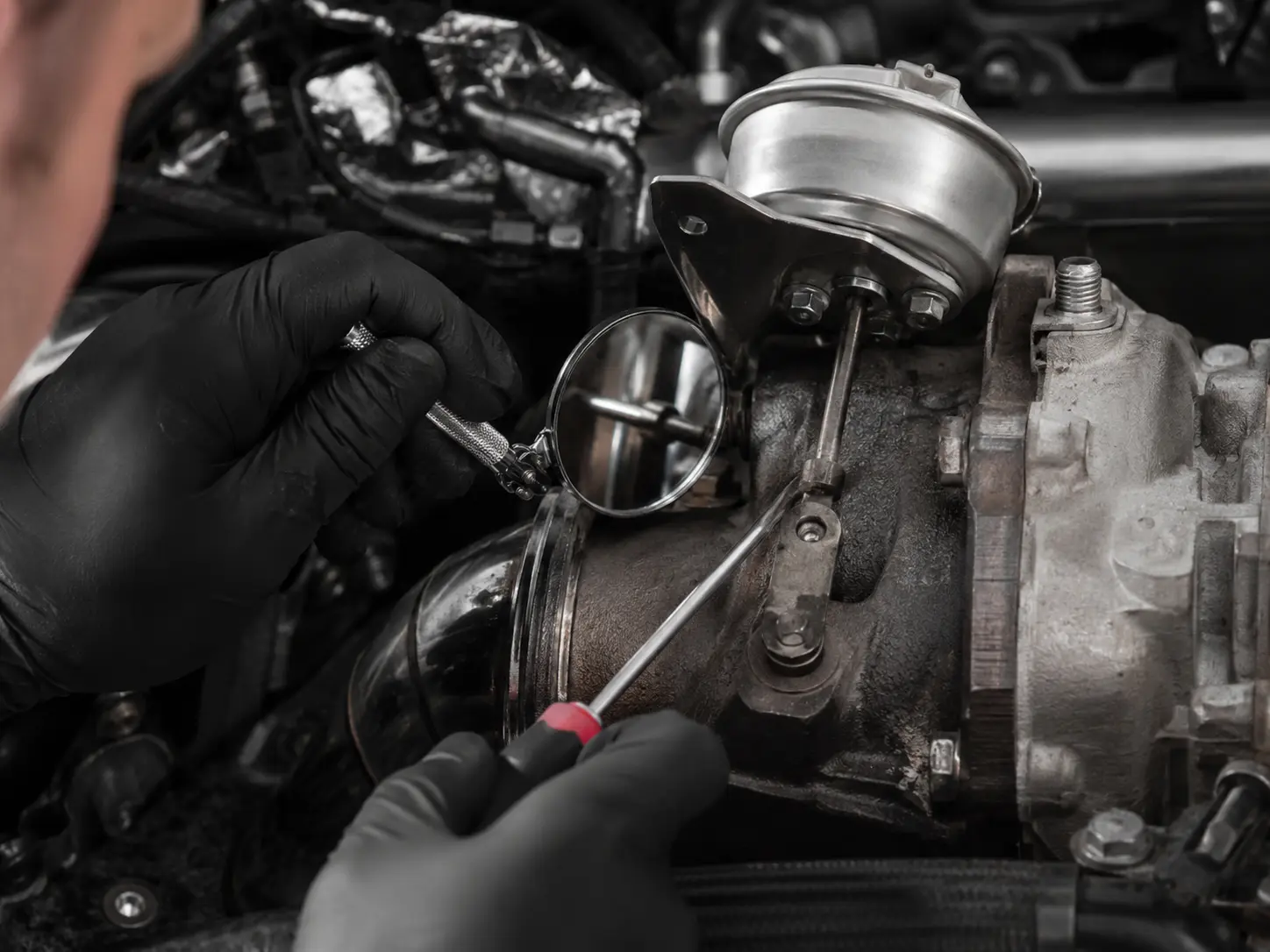
An output command, reported position and observed linkage movement should agree. Binding, excessive play, an electrical failure or a calibration problem can require different parts even when the driver feels the same power loss.
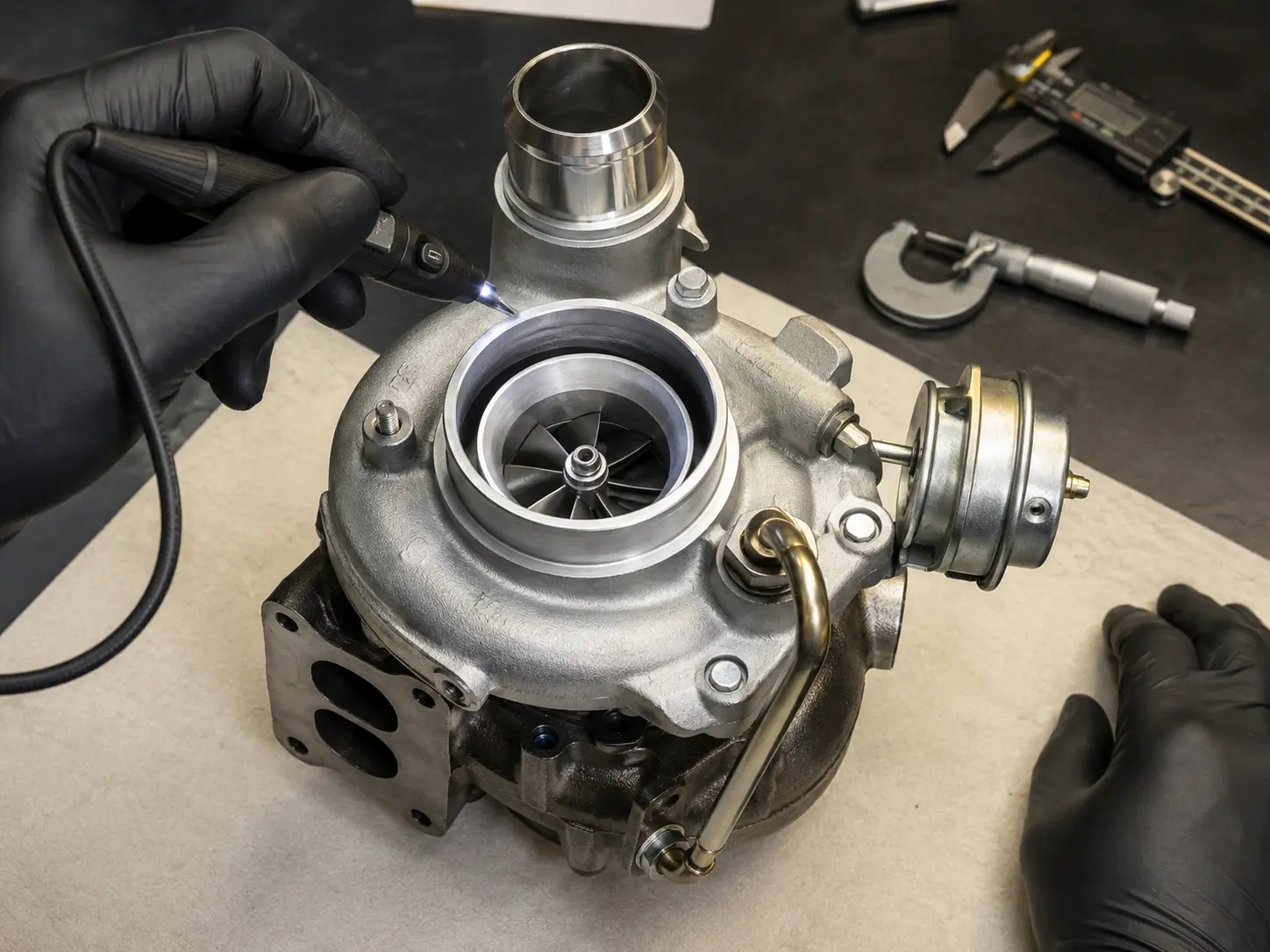
Physical turbo inspection
Wheel contact, blade damage, housing marks, abnormal movement and oil evidence are assessed together. A clean-looking compressor inlet cannot rule out every fault, and a light oil film does not prove seal failure by itself.
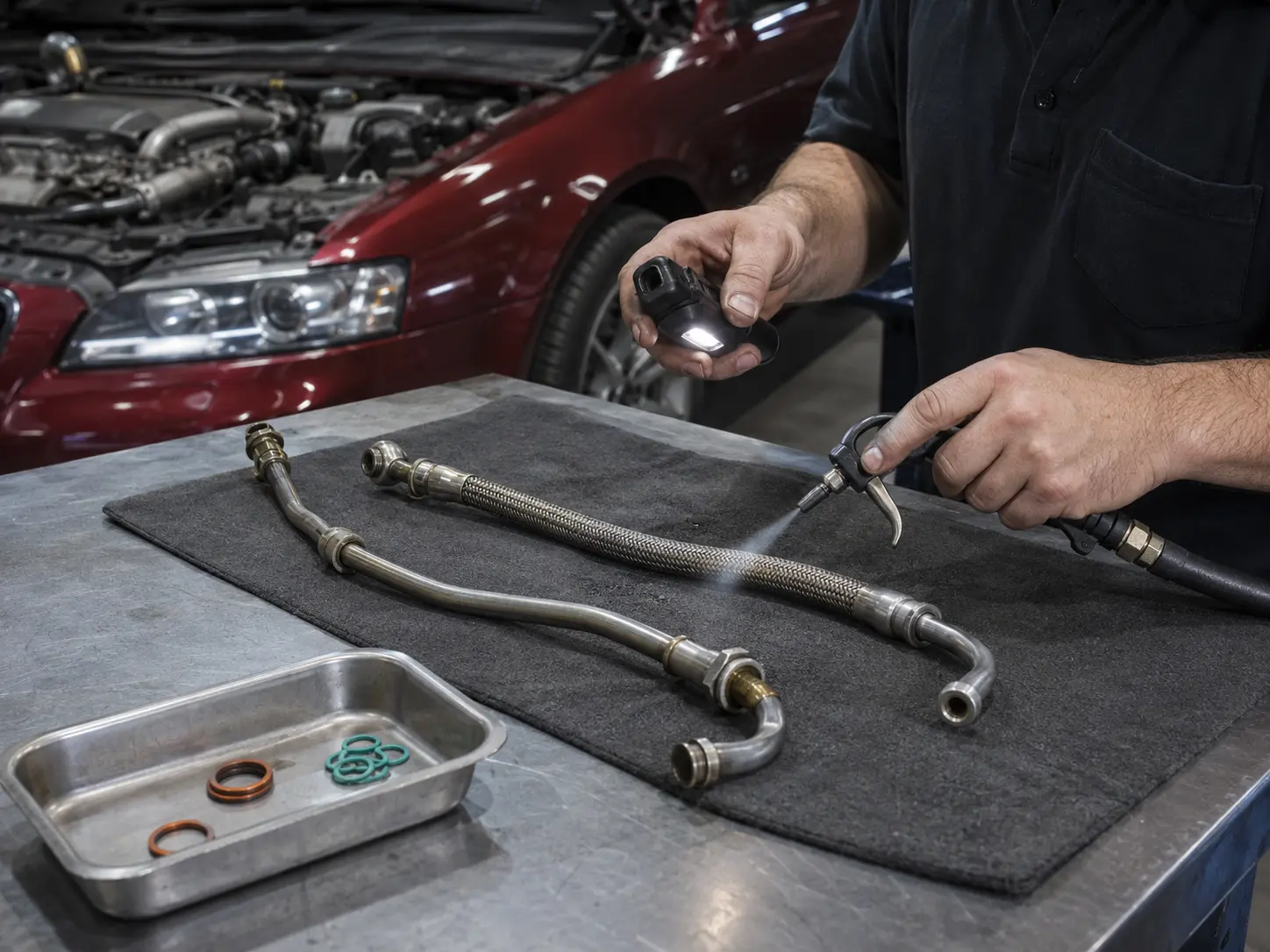
Root-cause oil check
Feed and return lines are checked for condition, restriction and deposits. Correct oil, filter and crankcase-ventilation context matters because a new or remanufactured turbo does not correct an oil-supply or drainage problem on its own.
Engine identity first
TFSI and TDI repairs differ
VIN, engine code and turbo part number are checked before parts are ordered. Audi uses different boost-control hardware, access arrangements and turbo layouts across models and years.
TFSI boost control
A TFSI application may use a wastegate, electronic or vacuum actuation, a diverter valve and engine-specific pressure and airflow strategies. Single and multi-turbo layouts alter access, heat management and the number of oil and coolant connections. The test plan follows the installed equipment rather than a generic petrol-turbo checklist.
TDI airflow control
A TDI application may use variable turbine geometry and a different relationship between boost, exhaust flow, EGR, intake control and particulate-filter condition. Actuator movement, vane control and exhaust restriction can change the diagnosis. A TFSI repair assumption should not be transferred to a TDI engine.
An Audi A4, Q5, A6, S model or RS model can carry very different engine and turbo hardware across generations. The booking team can start the parts and access check when you send the VIN, model year and engine size. The workshop confirms the engine code before approval.
Repair routes after testing
Match the repair to the finding
The quote should show which fault was confirmed, which parts correct it and which related items are included. A turbo replacement is one route, not the default answer to every boost symptom.
| Confirmed finding | Likely repair route | Quote details to check |
|---|---|---|
| Charge-air leak | Repair or replace the split hose, seal, clamp, pipe or leaking intercooler connection, then repeat the pressure test. | Exact failed joint, neighbouring wear, required seals and whether contamination needs cleaning. |
| Sensor or valve fault | Replace a confirmed pressure sensor, diverter valve, boost-control solenoid or repair its wiring and connection. | Test that proved the fault, engine applicability and any basic setting or rescan. |
| Wastegate or actuator fault | Repair or replace the actuator or related mechanism where design and parts support it, or replace the turbo assembly when the item is not separately serviceable. | Linkage condition, calibration requirement, supplied hardware and whether the wastegate itself has excessive wear. |
| Oil, PCV or exhaust cause | Correct feed, return, ventilation, intake, cooling or exhaust-side conditions before deciding whether the turbo also needs work. | Root cause, contamination, line condition, fluids and what is required to protect the repaired unit. |
| Confirmed turbo damage | Install a correctly matched genuine Audi, OE-supplier, reputable aftermarket or professionally remanufactured unit after checking compatibility and cause. | VIN and part-number match, supplied actuator, seals, lines, oil and filter, coolant where applicable, calibration and written warranty terms. |
Parts choices need a fitted comparison
Genuine Audi, an OE-supplier part, reputable aftermarket and professionally remanufactured units are not interchangeable labels. Compare the exact part number, included actuator and hardware, calibration requirement, supplier support, return conditions and written warranty. A cheaper bare unit can become the more expensive route after seals, lines, fluids, labour and calibration are added. A remanufactured unit needs a clear core, component and balancing basis. The workshop checks what the box actually contains before presenting the fitted route.
Quote scope can also include one-time-use fasteners, gaskets, oil and filter, oil-feed or return lines, coolant for water-cooled units, contaminated charge pipes or intercooler cleaning, damaged studs and heat shields. Those items should be named rather than hidden inside a single turbo price.
Workshop evidence route
From complaint to verified boost
A complete documented customer case with approved scan values and repair outcome was not supplied for this page, so no model, engine code, measurement, price or technician result has been invented. Instead, this sequence shows what a genuine boost-system job should record.
The vehicle record starts with the driver’s complaint and the operating condition. It preserves fault context, identifies the decisive pressure, control or physical test, lists the approved repair and closes with the same checks needed to show that the symptom and deviation have changed.
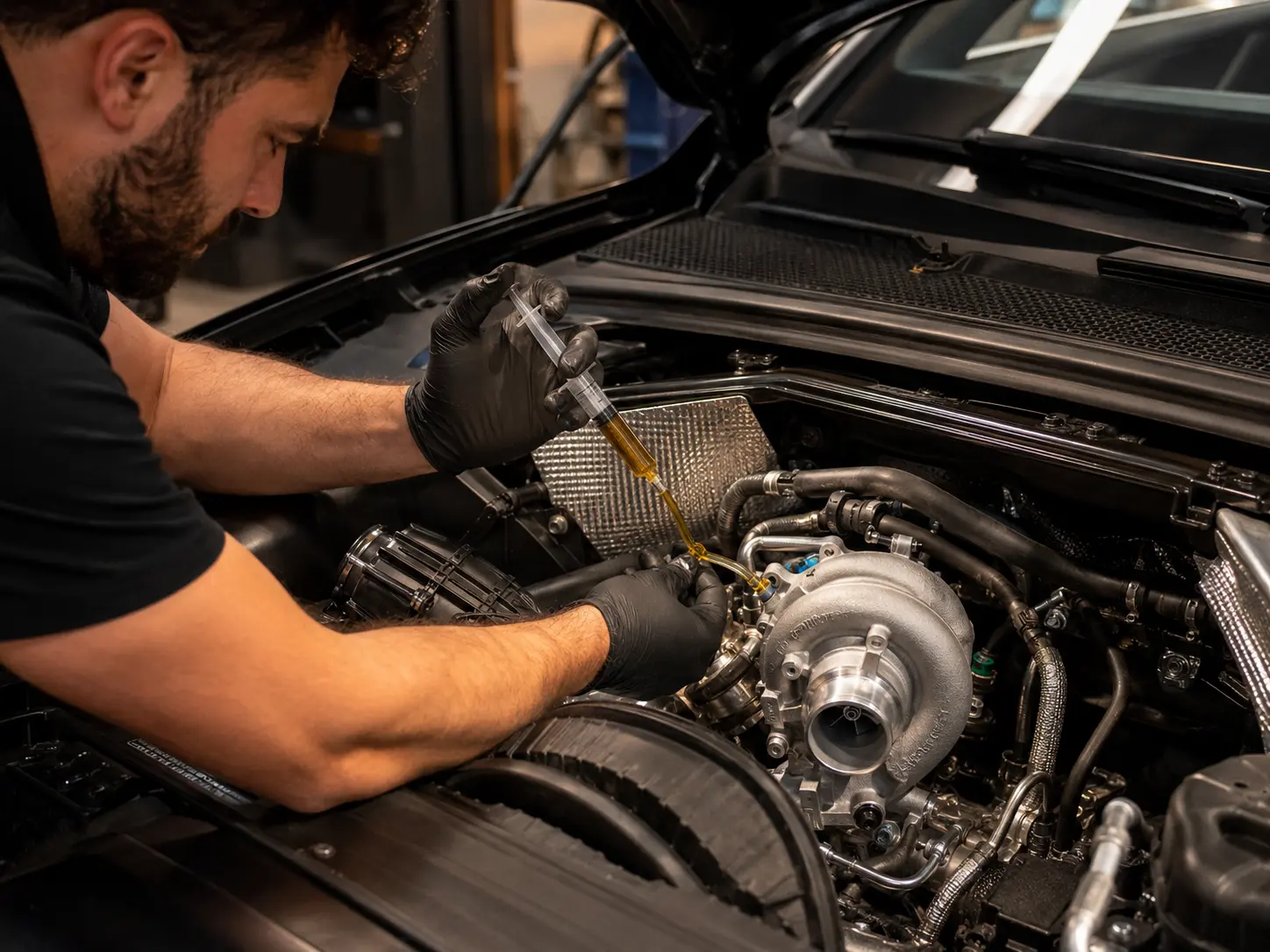
Complaint and conditions
Record power loss, warning wording, smoke colour, noise, oil use and when the change appears. Confirm VIN, engine code, mileage and recent repair or tuning history.
Stored and live evidence
Save relevant faults and freeze-frame context. Compare requested and actual pressure with RPM, load, airflow and actuator data in the applicable test window.
Decisive physical test
Identify the leaking joint, failed command response, abnormal linkage, oil-path problem or physical turbo condition that changes the repair decision.
Approved repair work
List the exact component, seals, lines, fluids, cleaning, calibration and related cause correction. Separate confirmed items from condition-dependent work.
Post-repair verification
Repeat leak checks and the relevant boost comparison, rescan the vehicle, inspect oil and coolant connections, confirm actuator setting where applicable and road-test under controlled conditions.
What changes the quote
Price follows access and evidence
There is no honest universal Audi turbo-repair price. The failed component, engine layout, test time, parts route and work needed to correct the cause can change the fitted scope substantially.
Diagnostic time
An intermittent fault, a symptom that appears only under load, or a system with several related faults can require more capture and testing than a visible split pipe.
Engine access
Turbo position, single or multi-turbo layout, heat shielding and surrounding components determine what must be removed and reinstalled safely.
Failed component
A seal or hose, sensor, diverter valve, actuator, linkage problem and complete turbocharger carry different parts and labour scopes.
Parts basis
Genuine, OE-supplier, reputable aftermarket and remanufactured choices differ in contents, calibration, support and warranty boundaries.
Related findings
Restricted oil lines, PCV faults, contamination, exhaust leaks, damaged fasteners, intercooler oil or underlying engine damage may need correction.
Closing work
Fluids, seals, priming, actuator setting, pressure retest, rescan and road verification belong in the fitted comparison.
Send these details for a faster estimate
- Audi model and year
- VIN or registration details
- Engine size if known
- Mileage
- Fault code or warning wording
- When the power loss, smoke or noise occurs
For wider budgeting questions, the Audi service cost guide explains how diagnosis, access, parts and approval affect a workshop estimate. The vehicle-specific quote is prepared after identity and scope are checked.
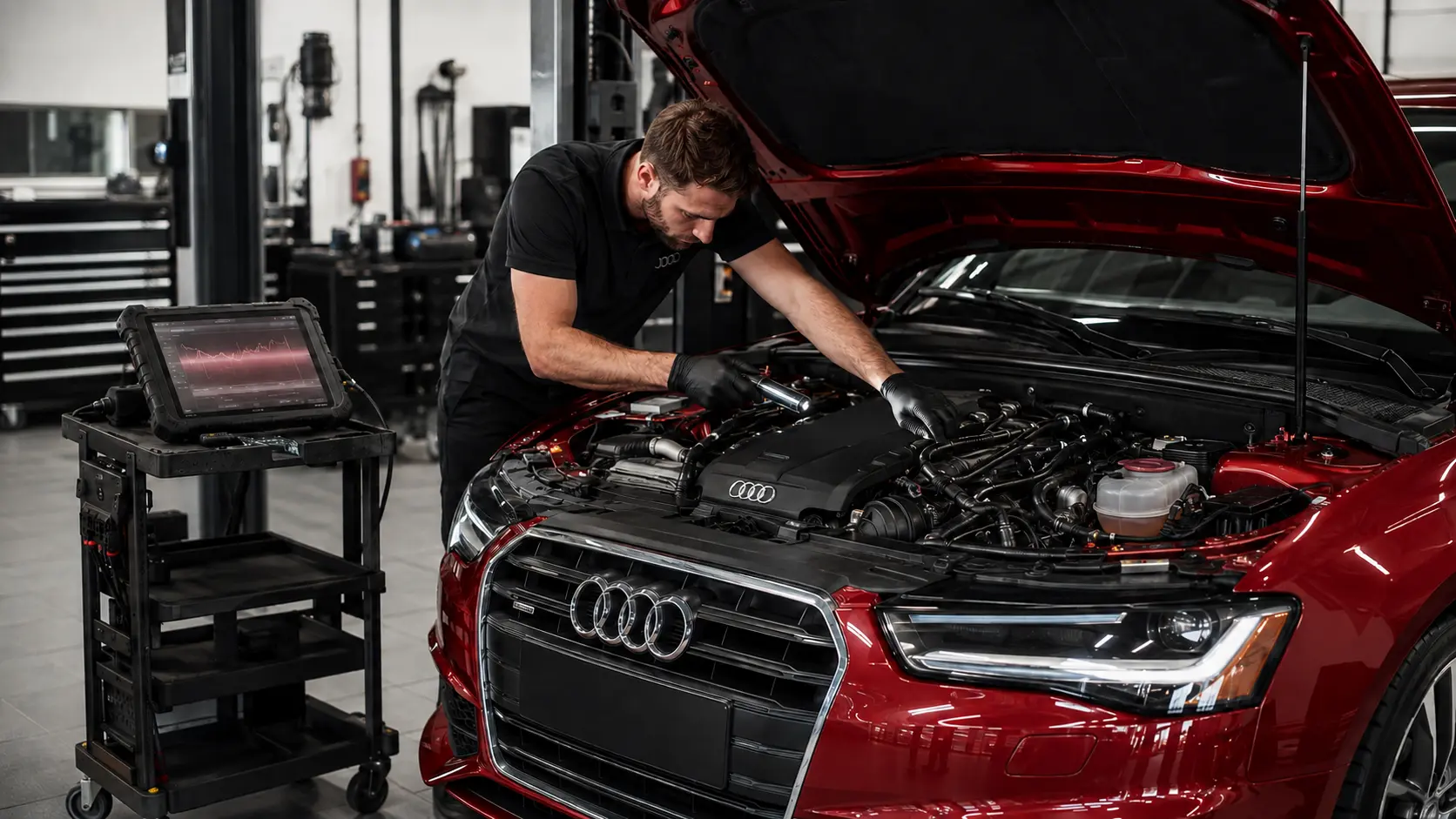
Installation and verification
Protect the repaired turbo system
Replacing a damaged unit without correcting the cause can repeat the failure. Before first start, the charge tract and intercooler are checked for debris or oil where the failure pattern requires it. Oil-feed and return paths are inspected, required seals and fluids are renewed, and the replacement is primed according to the applicable procedure.
- Confirm the VIN-linked unit and supplied actuator or hardware.
- Correct intake, oil, PCV, cooling or exhaust causes identified during diagnosis.
- Clean relevant charge pipes and intercooler contamination where required.
- Install new specified seals, fasteners, oil and filter, and coolant where applicable.
- Prime the turbo and control the first start without unnecessary engine speed.
- Complete basic setting or actuator calibration when the engine requires it.
- Inspect for oil, coolant, exhaust and charge-air leaks.
- Rescan and compare requested and actual boost in a safe repeatable window.
Prevent repeat trouble
Aftercare that matters
Use the Audi or Volkswagen oil approval specified for the exact engine, not viscosity alone. Keep the oil level within the correct range and investigate a rising or falling trend. Follow the service interval agreed for the vehicle’s use and repair history. Delayed oil changes, an incorrectly fitted filter, intake leakage and restricted oil supply can all matter to turbocharger life on applicable engines.
Do not keep forcing repeated full-load acceleration through an unresolved underboost, overboost, smoke or noise concern. A small charge-air leak can become larger, and an oil or physical fault can create wider contamination or damage. Respond to an oil-pressure instruction or severe smoke immediately and follow the exact dashboard and owner-manual guidance for the vehicle.
Keep the estimate, fitted part number, supplier or warranty document, oil specification, line or cleaning work and final test record. After collection, monitor warning lights, smoke, oil and coolant levels, new noise and power delivery. If the original symptom returns, report the operating condition rather than clearing codes or adding parts. For a fresh workshop visit or a second opinion, use the Audi Specialist contact page to prepare the vehicle details.
Focused questions
Audi turbo repair questions
Direct answers to the questions that normally come before boost diagnosis, actuator work or turbo replacement.
Does P0299 mean the turbo needs replacement?
No. P0299 describes an underboost condition on applicable systems. Charge-air leaks, wastegate play, actuator or control faults, sensor plausibility, exhaust conditions and the turbocharger itself can produce insufficient pressure. The code becomes useful when its freeze-frame and live pressure behaviour are connected to a pressure test, output test or physical finding.
Can a boost leak feel like a failed turbo?
Yes. Air that escapes through a split hose, seal, clamp or intercooler connection can reduce acceleration and trigger limp mode or an underboost fault. Some leaks open only when the tract is pressurised, so the car can idle normally and still fail under load. A regulated pressure or smoke test is usually more decisive than visual inspection alone.
Can an Audi turbo actuator be replaced separately?
Sometimes, but it depends on the engine, turbo design, parts availability and whether the actuator can be calibrated correctly. On another application, the actuator may be supplied with the turbo or the wastegate mechanism itself may be worn. The workshop checks command, position and mechanical movement before deciding which route is supported.
What causes blue smoke after idling or acceleration?
Blue smoke suggests oil is entering the combustion or exhaust path, but the source is not automatically the turbo. Turbo oil leakage, restricted return, crankcase-ventilation problems, engine wear and residual oil in charge pipes can overlap. The timing of the smoke, oil-use trend and intake and exhaust-side inspection help narrow it.
Is it safe to drive with underboost or turbo noise?
That depends on severity and the accompanying signs. Do not continue for a red oil-pressure instruction, heavy smoke, rapid oil loss, harsh mechanical or siren-like noise, severe shaking or a major sudden power loss. For a stable warning with mild power loss, avoid hard driving and ask the workshop what information is needed. Follow the exact dashboard message and owner manual.
Should the intercooler and pipes be checked after turbo failure?
Yes, when the failure pattern could place oil, debris or damaged material into the charge tract. The scope depends on what failed and where contamination travelled. Pipes, seals and the intercooler should also be checked for the leak or restriction that contributed to the original fault. Cleaning or replacement should be based on the finding.
What belongs in a turbo replacement quote?
The quote should identify the exact turbo and parts basis, actuator or calibration status, seals, gaskets, one-time-use hardware, oil and filter, coolant where applicable, oil-line work, charge-system cleaning, labour and verification. It should also explain the diagnosed cause and any condition-dependent work that could change the total.
How is the repair checked before handover?
The relevant leak or control test is repeated, oil and coolant connections are inspected, the vehicle is rescanned and actuator setting is confirmed where applicable. Requested and actual boost are compared in a controlled operating window, and the original symptom is checked without abusing the vehicle. The final record should show what changed.
Prepare the booking
Send the symptom before parts are chosen
Tell us what happens, when it happens and what the car has already shown. Audi Specialist can check the likely diagnostic route and the information needed for a vehicle-specific estimate.
See the main Audi repair services if the symptom belongs to another system.
Audi Turbo Repair
Turbo, oil and cooling repairs
These pages extend the decision path without replacing diagnosis or repeating the same service intent.