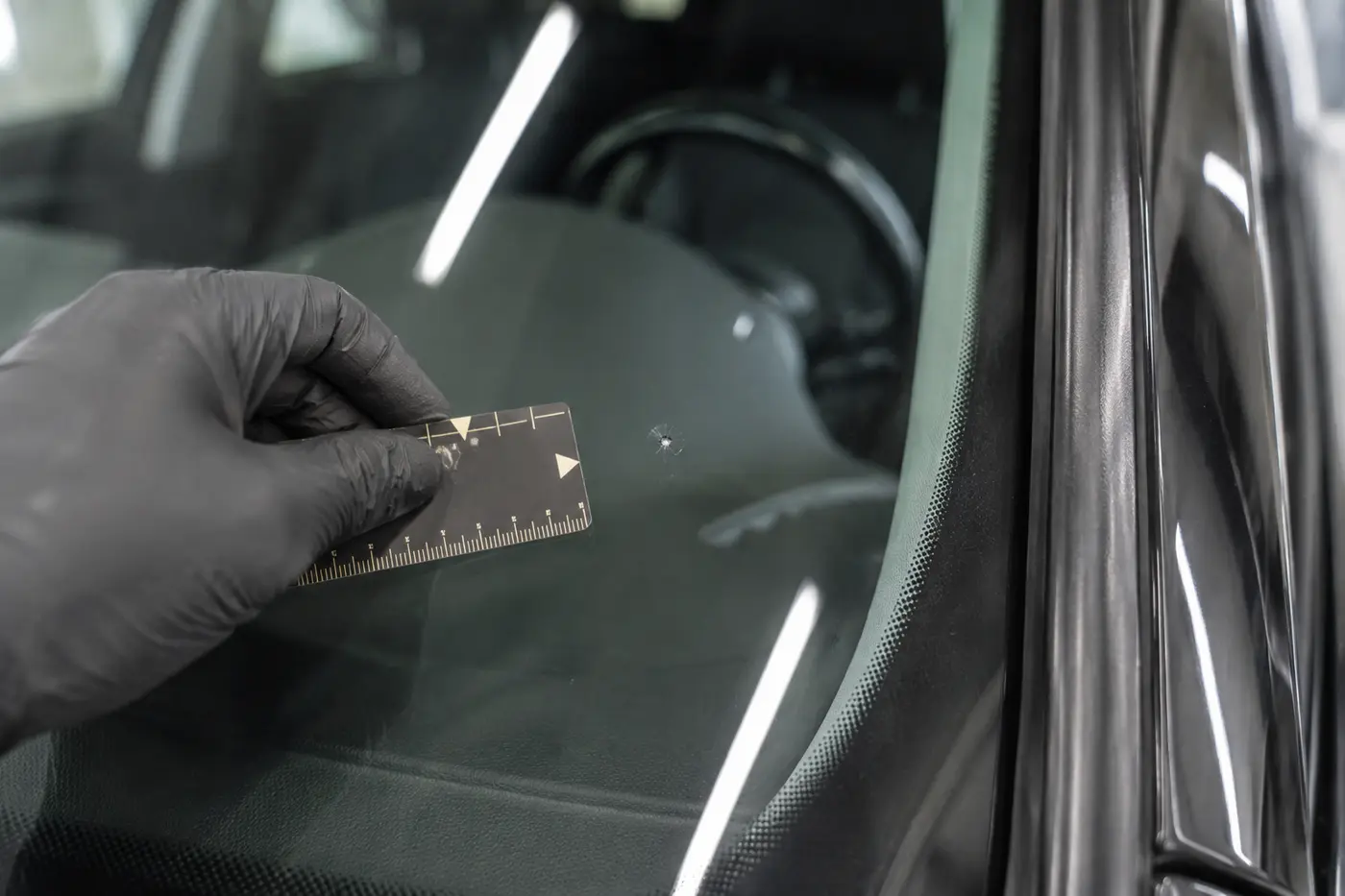
Exact glass before parts
An Audi windshield quote starts with the vehicle, the markings on the installed glass and the equipment around the mirror. A small, clean chip may still qualify for resin repair. A crack, edge break, optical obstruction or damaged laminated layer can require replacement. The correct pane must match any acoustic, solar-control, heated, head-up display, antenna, rain-sensor or camera provision fitted to that exact car.
We identify the glass and decide whether repair remains sound before pricing the screen, fitting parts and any required system checks. Camera calibration is included or separately coordinated only when the vehicle procedure requires it.
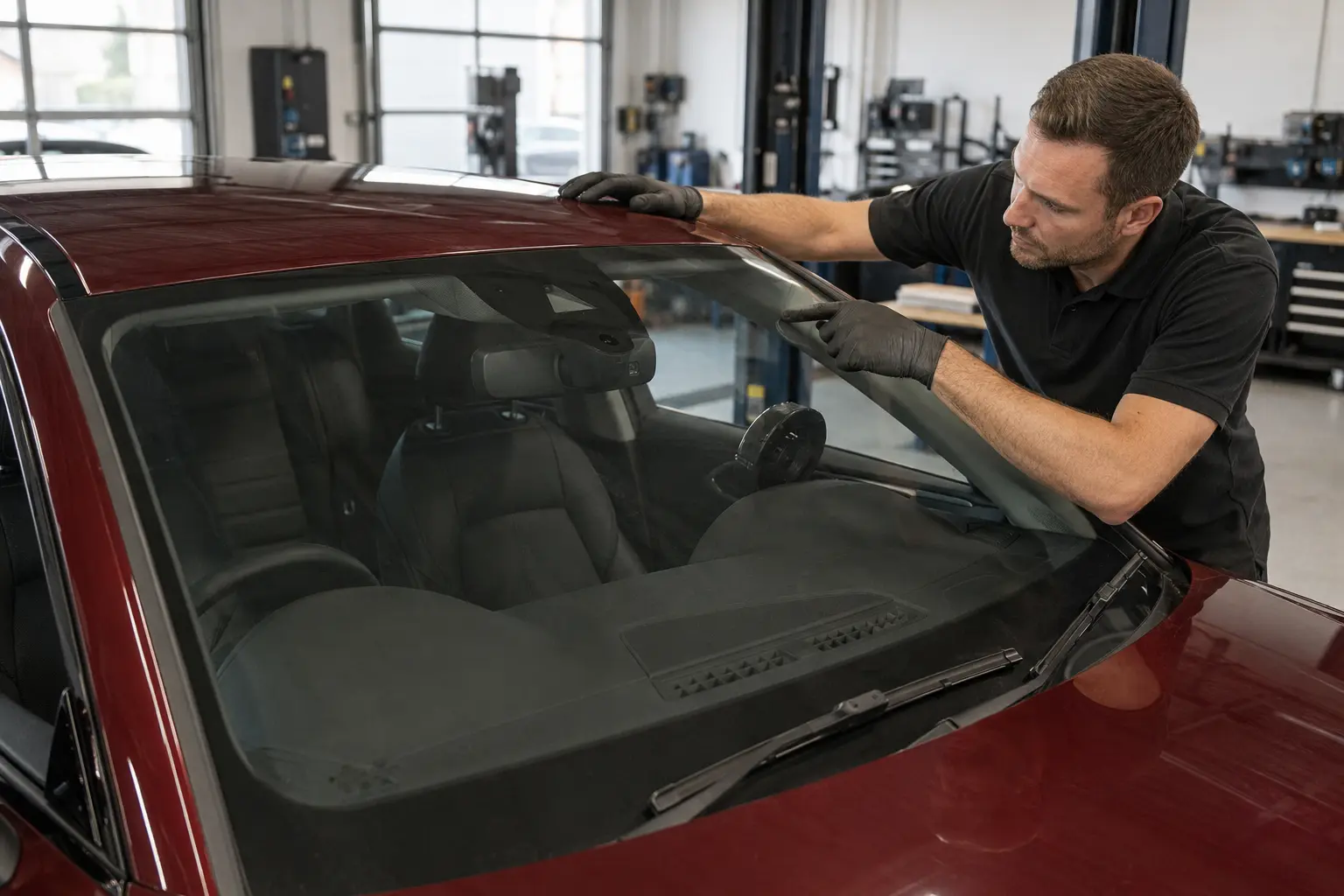
Photo-led first assessment
Tell us what happened
Photos help us route the enquiry, but they do not reveal every glass feature or the condition of the bonding aperture. Do not press a damaged screen or lean across broken glass to take a picture.
Send three useful views
- One full-windshield photo from outside.
- One close photo with a coin or ruler beside the damage.
- One clear view of the mirror, camera and sensor housing.
Repairability comes first
Repair or replace
Resin repair can stabilise suitable local damage and improve its appearance. It does not return the glass to unused condition, may remain visible and cannot carry a promise that it will never spread. The decision uses the break, its position and the surrounding laminated glass rather than one coin-size rule.
| Visible condition | Repair may be considered | Replacement is more likely | Check first |
|---|---|---|---|
| Small clean chip | Local, stable and free from disqualifying depth or contamination. | The break reaches deeper layers, sits at the edge or distorts the main view. | Impact type, depth, position and age. |
| Star or bullseye break | Legs are limited and the repair tool can work without worsening the break. | Branching is extensive, contaminated or near a stressed edge. | Leg length, pressure response and inner-layer condition. |
| Short crack | Professional assessment supports a stable local repair. | It is spreading, branched, contaminated or optically intrusive. | Ends, direction, depth and movement. |
| Edge crack | Only after a specialist assessment supports it. | Edge involvement affects the stressed perimeter or bond area. | Distance to edge and aperture condition. |
| Driver’s main view | Only where visibility and local requirements allow a sound result. | Residual optical disturbance would remain in the primary viewing area. | Driver eye line and likely repair mark. |
| Camera or sensor area | Only if the exact optical area and procedure allow it. | The break interferes with the viewing zone, bracket or sensor function. | Installed equipment and specified optical field. |
| Inner-layer damage | Surface-only damage has been confirmed. | More than the outer layer or laminate is affected. | Layer, moisture and optical distortion. |
| Multiple or old impacts | Each break is independently suitable and the overall glass remains sound. | Pitting, scratches, earlier repairs or multiple breaks reduce practical value. | Whole-screen condition. |
| Shattered or accident-damaged glass | Not a normal resin-repair route. | Replacement and possible body-opening assessment are required. | A-pillar, roof, scuttle and aperture geometry. |
Choose the safe route
How urgent is it
Stop and assess
Arrange assessment if the view is materially obstructed, glass is loose or shattered, a crack is spreading across the driver’s view, the opening is distorted or water is reaching electrical equipment.
Limit driving
Book promptly for an edge crack, growing branches, camera-area damage, visible movement, or wind noise and leakage after an earlier installation.
Send clear photos
A small stable mark away from the edge and main view can be routed for repairability assessment. A photograph cannot provide a road-safety or legal guarantee.
Part matching
Identify the exact glass
A model name is not a glass specification. Cars sharing an A4, Q5 or e-tron badge can differ by generation, production split, market and options. VIN data helps, but it is cross-checked with the installed markings and physical equipment because earlier repairs or retrofits may have changed what is on the car.
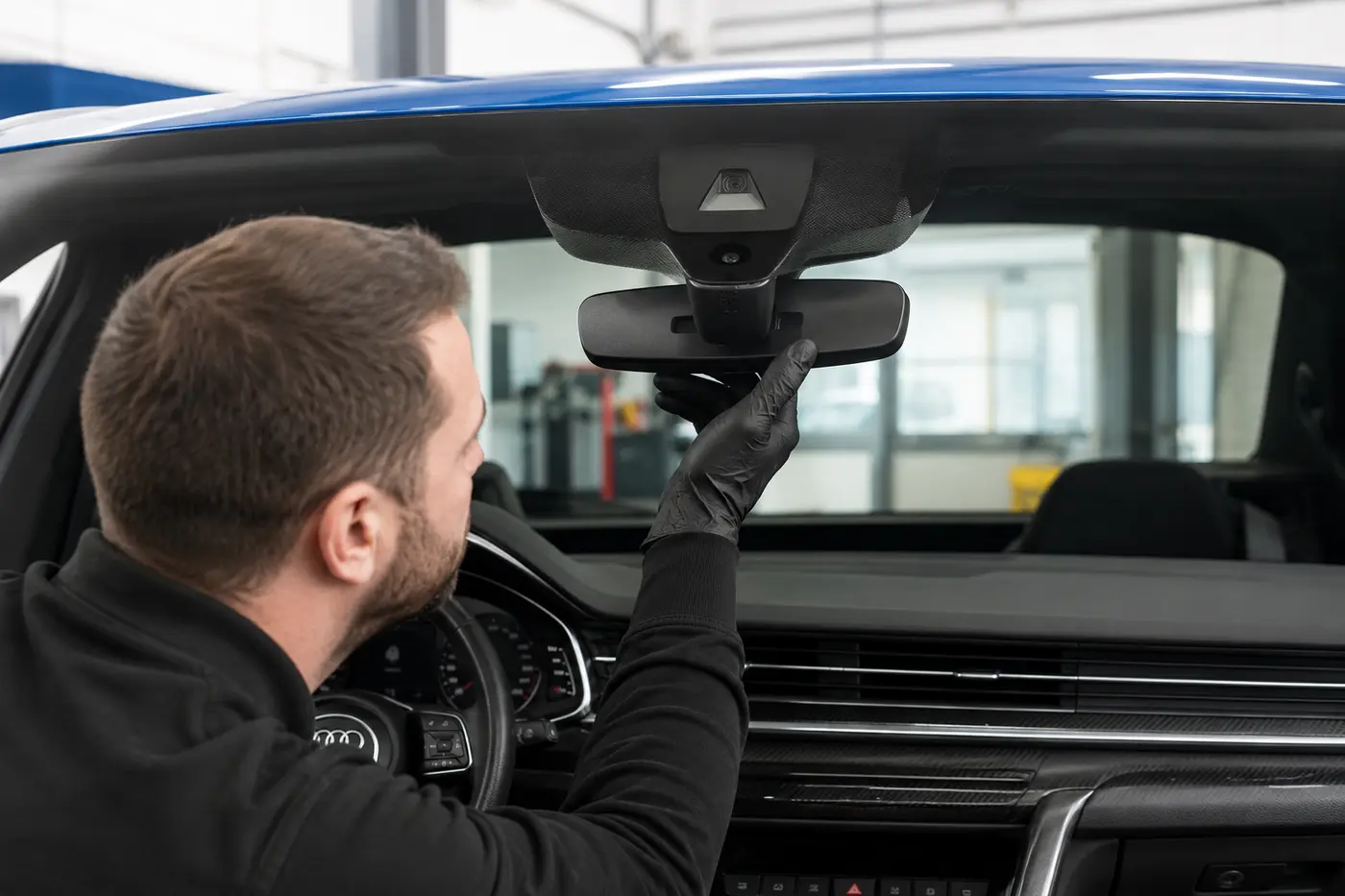
One pane, several functions
What the windshield may contain
The front windshield is laminated safety glass for the normal Audi applications covered here. Optional layers and printed or mounted features change the correct part. A pane that fits the opening can still be wrong for the vehicle.
Outer glass, interlayer and inner glass
The laminate holds the construction together after an impact. Damage can affect the outer surface, the inner sheet or the interlayer, which changes repairability.
Acoustic and solar control
An acoustic interlayer targets cabin noise. Solar-control or heat-reflective treatments manage energy through the glass. Neither label can be assumed from tint alone.
Head-up display optics
HUD-compatible glass uses a specified optical construction to control ghosting and double images. A plain pane is not a safe price substitute where HUD glass is specified.
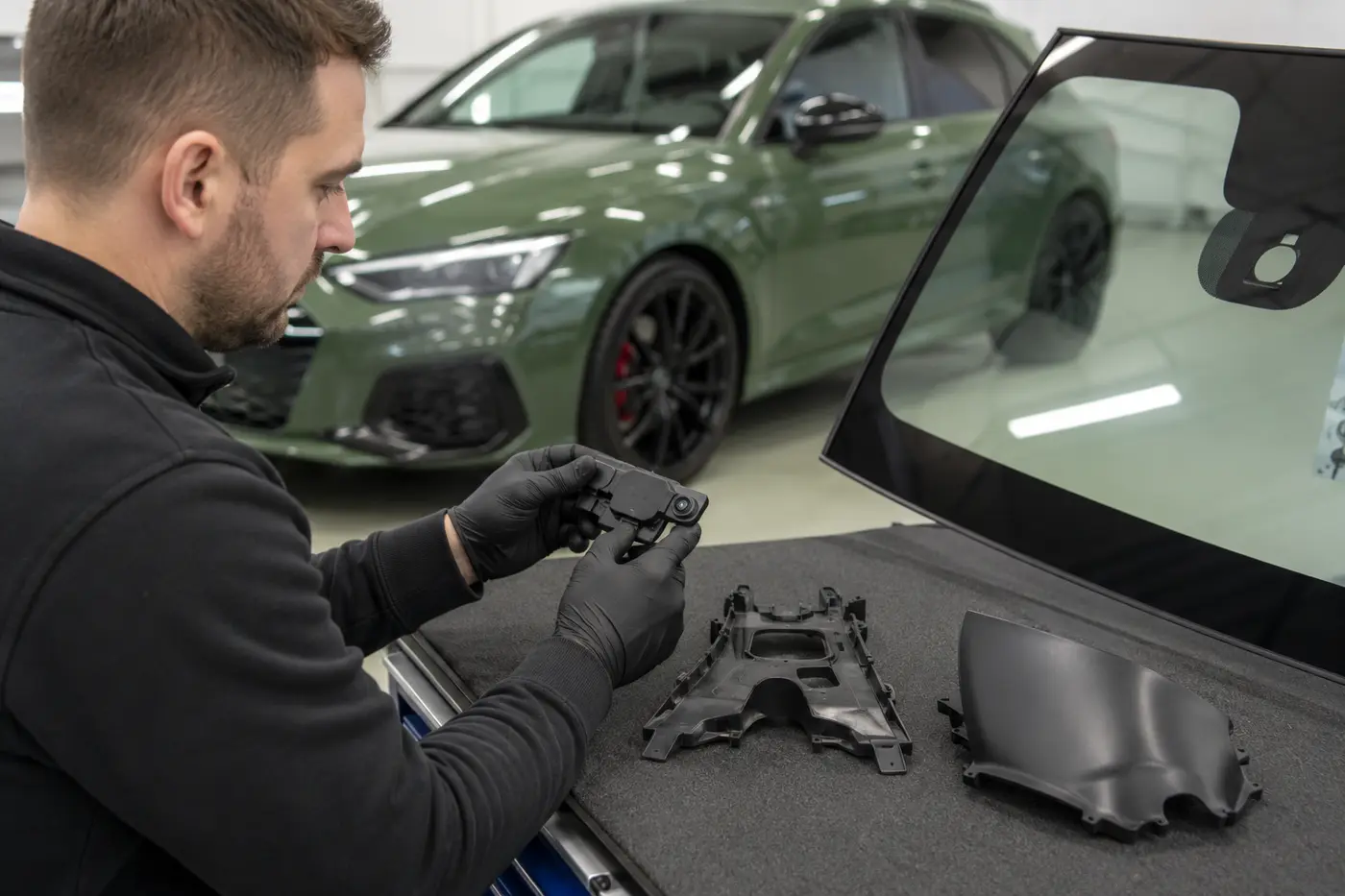
Cameras, sensors and mirror
The bracket, optical window, sensor pad, mirror mount and covers must suit the exact vehicle. Transfer, coding and calibration are separate decisions.
Part-category decision
Compare glass choices
The label on a quote should tell you what you are buying. Audi-branded, recognised replacement-market and quality aftermarket panes are not interchangeable terms.
Genuine Audi glass
- Meaning
- An Audi-branded pane selected through the vehicle details and current part supersession.
- Strength
- Clear brand and catalogue route for the stated specification.
- Trade-off
- Usually the highest purchase price, with supply timing and related trim priced separately.
- Poor value when
- The customer pays the premium but the estimate still omits required features, fitting parts or calibration.
Recognised OEE or OE-quality
- Meaning
- A traceable replacement-market pane from a recognised manufacturer, confirmed by exact catalogue and markings.
- Strength
- Can balance feature compatibility, optical quality and price.
- Trade-off
- A manufacturer’s reputation does not prove that this pane was the factory-installed Audi part.
- Poor value when
- The actual part lacks the correct bracket, HUD optics, acoustic layer or other listed feature.
Quality aftermarket
- Meaning
- A new non-Audi pane with a traceable supplier and verified construction for the exact application.
- Strength
- May reduce purchase cost on suitable standard specifications.
- Trade-off
- Curvature, optical quality, printed areas, brackets and warranty need closer checking.
- Poor value when
- An unknown white-label pane is treated as equivalent without documentation. Used bonded glass is not our normal budget recommendation.
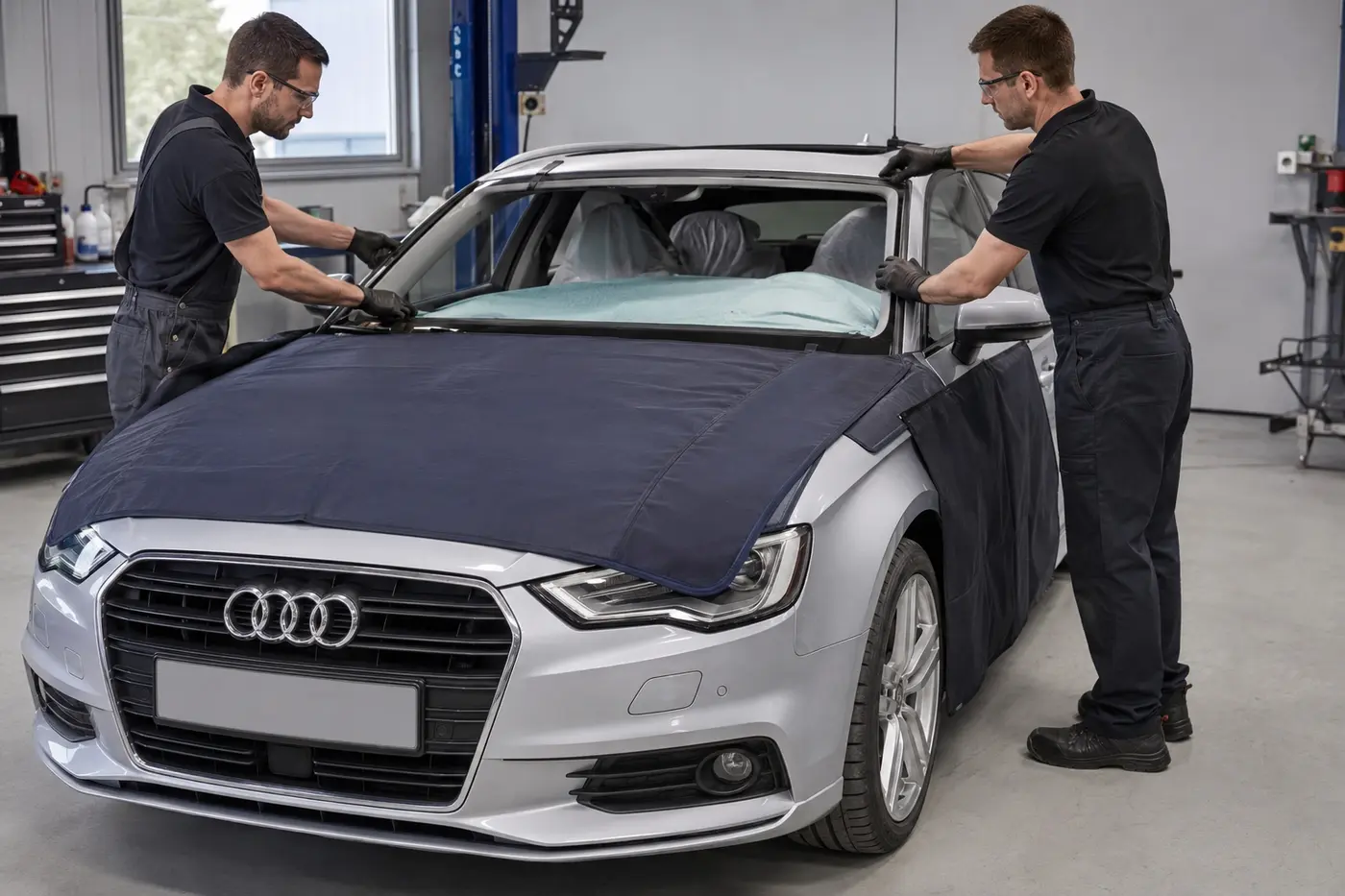
Controlled installation
Replacement process
- Record the starting condition
Photograph the damage, previous marks, warnings and fitted equipment. Confirm the customer’s leak, noise or visibility complaint.
- Confirm the approved pane
Cross-check the vehicle, glass markings, catalogue part, optical functions, brackets, mouldings and calibration route.
- Protect and remove
Protect paint, bonnet, dashboard and trim. Remove only the necessary wipers, cowl, covers and mouldings before cutting the bonded glass by the suitable method.
- Inspect the aperture
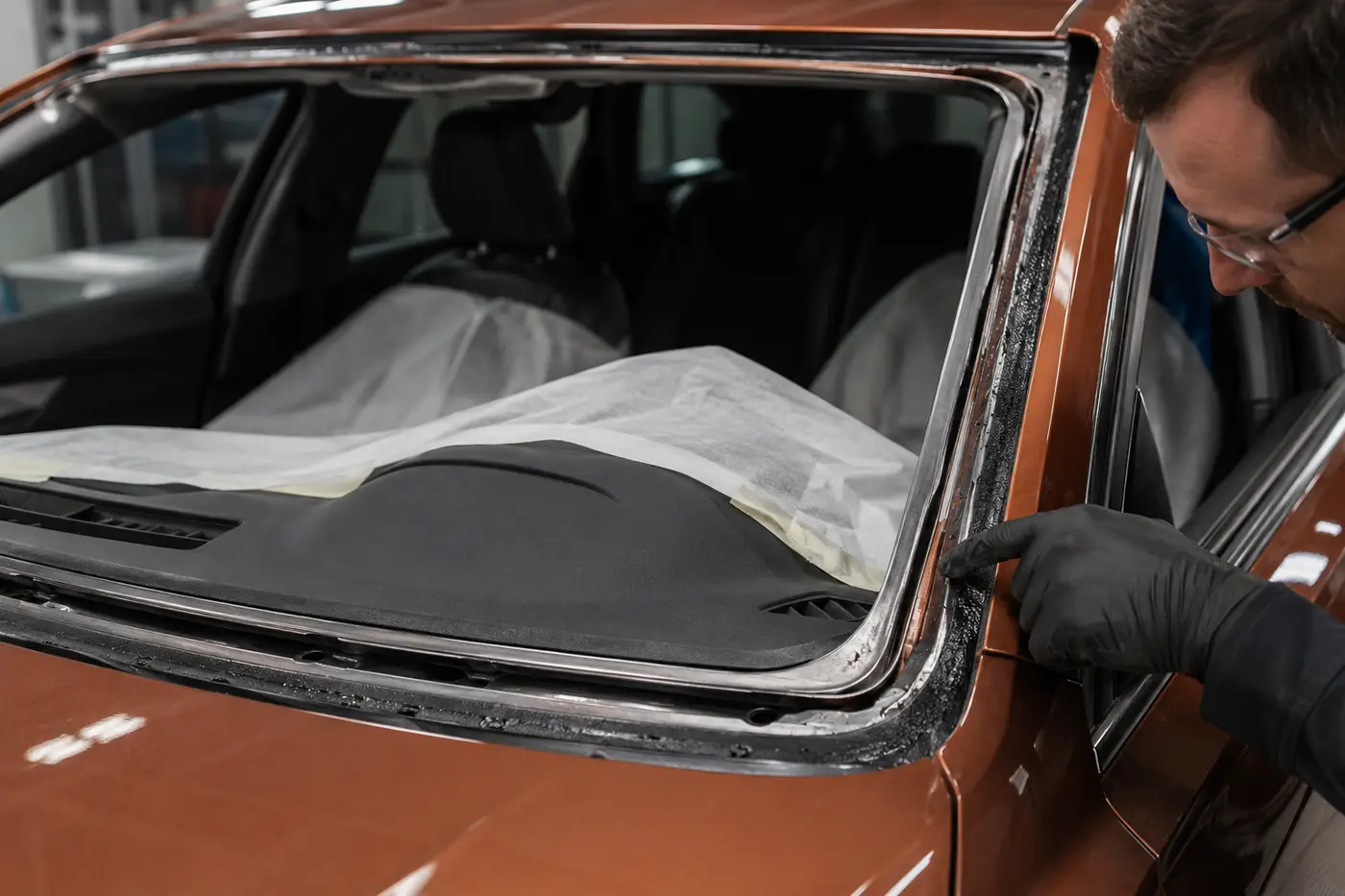
Check old adhesive condition, paint damage, corrosion and accident distortion. Material corrosion or a deformed opening moves to body repair before a new pane is bonded.
- Prepare compatible surfaces
Trim and prepare the bonding surface and glass using the primer, activator and adhesive-system instructions applicable to the selected materials.
- Position the glass
Apply the correct bead and place the verified pane at the required setting height without contaminating the bond.
- Refit equipment
Secure mouldings, clips, cowl, mirror, sensor, camera and covers that belong to the approved scope.
- Observe cure conditions
The safe drive-away instruction follows the actual adhesive, temperature, humidity, vehicle arrangement and product data. One universal time is not published.
- Verify the result
Complete the required scan, coding, basic setting, calibration or coordinated specialist step, then check trim, wipers, sealing, wind noise and applicable functions.
Do not conflate the steps
Camera, sensor and HUD route
A camera transfer moves the existing camera to the correct bracket and reconnects it. A rain or light sensor also needs the correct mount and, where applicable, an uncontaminated optical gel or coupling pad. These actions are not calibration.
Coding or basic settings initialise or configure a component only when the exact procedure calls for it. Static calibration uses a specified workshop setup and targets. Dynamic calibration follows the prescribed road procedure and conditions. Some applications use both. A post-scan checks fault status but does not prove geometric calibration by itself.
The workshop has not provided application-by-application proof of in-house Audi camera calibration for this page. The estimate therefore identifies the requirement and prices calibration as a separately approved, externally coordinated step with a suitably equipped provider when the exact vehicle procedure requires it. The completion record should state what was performed. HUD checking or adjustment is also priced only for an applicable, verified procedure.
Pre-existing alignment, suspension, tyre, voltage, camera, module or network faults can prevent a normal completion and belong on a separate Audi Diagnostics route. A warning-free dashboard alone is not a calibration result.
Trace the water path
Leaks and wind noise
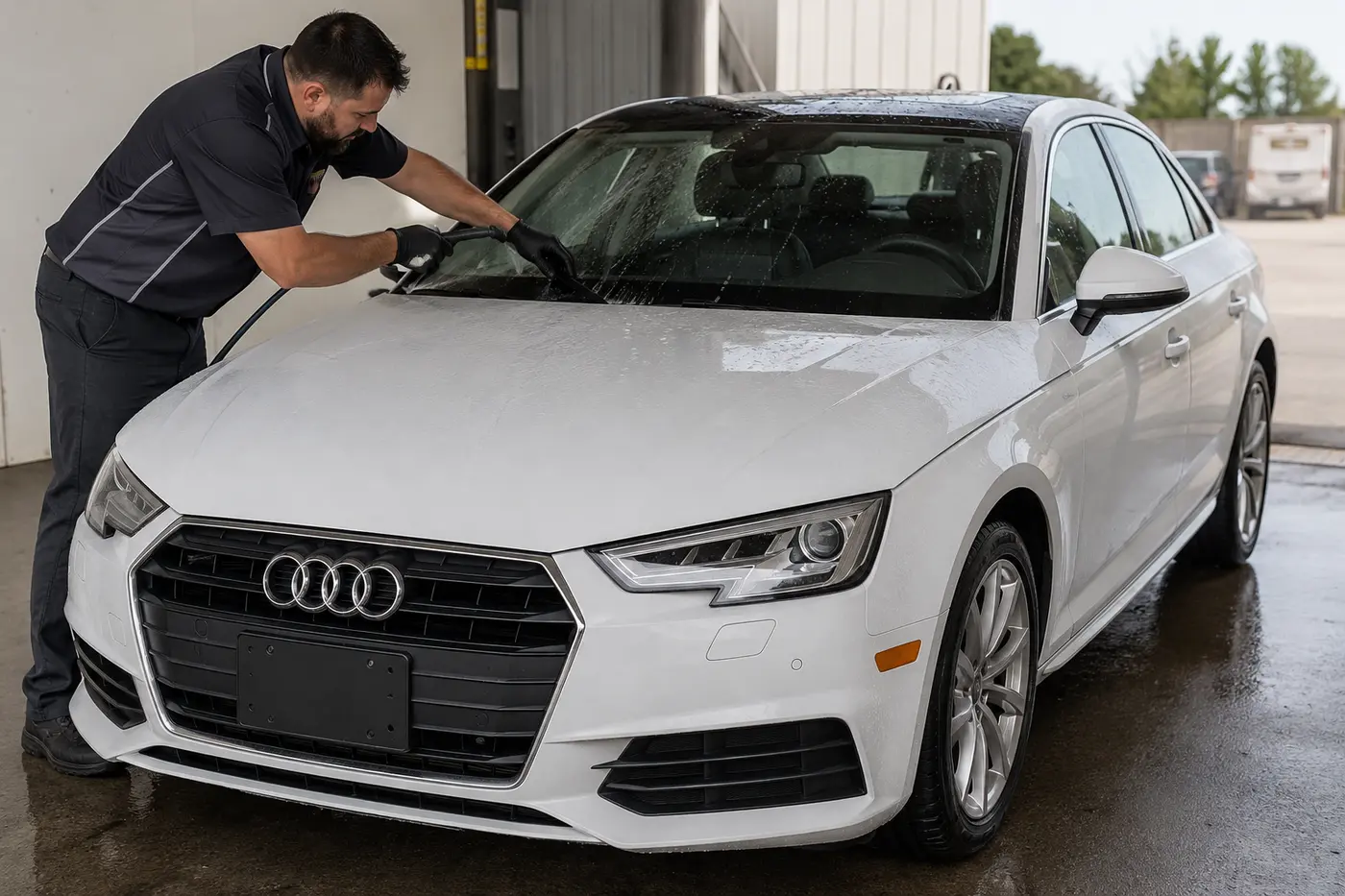
Water can travel behind trim before it appears in the cabin. A wet footwell does not prove that the windshield bond has failed, and resealing the visible edge can hide rather than solve the source.
Glass and bond
Bead discontinuity, incorrect setting height, damaged moulding, loose clips or previous removal can affect sealing or airflow.
Drainage and cowl
A cowl, plenum or blocked drain can route water toward the cabin while the glass bond remains intact.
Body opening
Roof, sunroof, body seam, aperture corrosion or earlier accident distortion can move the source beyond a windshield-only repair.
Other sources
Door, mirror or roof-rail noise and HVAC condensate can be mistaken for windshield noise or leakage.
What changes the repair
If corrective removal is necessary, the estimate should state the risk that the existing glass may break, whether new mouldings are required and how aperture damage will be approved. Minor, permitted surface preparation is different from corrosion repair or structural correction.
A distorted A-pillar, roof, scuttle or opening needs a separate Audi Body Shop and Accident Repair assessment; it is not treated as part of a routine windshield installation. Water-damaged wiring or modules move to Audi Electrical Repair.
Policy questions
Insurance or self-pay
Check whether glass damage is covered, what excess applies, whether repair must be authorised before replacement, which glass categories the policy allows, and whether a required camera-calibration step is included. An insurer may nominate a provider or request photographs and approval before work starts.
This page does not claim direct billing, cashless approval or insurer relationships. Acceptance, excess, depreciation, glass category and calibration authorisation remain policy and insurer decisions.
Small damage
When self-pay may be simpler
An eligible chip repair can cost less than a policy excess, but that comparison only matters after repairability has been checked. A cheap repair should not be used to preserve a screen whose depth, position or optical effect makes replacement the sound route.
For replacement, compare the full installed scope rather than the pane price alone. Adhesive, trim, sensor transfer, calibration and VAT can change which quote is genuinely lower.
Approval control
Keep variations visible
Photos and catalogue data can support a tentative estimate. Removal may expose damaged clips, an incorrect earlier pane, corrosion or accident distortion. The workshop should stop, document the finding, revise the written scope and obtain approval before extending the job.
Tentative installed bands
Audi windshield prices
These September 2026 planning ranges include 5% UAE VAT where a fitted route is described. The Federal Tax Authority still shows a 5% VAT basis. They are not a final quote. Final cost depends on the VIN-matched glass specification, current availability, access condition and any separately coordinated calibration route confirmed for the vehicle.
| Service route | Tentative range | Main assumption and inclusion | Main variables or exclusions |
|---|---|---|---|
| Damage and glass-specification assessment | AED 100–300 | Visual check and initial identification. | No removal, glass or calibration. |
| One eligible small chip resin repair | AED 150–350 | One local repair with realistic cosmetic limits. | Edge, optical-area and multi-layer damage excluded. |
| Additional eligible chip, same visit | AED 75–200 each | Same pane and setup. | Each break must qualify separately. |
| Complex repairable local damage | AED 300–700 | Inspection supports resin repair. | No promise of invisible result. |
| Wind-noise or water-ingress diagnosis | AED 200–500 | Source diagnosis before removal. | Trim, body and electrical repair additional. |
| Controlled leak test | AED 150–350 | Defined test area and normal access. | Extended dismantling additional. |
| Minor moulding or clip correction | AED 200–750 | No windshield removal. | New pane and aperture work excluded. |
| Corrective bonded-glass removal route | AED 700–1,800 | Feasibility checked first. | Glass-breakage risk and replacement pane separate. |
| Standard laminated quality aftermarket windshield fitted | AED 1,200–2,400 | Plain compatible pane, labour and adhesive. | Special features, trim and calibration excluded. |
| Recognised OEE or OE-quality windshield fitted | AED 1,800–3,800 | Exact catalogue match at standard feature level. | High-specification optical features additional. |
| Acoustic or solar-control windshield fitted | AED 2,200–4,500 | Feature-compatible glass and normal fitting. | HUD and camera calibration separate unless listed. |
| Rain or light-sensor compatible windshield fitted | AED 2,200–4,500 | Correct bracket or optical area. | Failed sensor, coding and calibration additional. |
| Forward-camera compatible OEE windshield fitted | AED 2,700–5,500 | Correct camera bracket, labour and adhesive. | Calibration separately stated. |
| Head-up-display compatible windshield fitted | AED 3,000–6,500 | Correct HUD optical specification. | Projection adjustment and calibration additional. |
| Heated or multi-feature windshield fitted | AED 3,200–7,500 | Verified feature combination. | Exact part and supply route dominate price. |
| Genuine Audi windshield fitted | AED 4,000–9,000+ | Audi-branded VIN-matched pane and normal fitting. | Features, availability, trim and calibration vary widely. |
| Removal and refitting labour when separate | AED 550–1,200 | Normal access. | Complex trim or previous damage additional. |
| Adhesive, primer and consumables when separate | AED 250–550 | Compatible system and normal preparation. | Aperture repair excluded. |
| Mouldings, clips and retainers | AED 150–700 | Common associated pieces. | Exact part number and reuse rule vary. |
| Cowl panel or associated trim | AED 400–1,800 | One compatible part and ordinary access. | Multiple trim pieces additional. |
| Sensor gel pad and correct refitting | AED 150–450 | Sensor remains serviceable. | New sensor or coding excluded. |
| Rain or light sensor replacement | AED 600–1,800 | Confirmed sensor fault. | Diagnosis, coding or unrelated wiring additional. |
| Mirror, camera cover or mounting hardware | AED 250–1,200 | Exact local hardware. | Camera or module excluded. |
| Pre-installation or post-installation scan | AED 250–650 | Relevant modules and recorded result. | Repair and calibration separate. |
| Forward-camera calibration when required | AED 600–1,800 | Externally coordinated for the exact applicable process. | Static, dynamic or combined need changes price. |
| HUD or projection adjustment when required | AED 500–1,500 | Verified applicable procedure. | Parts or unrelated display fault excluded. |
| Minor aperture preparation | AED 300–900 extra | Limited approved preparation. | Structural work or material corrosion excluded. |
| Aperture corrosion or body correction | AED 1,000–5,000+ | Body-shop route after inspection. | Final price depends on extent and geometry. |
| Electrical diagnosis after water ingress | AED 300–1,200 | Fault isolation. | Harness and module repair additional. |
| Recovery within Dubai when unsafe | AED 250–800 | Location and vehicle condition confirmed. | Complex access or specialist transport can vary. |
Planning arithmetic
Worked service examples
These are not customer jobs. Each shows why the same Audi model can produce a different estimate after its glass and damage are identified.
Eligible local chip
Assume one clean chip away from the edge, primary view and camera area. Assessment at AED 100 plus resin repair at AED 250 gives an indicative total of AED 350 including VAT. A deeper layer, contamination or visible spreading changes the route to replacement.
Standard OEE pane
Assume a recognised OEE pane at AED 2,300, normal labour and adhesive included, plus AED 250 of required mouldings. The indicative total is AED 2,550 including VAT. Acoustic, HUD, camera or unexpected aperture work is excluded.
Acoustic glass and sensor
Assume feature-compatible acoustic glass fitted at AED 3,200, a new coupling pad at AED 250 and trim at AED 350. The indicative total is AED 3,800 including VAT. A failed sensor or camera requirement would be separately approved.
Camera or HUD screen
Assume a high-specification OEE pane at AED 5,200, a recorded scan at AED 400 and externally coordinated forward-camera calibration at AED 1,100. The indicative total is AED 6,700 including VAT. A Genuine Audi pane, HUD adjustment or pre-existing assistance fault could increase it.
Leak outside the bond
Assume a diagnosis at AED 350 and controlled leak test at AED 250 identify cowl drainage rather than the glass bond. A cowl correction at AED 600 gives AED 1,200 including VAT. Body-seam or aperture corrosion would move to a body-repair estimate instead of a blind reseal.
Before approval
Read the estimate line by line
The written estimate should define the vehicle and production split, pane manufacturer, category and part number. It should list laminated construction and every required acoustic, solar-control, heating, antenna, HUD, camera and sensor provision.
- Mirror mount, covers, mouldings, clips, cowl and trim
- Removal, fitting labour, adhesive, primer, activator and consumables
- Aperture inspection and the approval rule for corrosion or body damage
- Camera and sensor transfer
- Pre-scan and post-scan
- Coding, basic settings and calibration status
- In-house, coordinated or excluded specialist work
- Leak, wind-noise, wiper and washer checks
- Safe drive-away instruction for the actual adhesive system
- VAT and separate parts and labour warranty boundaries
- Incorrect or damaged supplied-part terms
“All inclusive” is not accurate while the bonding aperture, calibration need or part specification remains unconfirmed.
Closing verification
Final checks and handover
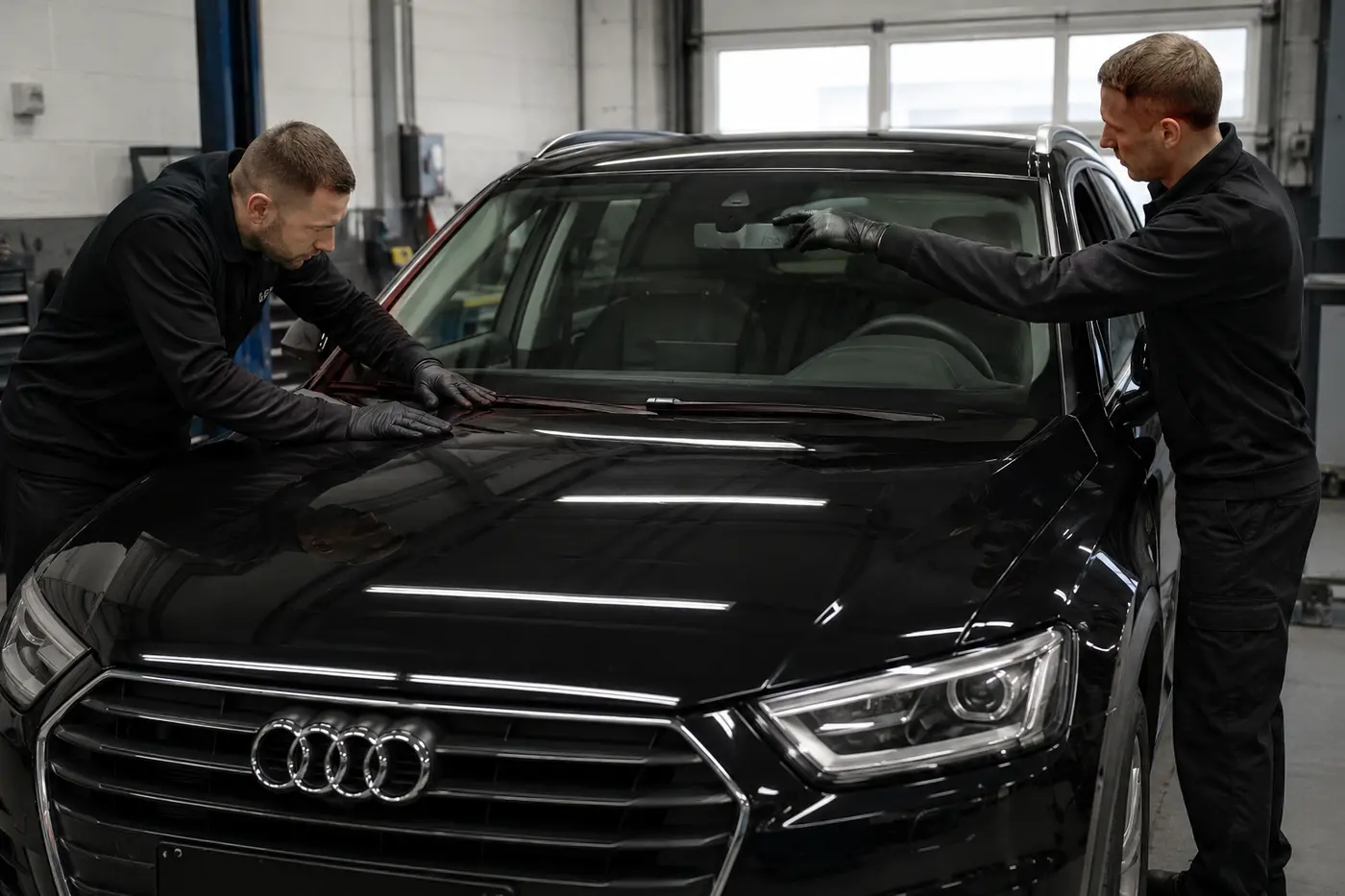
The original damage and warnings remain recorded. The fitted pane’s markings and features are checked visually, followed by position, trim, mouldings, cowl, clips, mirror and covers. Wipers and washers are operated, and rain or light sensor function is checked where it is fitted and safely testable.
Required camera or driver-assistance work is completed or transparently coordinated. HUD image is checked where fitted, with separate adjustment only when applicable. A relevant post-repair scan, controlled leak check after the suitable curing stage and a wind-noise assessment are added when the approved scope requires them.
The handover states the safe drive-away time and immediate care instructions for the actual adhesive system. It records the glass and part status, calibration route, invoice and warranty boundaries. A clear dashboard, brief drive or one water test is not presented as a guarantee of future performance.
Useful questions
Windshield replacement FAQs
How much does Audi windshield replacement cost in Dubai?
A fitted standard quality aftermarket pane is tentatively AED 1,200 to 2,400 including VAT. Recognised OEE, acoustic, camera-compatible, HUD, heated and Genuine Audi screens can range from AED 1,800 to AED 9,000 or more. The final price needs the exact pane, trim and calibration route.
Can a chipped Audi windshield be repaired?
Some small, stable and clean local breaks can be repaired with resin. Depth, contamination, edge involvement, driver view, optical effect and camera area can rule out that route.
When is a crack too risky to repair?
There is no single universal length on this page. Active spreading, branching, edge involvement, multi-layer damage, contamination and optical obstruction all increase the likelihood of replacement.
Can damage in the driver’s view be repaired?
It requires a stricter assessment because the repaired mark can remain visible or optically distracting. The decision must consider the exact position and applicable requirements.
What is the difference between Genuine Audi, OEE and aftermarket glass?
Genuine Audi is Audi-branded and catalogue-selected. OEE or OE-quality describes a traceable replacement-market pane from a recognised route, not automatically the factory pane. Aftermarket quality varies and must be judged by construction, optics, brackets, features and warranty.
How do I identify acoustic or solar-control glass?
Use the existing glass markings, vehicle equipment and part catalogue together. Tint or appearance alone is not reliable.
Does a head-up display need special glass?
Yes, where the car uses HUD the pane must have the specified optical construction. A plain laminated pane can create double images or distortion.
Does every replacement need camera calibration?
No. It depends on the fitted camera, what was disturbed and the exact Audi procedure. The requirement is identified before approval and externally coordinated when needed under the current page scope.
What is camera transfer versus calibration?
Transfer moves and reconnects the camera. Calibration verifies its geometric relationship through the specified static, dynamic or combined process. A scan alone is not calibration.
Can you replace glass with a rain or light sensor?
The replacement pane, bracket and optical area must support the exact sensor. The coupling pad and sensor condition are checked separately.
Can I get an exact price from model and year alone?
Usually not. Production splits, glass markings, camera, HUD, acoustic and trim details can change the part and the installed scope.
Why can a windshield leak after replacement?
A bond or setting problem is possible, but water may also come from the cowl, drains, roof, sunroof, body seam, door or HVAC condensate. The entry path should be traced before resealing.
How long does replacement take?
No universal time is published. Part availability, trim access, aperture condition, adhesive cure and any required calibration determine handover.
When can I safely drive after fitting?
Follow the written safe drive-away instruction for the adhesive product, weather and installation conditions used on your car.
Does insurance cover Genuine glass and calibration?
It depends on the policy, excess and insurer authorisation. Confirm the permitted glass category and whether required calibration is covered before approval.
Is used windshield glass worth fitting?
It is not our normal budget route. Unknown impact history, edge damage, optical wear, old adhesive and removal risk can outweigh the saving.
Can body damage affect windshield fitting?
Yes. A distorted roof, A-pillar, scuttle or opening must be measured and corrected through body repair before a new pane is bonded.
Send the evidence first
Start with the glass and damage
Send the model, year, damage position, full-screen photo and mirror-camera view. We can then route resin repair, exact glass identification, replacement or a body and electrical assessment without treating every chip as a new-screen sale.
For other Audi repair routes, use Audi Repair Services or Contact. Side, rear and panoramic-roof glass are assessed separately and are not the primary service on this page.