
Independent Audi specialist · Al Quoz 4
Audi Q5 Repair Dubai and Service from AED 487.50
Book Audi Q5 servicing, diagnostics, and repairs in Al Quoz 4, Dubai. We handle coolant leaks, engine warnings, gearbox problems, brake wear, suspension noise, and electrical faults. We check the cause, explain the work needed, and confirm the price before repairs begin.
Save 25% on listed Q5 service packages. Minor service now starts at AED 487.50 before VAT for eligible 2.0 TFSI models.
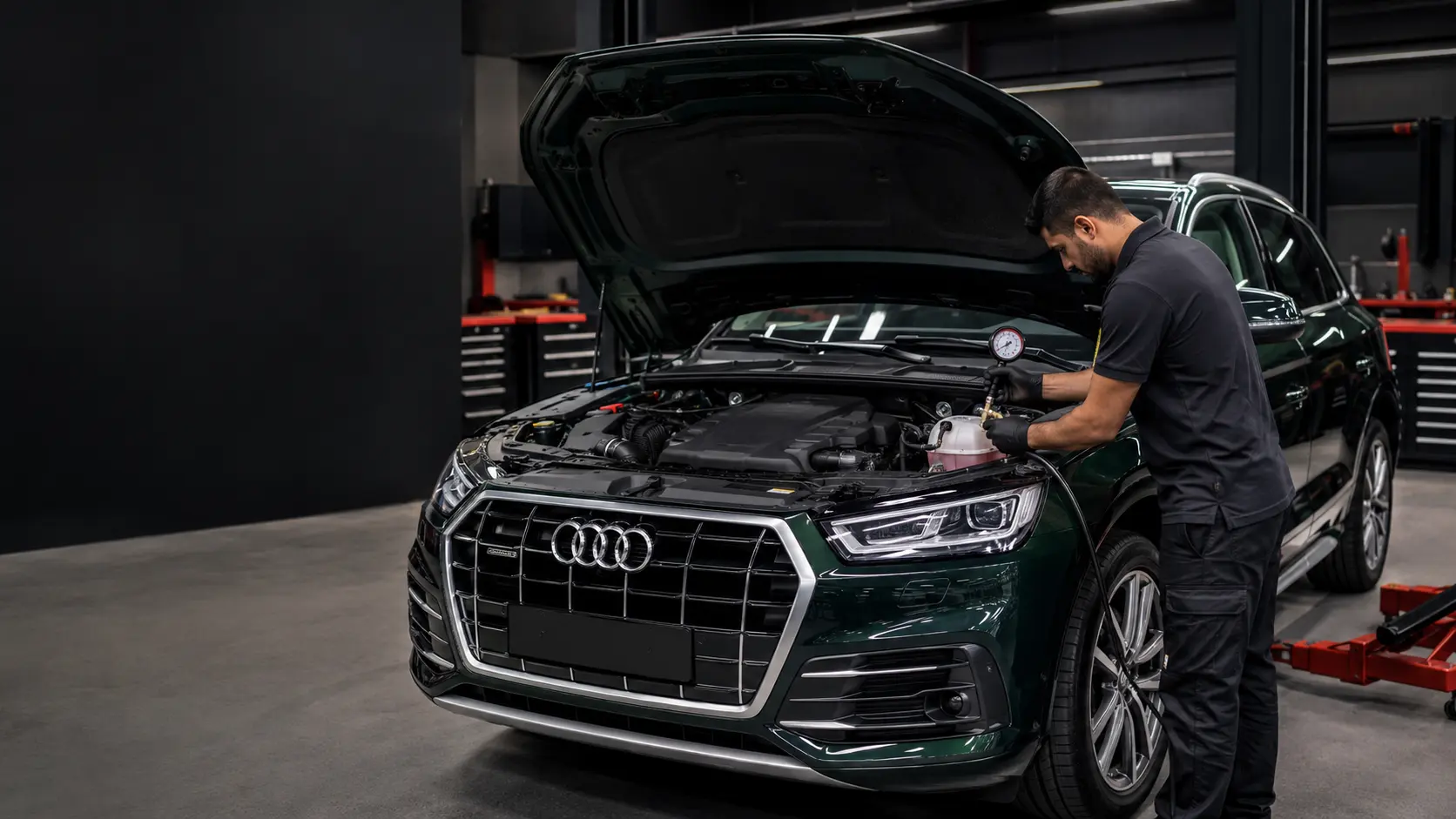
25% off listed service packages
Audi Q5 service now from AED 487.50
Book your Q5 service at our Al Quoz 4 workshop. Compare the regular and discounted starting prices below. All figures exclude 5% VAT.
| Q5 version | Minor service | Interval service | Major service |
|---|---|---|---|
| Eligible Q5 2.0 TFSI | |||
| Eligible Q5 V6 | |||
| SQ5 six-cylinder |
Q5 2.0 TFSI including VAT: minor from AED 511.88, interval from AED 748.13, and major from AED 2,047.50.
Minor: approved engine oil and oil filter, basic inspection, and service reminder reset.
Interval: minor-service work plus engine air filter and cabin filter.
Major: interval-service work plus spark plugs and applicable transmission-fluid servicing, confirmed for your engine and gearbox.
Listed packages include parts and standard labor. The 25% discount applies to these routine service packages. Separately quoted repairs, diagnostic work, and additional maintenance are excluded. We confirm vehicle eligibility, included work, and the final total before approval.
Q5 repair services
Q5 engine, gearbox, suspension, and electrical repairs
Whether your Q5 is losing coolant, shifting roughly, sitting unevenly, or showing an electrical warning, we inspect the affected system and explain the repair options. The checks below show what each type of complaint may involve.
Coolant leaks and engine problems
Record temperature, coolant level, warning and driving condition. Begin with pressure, live temperature, fan or air-path checks as justified.
Gearbox faults and drivetrain vibration
Identify S tronic, tiptronic and the actual quattro arrangement. Compare scan data with fluid state, mounts, shafts and safe road behavior.
Brake wear, tire wear, and suspension noise
Measure tire condition, brake package, ride height and loaded joints before alignment, calibration or a suspension parts list.
Battery faults and electrical warnings
Stabilize the 12V supply, identify any fitted 48V or PHEV architecture, retain fault context and then perform a confirming measurement.
Tailgate faults and water leaks
Separate SUV and Sportback tailgate, seal, drain, lamp, camera and prior-body-repair concerns instead of treating the rear as generic trim.

Models we service
Q5 generations, Sportback, SQ5, and hybrid models
The first Q5 dates from 2008. The second generation later added the Q5 Sportback and Q5 TFSI e plug-in hybrid. Audi introduced the third generation globally in 2024 as the first SUV on its Premium Platform Combustion. Launch timing and equipment vary by market.
Before work, record the VIN, source market, body, engine and gearbox codes, driveline, suspension, brake PR code, wheel and tire sizes and electrical architecture. Badges may not resolve imported or modified vehicles.
S line is an equipment package, not an SQ5. Performance-model powertrain, cooling, brake and chassis requirements should not be applied to every Q5.
First-generation Q5 maintenance
Age, prior repairs, rubber parts, cooling condition and history can matter as much as mileage. Order by engine and gearbox, not year alone.
Second-generation Q5 repairs
Powertrain, quattro, assistance and suspension equipment vary. Facelifts can change electronics and parts without creating one universal checklist.
Q5 Sportback body and tailgate
The sloping rear changes tailgate, glass, trim, sealing and water-management decisions.
Plug-in hybrid and newer Q5 models
Plug-in hybrid and newer PPC vehicles add electrical and cooling requirements; availability and accepted scope require confirmation.
Routine maintenance
What we check during your Q5 service
Your Q5 service follows its engine and gearbox requirements, mileage, age, and service history. We check what is due, inspect for wear and leaks, and list any additional work separately. Heat, dust, and frequent short trips also affect what needs closer attention.
Engine oil and filter changes
Confirm engine code, approved oil specification, capacity, filter and drain hardware. Record leaks, level and any warning separately from routine service.
Air filters, cabin filters, and spark plugs
Inspect dust loading and determine whether air, cabin, fuel or spark-plug items are actually due. Access and cylinder count change labor.
Transmission and quattro fluid servicing
Use gearbox and driveline codes for fluid, filter, temperature and level procedures. S tronic, tiptronic and quattro are not interchangeable labels.
Coolant leaks and AC performance
Check coolant type, loop arrangement, pressure condition and temperature behavior. Air-conditioning performance also needs pressure and temperature evidence.
Brake, tire, and suspension checks
Measure pad, disc, tire, pressure and ride-height condition. Inspect loaded joints before alignment or calibration is sold as the first answer.
Battery and driver-assistance checks
Test 12V condition and identify fitted 48V or TFSI e high-voltage systems. Check camera, radar and calibration needs after relevant repair work.
Symptoms and urgency
Q5 warning signs and when to stop driving
Recover the Q5 rather than continue driving when a red lubrication or temperature warning appears, steam, smoke or a burning odor is present, a severe misfire develops, braking or steering becomes unsafe, drive is lost, a corner drops far enough to threaten tire clearance, or loose exterior bodywork cannot be secured.
| Owner observation | Possible systems | What we check | System affected | When to stop driving |
|---|---|---|---|---|
| Coolant drops or temperature rises | External leak, pump, thermostat, fan, heat exchanger or PHEV thermal loop | Pressure test, visible inspection, live temperatures and fan command | Engine and cooling | Stop for overheating, steam or rapid loss |
| EPC, hesitation or boost change | Ignition, fuel, intake leak, boost control, wiring or mechanical condition | Fault context, counters, smoke or pressure test and matched live data | Engine or cooling repair | Stop for severe flashing misfire or heavy knock |
| Cold or hot shift change | S tronic, tiptronic, clutch, hydraulic control, mounts, shafts or differential | Identity, scan, adaptations, fluid state and safe reproduction | Gearbox and drivetrain | Stop for loss of drive or severe engagement |
| Pull, vibration or uneven tire wear | Tires, wheels, alignment, loaded joints, bearing, brakes or driveline | Tire pressure and wear at each wheel, run-out, loaded inspection and road test | Brakes and suspension | Stop for damaged tire, loose wheel or unstable control |
| Ride-height or damper warning | Standard, adaptive or fitted air system, sensor, compressor, wiring or calibration | Identify chassis, measure every corner and test the actual system | Brakes and suspension | Recover if a corner is very low or tire clearance is unsafe |
| MMI, camera, charging or intermittent warning | 12V supply, fitted 48V, network, software, module, wiring, calibration or TFSI e system | Voltage support, full scan, condition record and physical measurement | Electrical systems | Stop if essential controls, smoke or charging safety is affected |
| Tailgate fault, dampness or rear warning | Latch, drives, wiring, seals, drains, lamp areas, camera or prior body work | Safe operation, scan, moisture trace and body inspection | Rear body | Do not drive with an insecure panel or active water damage near electronics |
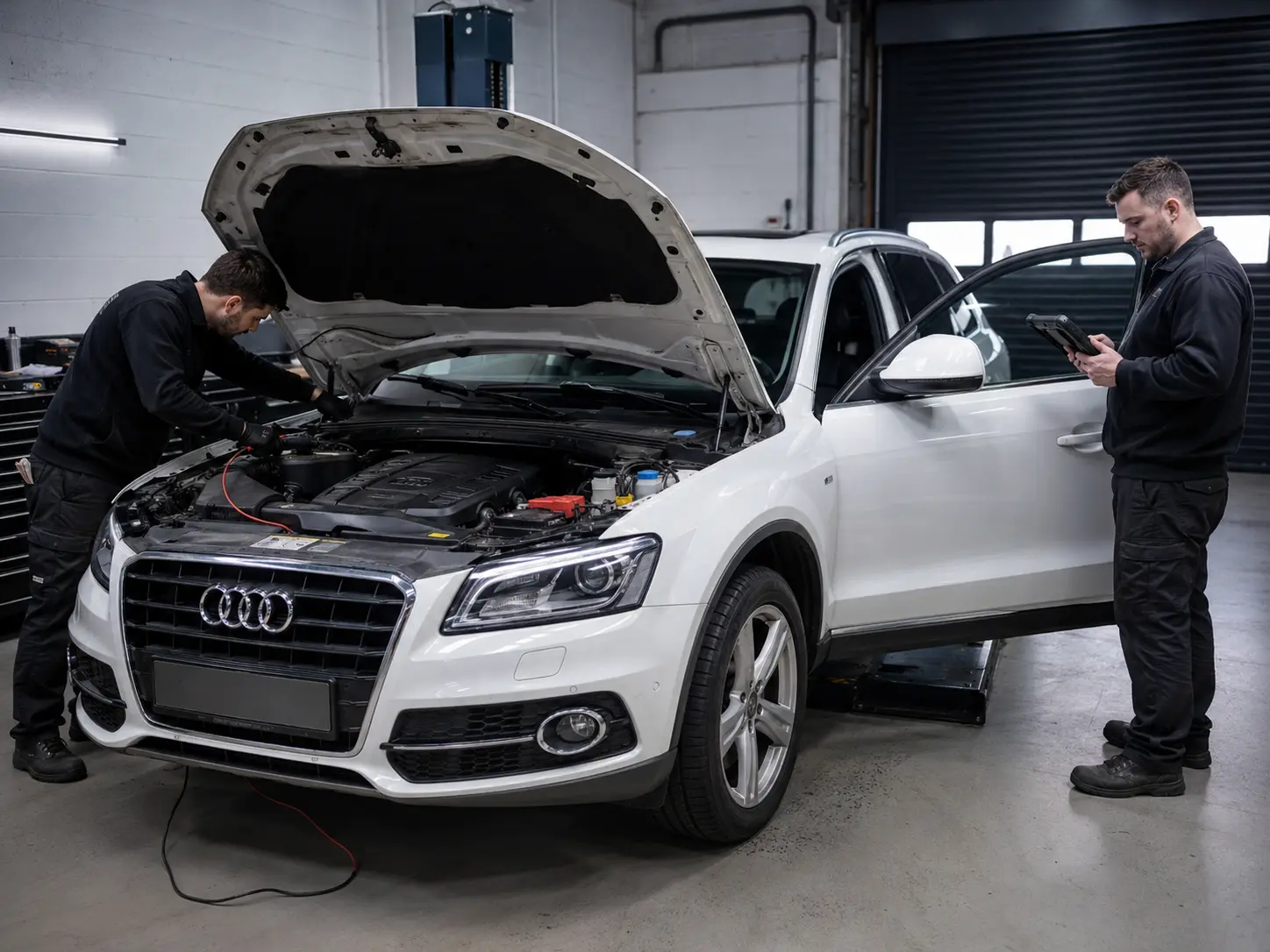
Fault diagnosis
How we diagnose your Q5’s fault
A Q5 can store secondary faults after a weak battery, interrupted communication or another system’s failure. The order of testing prevents a fault list from becoming an expensive parts list.
- Check the vehicle specificationVIN, generation, source market, body style, engine, transmission, driveline, suspension and voltage architecture.
- Check when the problem happensCold, hot, loaded, turning, braking, shifting, charging or operating the tailgate; record when the symptom does not occur too.
- Test the battery and charging systemTest the 12V battery and charging system; use support equipment where required before deep scanning, coding or programming.
- Save fault codes and operating dataKeep freeze frames, counters, adaptations, communication state, mileage and relevant live values instead of clearing first.
- Test the suspected faultPressure, smoke, voltage drop, current, temperature, mechanical pressure, ride height, brake thickness or loaded movement.
- Explain what needs repairConfirmed cause, contributing condition, overdue maintenance, unrelated recommendation and anything still uncertain.
- Confirm the written repair estimateParts choice, labor, fluids, seals, coding, calibration, exclusions, VAT and verification all appear in writing.
- Check the repair before handoverRe-scan, remeasure and safely road test or operate the relevant system after repair.
Engine and cooling repairs
Q5 coolant leaks, oil-pressure warnings, and engine faults
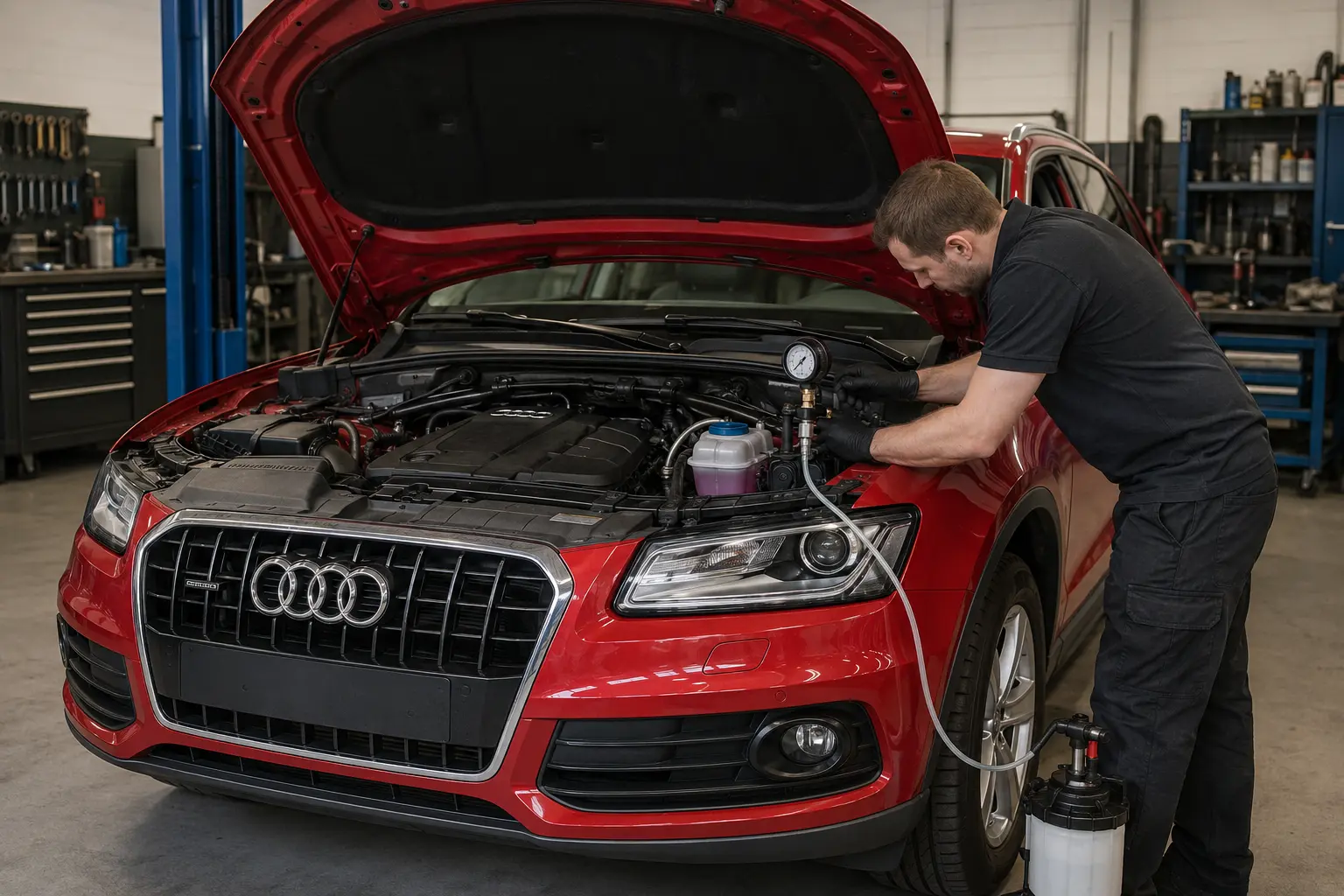
Coolant loss may come from a hose, cap, housing, pump, thermostat area, heat exchanger or a hot-only leak hidden by the undertray. Pressure, temperature and visible evidence should precede a broad parts list. On Q5 TFSI e, identify the relevant loops and high-voltage boundary.
An EPC light, misfire or boost complaint also needs conditions. Test ignition, fuel, air leaks, boost control, wiring and mechanical condition in the sequence supported by data. Smoke, oil-pressure, compression or leak-down tests are used only when they answer the remaining question.
A service does not erase a fault. Stop for red oil pressure, overheating, steam or heavy knock. See the cooling-system and engine routes for deeper scope.
Transmission and drivetrain
Q5 gearbox repair and quattro servicing
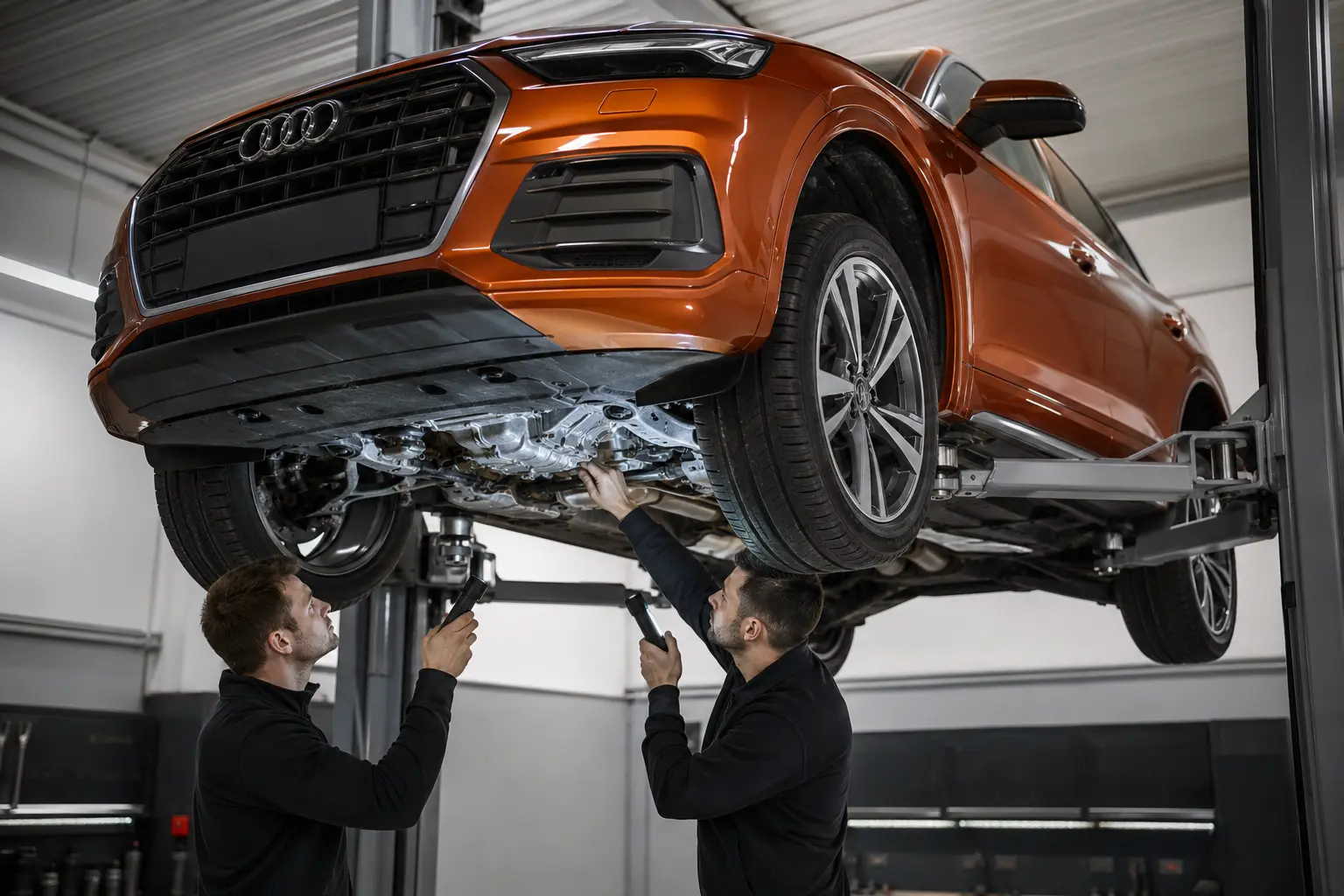
A Q5 badge does not settle S tronic, tiptronic, driven axles or the quattro arrangement. Exact gearbox and driveline codes control fluid, filter or pan design, fill procedure, adaptations and compatibility.
For a shift complaint, record cold and hot operation, direction change, throttle and speed. Compare scan context with fluid state, mounts, shafts, joints, wheels and differentials; vibration is not automatically internal.
A fluid service cannot renew worn clutches, bearings or hydraulic parts. Internal options must state repair scope, fluids, seals, programming, adaptation and verification. See the gearbox repair service.
Brakes and suspension
Q5 brake repair, suspension work, and wheel alignment
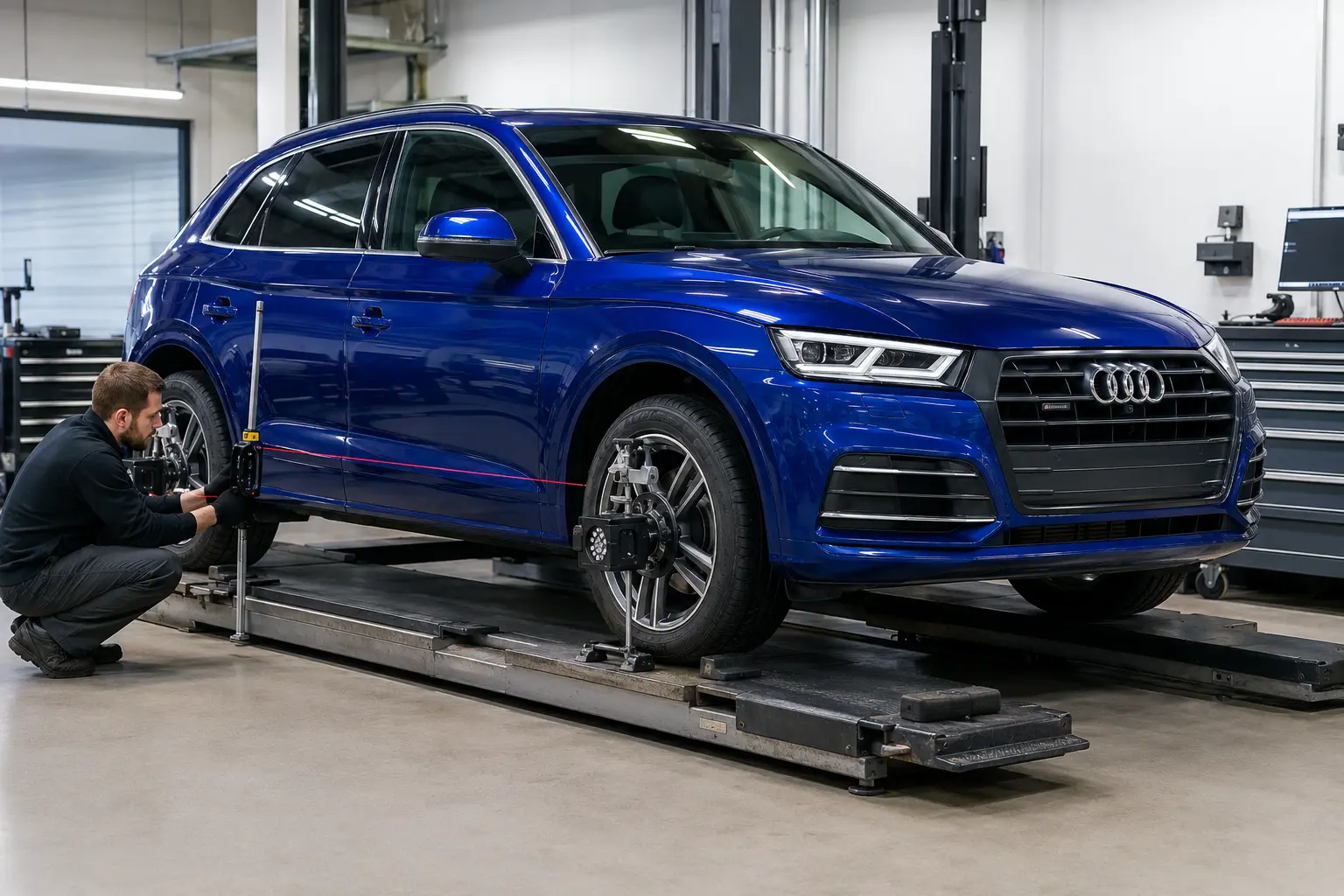
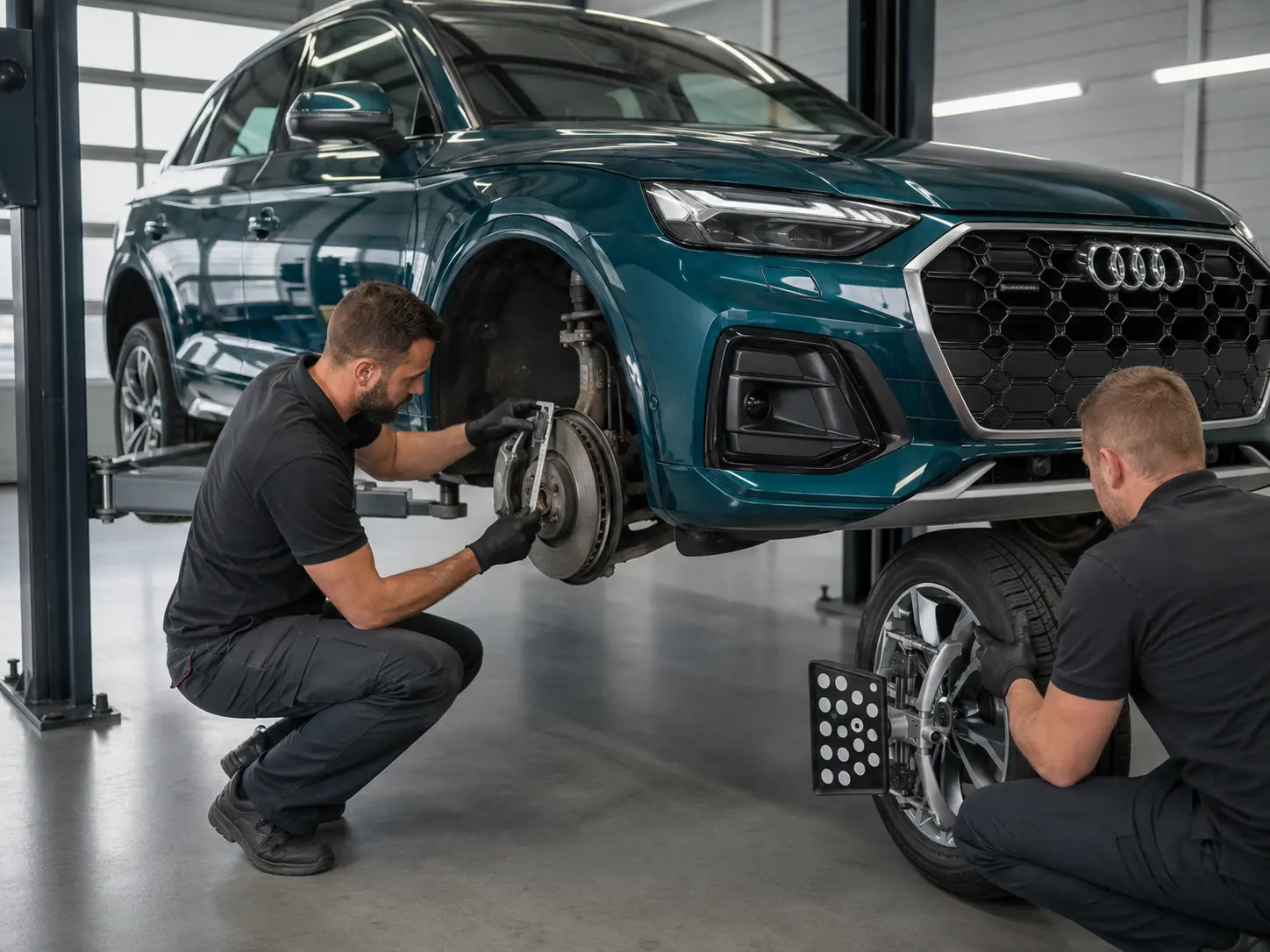
The Q5’s SUV stance does not make tire wear, pull, vibration or a ride warning self-explanatory. Measure every corner and inspect the suspension loaded before choosing alignment or parts.
Tire wear and wheel vibration
Record size, load and speed ratings, pressure, tread pattern, age, repair history, damage and rolling-circumference consistency. Check run-out when vibration or impact is reported.
Brake pads, discs, and warning lights
Use the PR code and measurement for pad, disc, sensor and parking-brake procedures. A warning may reflect wear, wiring or plausibility; inspection decides.
Suspension noise and uneven ride height
Identify standard, adaptive or fitted air-suspension equipment. Compare corner heights, inspect loaded joints and determine whether calibration is part of the repair.
Electrical repairs
Q5 battery, MMI, and electrical repairs
The electrical baseline begins with the 12V battery, charging performance, grounds and stable support. A weak supply can create faults across MMI, cameras, parking, tailgate, engine, transmission and chassis controllers. Preserve context before clearing and then test the affected supply, signal, communication or physical component.
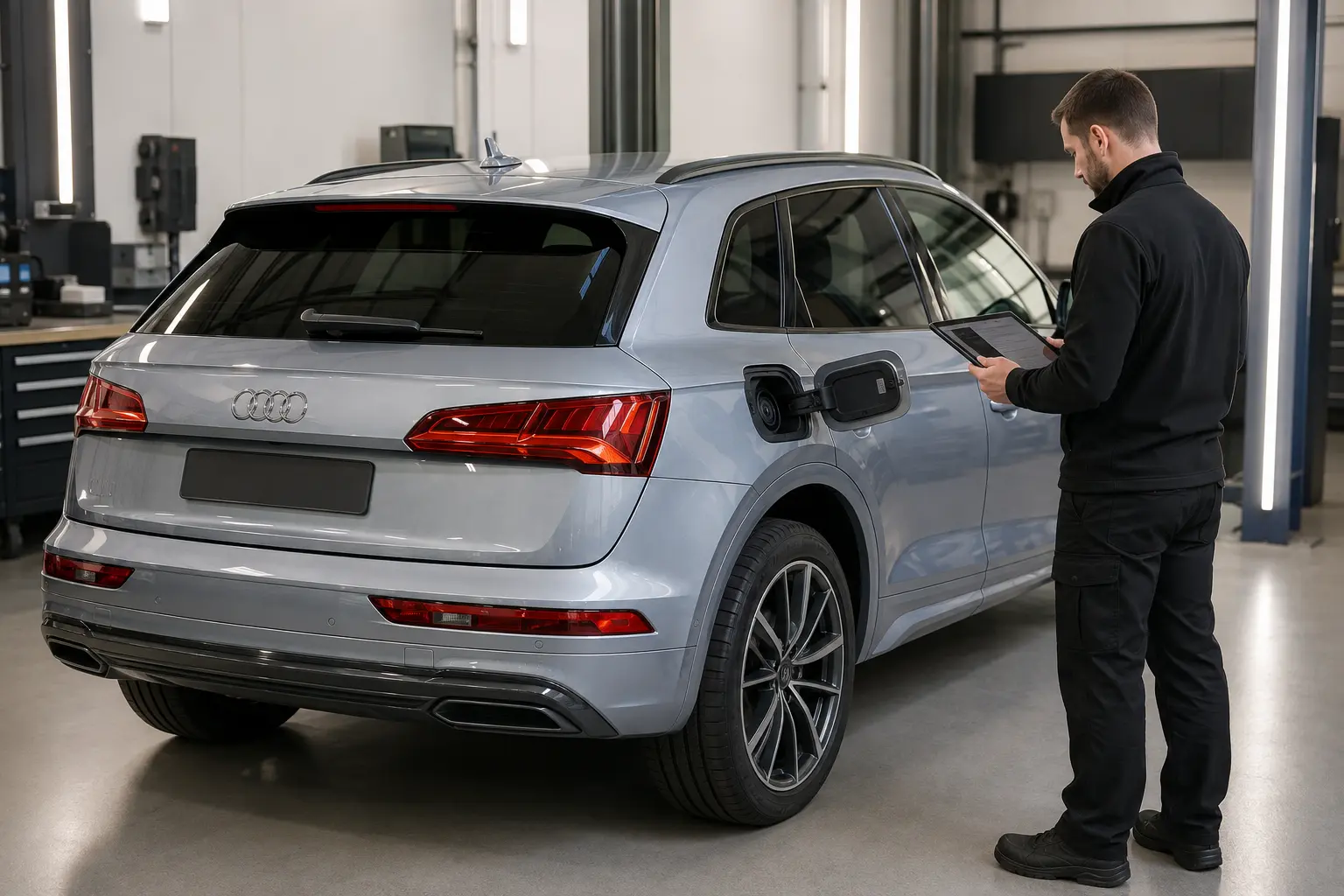
Some Q5 configurations add 48V mild-hybrid equipment; Q5 TFSI e adds plug-in charging and high-voltage systems. Neither should be assumed from model name alone. Identify the vehicle and agree the accepted electrical or high-voltage scope before disassembly. A Q5 TFSI e is a plug-in hybrid, not a battery-electric Q5.
Camera, radar and driver-assistance calibration may follow relevant windshield, bumper, grille, mirror, steering, suspension or alignment work. The exact fitted equipment and repair procedure decide the requirement. The electrical repair page explains the checks for wiring, power supply and module concerns.
Tailgate and water leaks
Q5 power-tailgate repairs and water leaks
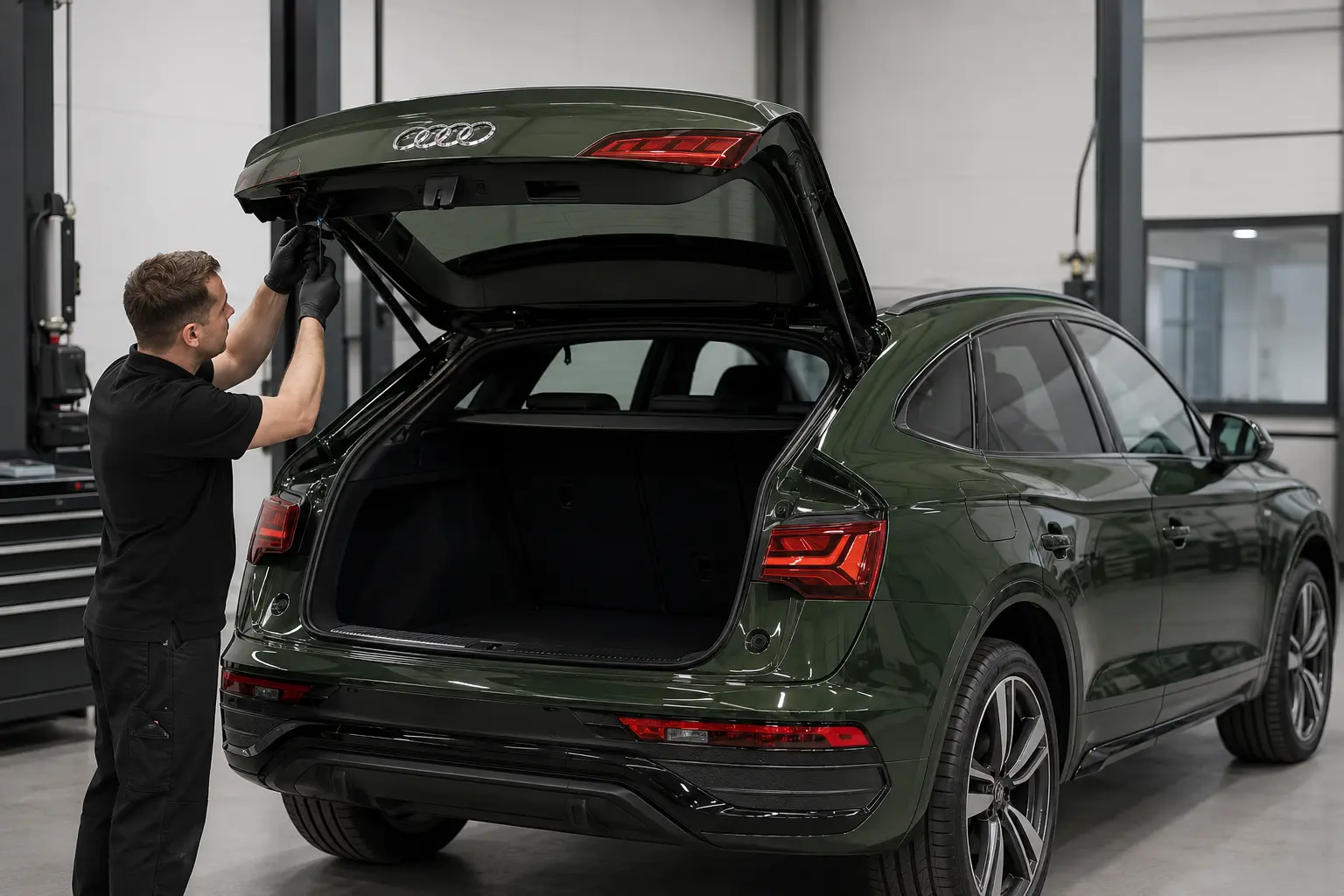
A powered tailgate concern can involve latch state, drive units, learned limits, obstruction logic, wiring through moving areas, supply voltage or alignment. The Sportback’s glass, trim, seals and water paths differ from the conventional SUV body. Parts and access should follow the exact body style.
If the cabin is damp, we trace where the water is entering before repairing the leak. Trace roof drains, tailgate and lamp areas, seals, previous repairs and any moisture near cameras, lamps, modules or connectors. Record whether the concern follows rain, washing, parking angle or body work. Repair the entry path and affected electrical condition, then verify with a controlled retest.
After bumper, tailgate, camera or lamp work, check operation, alignment, water sealing and any calibration or programming required for the fitted systems. A trim rattle, wind noise and water leak may share an area without sharing one cause.
Your repair options
Repair, rebuild, or replace a failed part
Once we find the fault, we explain whether a component repair, rebuild, or replacement is suitable. Your estimate lists parts, labor, fluids, and any programming or calibration needed so you can compare the total cost.
Q5 estimate guide
Audi Q5 diagnostics and additional repair costs
The ranges below cover separately quoted diagnostics, repairs, and additional work. They are excluded from the 25% routine service-package offer. UAE 5% VAT appears separately on the written estimate.
Generation, source market, engine, transmission, quattro arrangement, suspension, brake package, wheel size, Q5 Sportback body, TFSI e equipment, parts choice and previous repair quality can change the total. Firm figures follow identification, inspection and any approved diagnostic or dismantling stage.
| Work required | Vehicle details | Estimated price before VAT | Included labor and checks | Main variables | When we confirm the price | VAT status | Parts and fluids | Estimate date |
|---|---|---|---|---|---|---|---|---|
| Initial Q5 scan and assessment | VIN, generation and concern supplied | AED 350 to 650 | Vehicle identification, full-system scan and first physical inspection | Fault context, warning count and symptom complexity | After scan and first inspection | VAT excluded | Diagnosis only; no parts assumed | 1 September 2026 |
| Guided electrical diagnosis | Affected function and conditions recorded | AED 450 to 950 | First diagnostic time block, supply checks and one confirming measurement | Intermittent behavior, access and network scope | After agreed diagnostic block | VAT excluded | Vehicle-specific wiring and approved test equipment | 1 September 2026 |
| Brake fluid service | Fluid due and hydraulic system serviceable | AED 320 to 580 | Approved brake fluid, pressure bleed and checks | Fluid quantity and bleed complexity | At booking confirmation | VAT excluded | New approved brake fluid | 1 September 2026 |
| Coolant service | Engine and thermal loops identified | AED 480 to 1,050 | Correct coolant, controlled refill and bleed checks | Loop count, capacity and PHEV configuration | After VIN and inspection | VAT excluded | Approved coolant and required seals | 1 September 2026 |
| S tronic service | Gearbox code confirmed | AED 1,100 to 2,250 | Specified fluid, filter route and post-service checks | Transmission code, oil quantity and filter arrangement | After code and parts check | VAT excluded | Approved fluid and new applicable filter | 1 September 2026 |
| Tiptronic service | Tiptronic gearbox confirmed | AED 1,250 to 2,600 | Gearbox-code fluid service with applicable pan or filter parts and level procedure | Transmission code, pan and fluid method | After code and inspection | VAT excluded | Approved fluid and compatible service kit | 1 September 2026 |
| Quattro or differential fluid service | Exact driveline identified | AED 450 to 1,200 | Unit-specific oil, temperature and fill-level procedure | Front, centre, rear or clutch-based system | After drivetrain-code check | VAT excluded | Approved unit-specific fluid | 1 September 2026 |
| Cooling pressure test | Coolant loss or thermal concern present | AED 250 to 480 | Cold pressure test, visible inspection and findings record | Hot-only leak, multiple loops or access | After first inspection | VAT excluded | Test only; repair parts quoted separately | 1 September 2026 |
| Q5 water pump or thermostat repair | Leak or control fault confirmed | AED 1,500 to 4,900 | Component allowance, labor, coolant and bleed checks | Engine packaging, related housings and seals | After pressure and live-data tests | VAT excluded | New compatible components and seals | 1 September 2026 |
| Smoke test for intake or boost leak | Air-path symptom and test access confirmed | AED 300 to 650 | Controlled smoke test, visible leak trace and finding | Leak location, access and secondary faults | After scan and visual check | VAT excluded | Test only; hoses and seals quoted after finding | 1 September 2026 |
| Gearbox fault diagnosis | Shift or engagement symptom recorded | AED 450 to 1,000 | Scan, adaptations, fluid-state checks and safe road-test route | Cold or hot reproduction and transmission type | After first diagnostic block | VAT excluded | Diagnosis only; fluid or parts separate | 1 September 2026 |
| S tronic mechatronic or clutch repair | Fault and gearbox type confirmed | AED 5,500 to 16,500 | Repair allowance, fluids, adaptation, and final checks | Unit type, internal condition and parts route | After diagnosis and approval | VAT excluded | New, rebuilt or specialist-repaired option stated | 1 September 2026 |
| Front brake pads | Brake PR code and disc state confirmed | AED 650 to 1,750 | Pads, fitting, cleaning, measurement and reset where needed | Brake size, sensor and parts choice | After wheel and PR-code check | VAT excluded | New genuine or OE-supplier friction parts | 1 September 2026 |
| Front pads and discs | Axle package and measurements confirmed | AED 1,600 to 4,900 | Pads, discs, labor, cleaning and measurement | Disc diameter, coating and parts choice | After measurement and parts choice | VAT excluded | Matched new pads and discs | 1 September 2026 |
| Four-wheel alignment | Ride height, tires and joints serviceable | AED 280 to 550 | Measurement, permitted adjustments and report | Wheel size, seized hardware and calibration needs | After pre-alignment inspection | VAT excluded | No parts included | 1 September 2026 |
| Suspension diagnosis | Noise, handling or ride symptom recorded | AED 350 to 800 | Loaded inspection, ride-height comparison and first tests | Adaptive damping, air suspension and access | After initial inspection | VAT excluded | Diagnosis only; parts quoted after proof | 1 September 2026 |
| 12V battery and registration | Battery specification and failure confirmed | AED 950 to 2,450 | Battery, fitting, registration and charging check | Capacity, chemistry, location and source | After battery test | VAT excluded | New correctly specified battery | 1 September 2026 |
| 48V system diagnosis | 48V architecture confirmed | AED 650 to 1,600 | Voltage support, scan and first guided measurements | Battery, starter-generator and network involvement | After safety identification | VAT excluded | Diagnosis only; HV parts excluded | 1 September 2026 |
| PHEV charging diagnosis | Q5 TFSI e identity confirmed | AED 750 to 1,800 | Accepted charging, scan and thermal-system checks | AC supply, charging module and high-voltage scope | After scope and safety confirmation | VAT excluded | Diagnosis only; charging parts separate | 1 September 2026 |
| MMI, camera or parking diagnosis | Affected function and equipment confirmed | AED 450 to 1,250 | Scan, supply checks and first physical test | Water ingress, calibration and component access | After first diagnostic block | VAT excluded | Diagnosis only; calibration or parts separate | 1 September 2026 |
| Standard Q5 pre-purchase inspection | Combustion Q5 identity and access confirmed | AED 750 to 1,800 | Scan, road test, underbody, body and measured checks | Vehicle age, imported history and report depth | Before inspection booking | VAT excluded | Inspection only; dismantling excluded | 1 September 2026 |
| Q5 TFSI e pre-purchase inspection | PHEV identity and accepted scope confirmed | AED 1,200 to 2,800 | Standard inspection plus charging and supported battery-data review | Charging access, platform and available data | After VIN and scope confirmation | VAT excluded | Inspection only; battery capacity guarantee excluded | 1 September 2026 |
Compare diagnosis, labor, parts, fluids, VAT and variation terms in the Audi service cost guide. A written quote should identify what is new, genuine, OE-supplier, rebuilt or verified used.
Planning routine maintenance? See the Audi Q5 service cost and annual budget guide for the 25% discount on listed service packages, included work, and VAT-inclusive totals. Separately quoted repairs are excluded.
Used Q5 decision
Used Audi Q5 pre-purchase inspection
Confirm the VIN, generation, source market, SUV or Sportback body, Q5, S line or SQ5 identity, engine, gearbox, actual quattro arrangement, suspension, brake package, wheel and tire specification and any TFSI e charging equipment. Match service invoices and part numbers to that vehicle rather than accepting a generic history.
Begin with cold start and a full scan that retains fault context. Test hot restart, acceleration, gearbox engagement, turning, braking and ride over an agreed safe route. Pressure-test or inspect the cooling system as condition requires. Check oil and fluid leaks, underbody damage, mounts, shafts, loaded suspension joints, wheel bearings, brake measurements and tire age and consistency.
Inspect paint and structural evidence, windshield, bumper, grille, lamps, cameras, radar and calibration implications. Operate the MMI, climate, parking, assistance, seats, windows and powered tailgate. On a Sportback, include rear sealing and water paths. For TFSI e, agree supported charging and battery-data checks without implying a battery-capacity guarantee.
A Q5 inspection report should identify urgent safety work first, then overdue service, expected near-term costs and any question requiring deeper diagnosis. The dedicated pre-purchase inspection page explains the full reporting boundary.
Worked diagnostic example
How a boost leak can trigger the EPC light
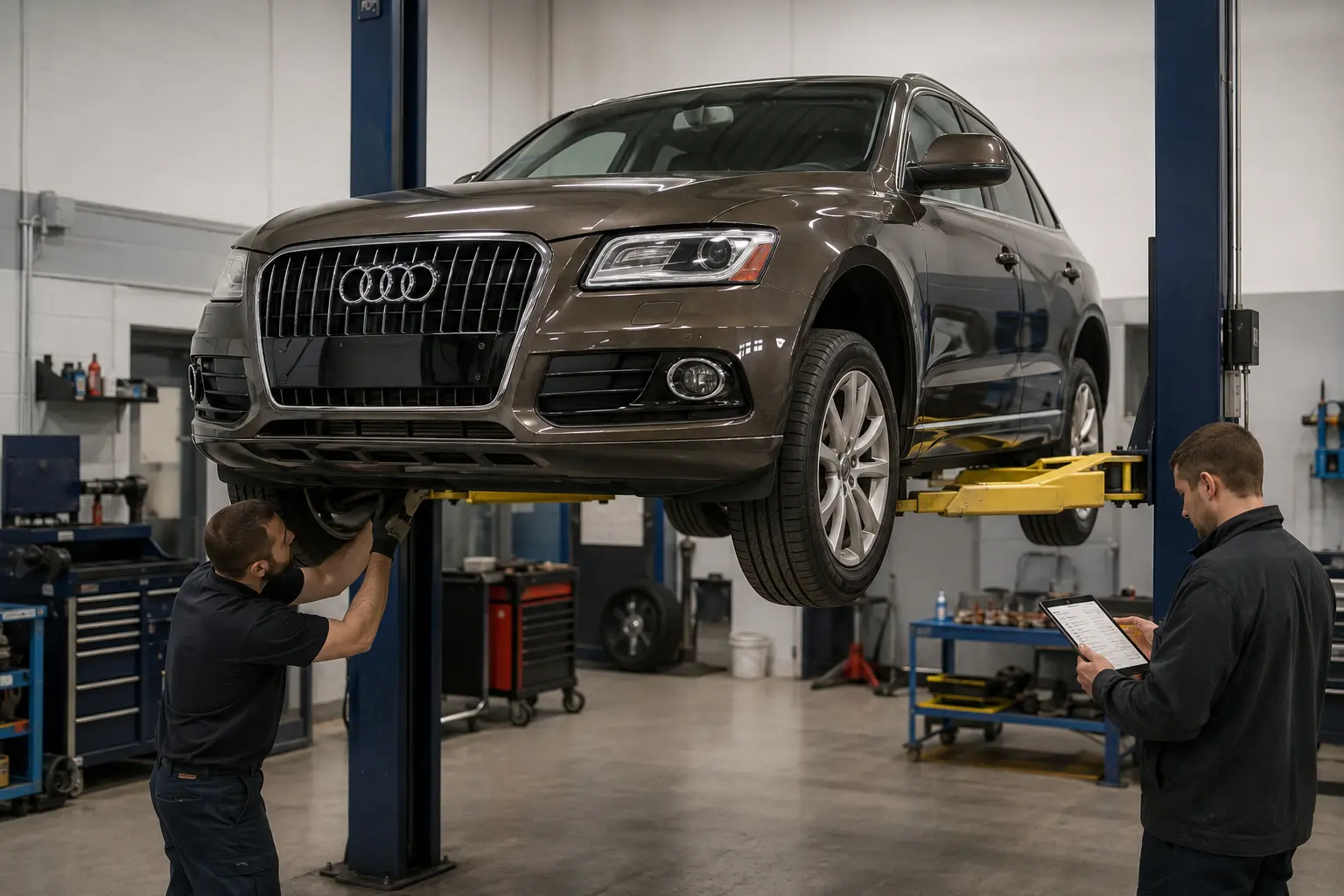
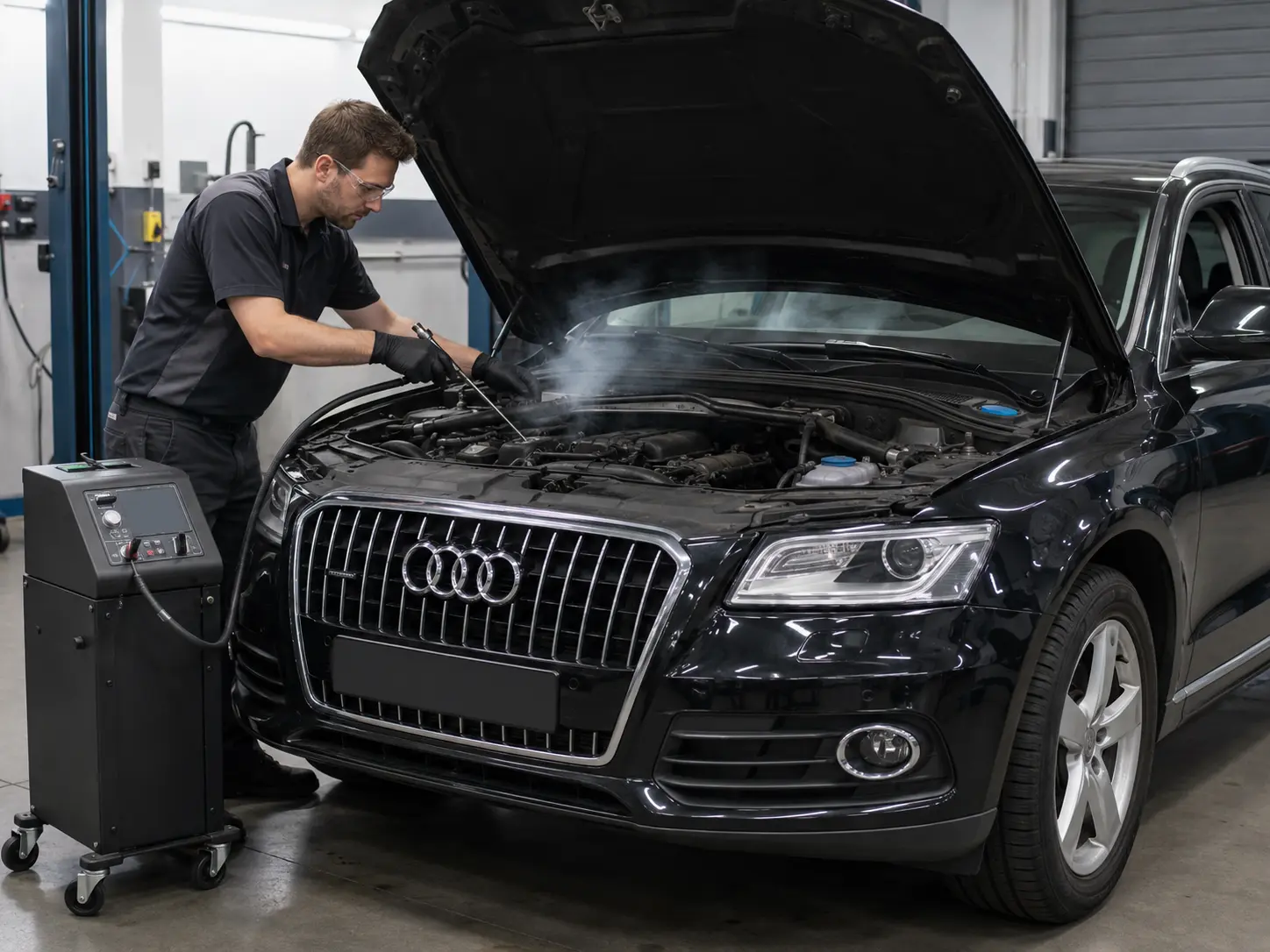
This is a worked example, not a claimed customer job. A Q5 owner reports an intermittent EPC warning and reduced response only after the engine is hot and accelerating onto a faster road. A stored underboost condition is relevant, but it does not prove a turbocharger has failed.
Competing routes include an intake or charge-air leak, control fault, wiring, sensor plausibility, exhaust restriction or a mechanical turbo concern. First confirm identity and battery condition, preserve the hot-event context and inspect the air path. A controlled smoke or pressure test finds a leaking connection. The repair choice then stays limited to the supported leak and any damaged adjoining seal rather than replacing the turbocharger.
Closing verification repeats the hot operating condition where safe, compares requested and measured values and completes a fresh scan. Overdue oil service, aging tires or another unrelated recommendation remains separate from the cause of the EPC event.
Q5 owner questions
Questions about Q5 servicing and repairs
How often should an Audi Q5 be serviced in Dubai?
Follow the schedule for the exact VIN, engine and source market, then adjust inspection attention for heat, dust, short trips and long idling. Time, mileage, oil approval and history all matter; a dashboard reset alone is not proof that the required work was completed.
Do all Audi Q5 models have quattro?
No. Driveline availability varies by generation, engine and market. The badge, VIN, gearbox code and physical configuration should be checked before any fluid, diagnosis or repair plan is approved.
Does every Q5 use S tronic?
No. Depending on generation and specification, a Q5 may use S tronic, tiptronic or another market-specific arrangement. The transmission code controls the fluid, filter, adaptation and repair route.
Is the Audi Q5 Sportback mechanically identical to the SUV?
It shares much of the model architecture, but the rear body, powered tailgate, seals, water paths, glass and trim can change diagnosis and parts. Exact engine, transmission, suspension and equipment still require VIN confirmation.
Is an Audi Q5 TFSI e an electric car?
It is a plug-in hybrid, not a battery-electric Q5. Its petrol engine and electric drive share charging, regenerative-braking and thermal-management systems, so the booking scope must cover the fitted high-voltage equipment. Accepted high-voltage work must be agreed before booking.
Can you quote a Q5 repair from a fault code?
A code is useful context but rarely proves a failed part by itself. A reliable route connects the stored conditions to a physical measurement such as pressure, voltage drop, smoke, temperature, ride height or mechanical inspection.
Why does my Q5 lose coolant without a visible puddle?
A small leak may appear only when hot or under pressure, collect in an undertray, evaporate on a hot surface or involve an internal thermal route. A cold pressure test, hot inspection and live-temperature review narrow the possibilities. Stop if the temperature rises or steam appears.
What can cause uneven Q5 tire wear?
Pressure, tire age, mismatched rolling circumference, alignment, ride height, worn joints, damaged wheels or previous impact can contribute. Alignment should follow a loaded suspension and tire inspection, not replace it.
Can a transmission fluid service fix a Q5 shift problem?
It can restore due maintenance when the gearbox is otherwise serviceable, but it cannot repair worn clutches, bearings, hydraulic faults or damaged internal parts. Identify the gearbox, record cold and hot behavior and diagnose before promising an outcome.
Do Q5 driver-assistance systems need calibration after repair?
Calibration may be required after certain windshield, bumper, grille, camera, radar, suspension, steering or alignment work. The fitted equipment and repair procedure determine the requirement; it is not universal after every job.
What should a used Audi Q5 inspection include?
It should confirm model identity, scan all systems, test cold and hot behavior, measure brakes and tires, inspect cooling, leaks, suspension, underbody, body repairs, electronics and fitted assistance systems, and separate urgent work from future spending and uncertainty.
Contact our Al Quoz 4 workshop
Book your Audi Q5 service or repair
Call or WhatsApp our Al Quoz 4 workshop to arrange a service or discuss a fault. Tell us your Q5’s year, mileage, and what you have noticed. We will help you choose the service or diagnostic check and confirm the price.
Audi Q5 Service and Repair
Related Audi maintenance and repair services
Find details about scheduled maintenance, diagnostic testing, and suspension repairs.