

Audi Specialist Dubai
Audi repair services in Dubai
Book Audi servicing, diagnostics, engine, gearbox, brake, AC and electrical repairs in Al Quoz 4, Dubai. Minor service starts from AED 350 before VAT for A1, A2, A3 and A4. Tell us what you need, and get the work and price agreed before we begin.
Compare the work and price
Audi service and repair prices in Dubai
These starting prices and estimates cover the work listed below. Prices exclude 5% VAT. The AED 350 minor service for A1, A2, A3 and A4 is AED 367.50 including VAT. Engine repairs, gearbox faults and other work with an unknown cause are quoted after inspection.
| Service or repair | Price before VAT | What the price covers |
|---|---|---|
| A1, A2, A3 and A4 minor service | From AED 350 | Engine oil, oil filter, replacement labor and basic checks. Other Audi models have separate prices. |
| Diagnostic scan and report | AED 150–250 | Read stored faults and provide the scan report. Guided testing and repairs are separate. |
| Initial AC diagnosis | AED 100–250 | Agreed pressure, vent-temperature and electrical checks. Refrigerant and repairs are extra. |
| Standard aftermarket brake pads | AED 350–550 per axle | Left and right pads with standard fitting for a common non-performance brake setup. Discs and sensors are extra. |
| AGM or start-stop battery | AED 500–1,200 fitted | One correctly rated battery, testing and standard fitting. Registration or adaptation is separate unless listed. |
| Four-wheel alignment | AED 250–450 | Measurement and adjustment where possible. Worn parts, seized adjusters and repair work are extra. |
Looking for better prices?
Send your Audi model and the service or repair you need. If you already have a quote, share its included work so we can compare the same parts and labor.
See our complete Audi service cost guide for model prices and repair ranges. Your written quote lists the parts, labor, VAT and any separate testing. Additional work needs your approval.
Typical job estimate for a 2018 Audi A4
An oil-and-filter service starts at AED 350 before VAT, or AED 367.50 including VAT. This covers engine oil to the required approval, the correct oil filter, standard labor and basic checks. Air filters, spark plugs and repairs are additional when needed.
Typical job estimate for a 2020 Audi Q5
A correctly rated AGM battery with testing and standard fitting is estimated at AED 500–1,200 before VAT, or AED 525–1,260 including VAT. Battery registration or adaptation, if required, is a separate quoted item. A charging or drain fault needs its own diagnosis.
Complete service directory
Choose your Audi repair or service
Book routine servicing or choose the repair your Audi needs below. Each service page explains the work and available options. If you are unsure what is wrong, send us a short description and we will help you arrange the right inspection.
Routine care and inspection
Oil and filter services, scheduled maintenance, fault diagnosis and inspections before buying a used Audi.
Engine, timing and fuel
Mechanical condition, timing control, boost and fuel-delivery faults.
Gearbox and driveline
Selection, shift quality, clutch operation and mechatronic control.
Cooling and AC
Engine temperature, coolant circulation, cabin cooling and refrigerant loss.
Electrical and electronics
Supply, charging, access, displays, lighting and communication faults.
Brakes, suspension and road contact
Stopping, steering, ride height, wheel condition and tire behavior.
Body, glass and finish
Accident damage, exterior repair, glazing and paint protection.
Help choosing a service
Start with the symptom
Tell us what you saw, heard or felt. A warning message, noise or change in driving is enough to start. The options below help you find the relevant service without guessing which part has failed.
For several warnings or an intermittent fault, book diagnostics. We test the likely causes and explain the repair options before replacing parts.
Warning lights
Record the warning before it disappears
Photograph the symbol or full message if it is safe. Note its color, whether it flashed or remained steady, and whether power, braking, steering, gear changes or temperature altered at the same time. A warning points to a system that needs attention. It does not identify a failed part on its own.
If several warnings appeared, preserve the order. The first event and the later responses may not have the same cause. Avoid clearing faults or disconnecting the battery before the car is assessed unless a safety instruction requires it.
Driving problems
Describe when the change happens
Say whether the car hesitates, vibrates, pulls, knocks, shifts harshly, rides unevenly, loses cooling or becomes difficult to steer. Add the condition. Cold start, warm idle, acceleration, braking, turning, road bumps and steady speed give the technician a useful test condition.
Similar words can describe different systems. A vibration during braking needs a different inspection from a vibration under acceleration. Do not reproduce a severe noise, overheating event or loss of braking control merely to make a recording.
Routine service
Book the maintenance that is due
Start with the service reminder, mileage, time since the last recorded work and any invoices available. Scope can change with the model, powertrain, age, use and previous work. An oil service may be due without every filter or fluid falling due at the same time.
If history is incomplete, say so. Records and condition checks can help establish what is known without pretending to reconstruct undocumented work. Report warning lights, leaks or driving changes separately because they may need diagnostic time in addition to maintenance.
Urgency guide
Decide how urgent the concern is
Warning color helps, but vehicle behavior matters as well. This triage guidance cannot confirm whether a particular car is safe to drive. Stop in a safe place whenever continued driving could worsen a loss of control, lubrication or cooling, then request advice using the exact warning and symptoms.
Stop driving safely
Serious oil, temperature, braking or control change
Stop as soon as it is safe after a low oil-pressure message, excessive coolant temperature, a sharp loss of braking or steering control, heavy engine knocking, rapid coolant loss, smoke entering the cabin or a wheel that appears insecure. Do not continue simply because the car can still move. Explain the warning and behavior when asking whether recovery is required.
Assess before driving
Amber warning with a noticeable behavior change
A steady amber warning does not automatically make a journey reasonable. Reduced power, abnormal gear changes, a new mechanical noise, vibration or unusual smell changes the decision. Ask for guidance before driving any significant distance. A flashing warning, rising temperature or worsening control calls for a fresh assessment.
Book soon
Gradual or intermittent issue without a severe change
A service reminder, weak air-conditioning output, gradual suspension noise or intermittent electrical fault may allow a planned booking. Preserve messages and the conditions that reproduce the issue. Early details can make an intermittent concern easier to test before it becomes constant or starts affecting another system.
Diagnosis before replacement
A fault code is a clue to test
Fault finding separates the symptom, stored information, test result, supported finding and repair choice. A control unit can record a fault when it sees an unexpected value, but wiring, voltage, a connector, a leak, an actuator or the named component may still need to be checked.
Intermittent problems need the same discipline. Temperature, frequency, road condition and recent work can help define a safe test. If the concern is absent during the visit, the useful outcome may be recorded findings and a next test rather than an immediate parts recommendation.
- 01
Describe the service concern
Keep the driver’s words, timing and operating conditions intact.
- 02
Inspect the relevant system
Look for visible condition, supply, leakage, movement and recent disturbance.
- 03
Choose a useful test
Measure the circuit, pressure, temperature or mechanical condition that could explain the symptom.
- 04
Explain the finding
Separate what was confirmed from what remains conditional or could not be reproduced.
- 05
Verify the approved work
Repeat the relevant function, leak, value or road check after the agreed repair.
Services by system
What our Audi repair services include
Browse maintenance, diagnostics, engine, gearbox, brakes, suspension, cooling, climate and electrical services. If more than one category fits, choose diagnostics.
Scheduled Audi care
Maintenance and routine care
Book oil and filter replacement, scheduled servicing, spark plugs or fluid maintenance. We check the service record and current condition so recently completed work is not repeated. Compare the minor, interval and major options on our Audi maintenance page.

Scheduled maintenance review
Use when servicing is due. Match the worklist to the powertrain, age and recorded history instead of a generic major-service package.
Engine oil and filter service
Confirm the correct oil approval, fill quantity and filter for the specific engine before an oil-only requirement is booked.
Engine air-filter service
Inspect the element and housing for condition or restriction rather than changing the filter automatically at every visit.
Cabin and pollen-filter service
Reduced airflow or odor may involve the filter or climate system, so identify the source before selecting parts.
Spark-plug service
Scheduled replacement can be planned from the vehicle record, while a misfire still needs testing before plugs are blamed.
Auxiliary drive-belt inspection
Noise, cracking or visible wear can prompt inspection where fitted. Belt routing and related pulleys vary by engine.
Pre-trip condition check
A present-condition check can record visible wear, leaks and due maintenance. It cannot guarantee trouble-free operation during a future journey.
Warnings and unclear symptoms
Diagnostics and vehicle checks
We investigate dashboard warnings, poor running, starting problems, leaks and intermittent electrical faults. For a used Audi purchase, book a condition inspection covering the agreed mechanical, electronic and body checks. A scan report and a full fault investigation have different scopes, which we explain when booking.

Dashboard warning diagnosis
Record the message and operating conditions. The warning identifies a system concern, while testing identifies the supported cause.
Rough-running and power-loss diagnosis
Hesitation, rough idle or reduced power can involve air, fuel, ignition, boost, wiring or mechanical condition.
Starting and no-start diagnosis
Slow cranking, no cranking and cranking without starting follow different paths and should not all be treated as battery failure.
Unusual-noise and vibration tracing
Record when the symptom occurs and reproduce it only when safe. Sound or vibration rarely identifies one failed part by itself.
Unknown fluid-leak tracing
Identify the fluid and highest active source before quoting a seal, hose, housing or related component.
Intermittent-fault investigation
Preserve the conditions and stored data where available. A fault absent during one visit can still need a documented next step.
Pre-purchase Audi inspection
Assess present condition and available records within an agreed scope. An inspection cannot certify future reliability, mileage or accident-free history.
Mechanical condition and leakage
Engine mechanical work
We repair oil leaks, running faults, worn mounts and confirmed internal engine damage. Testing separates ignition, fuel, intake and wiring problems from mechanical wear. Where major damage is found, we explain whether a targeted repair, rebuild or replacement engine makes sense for your Audi and budget.
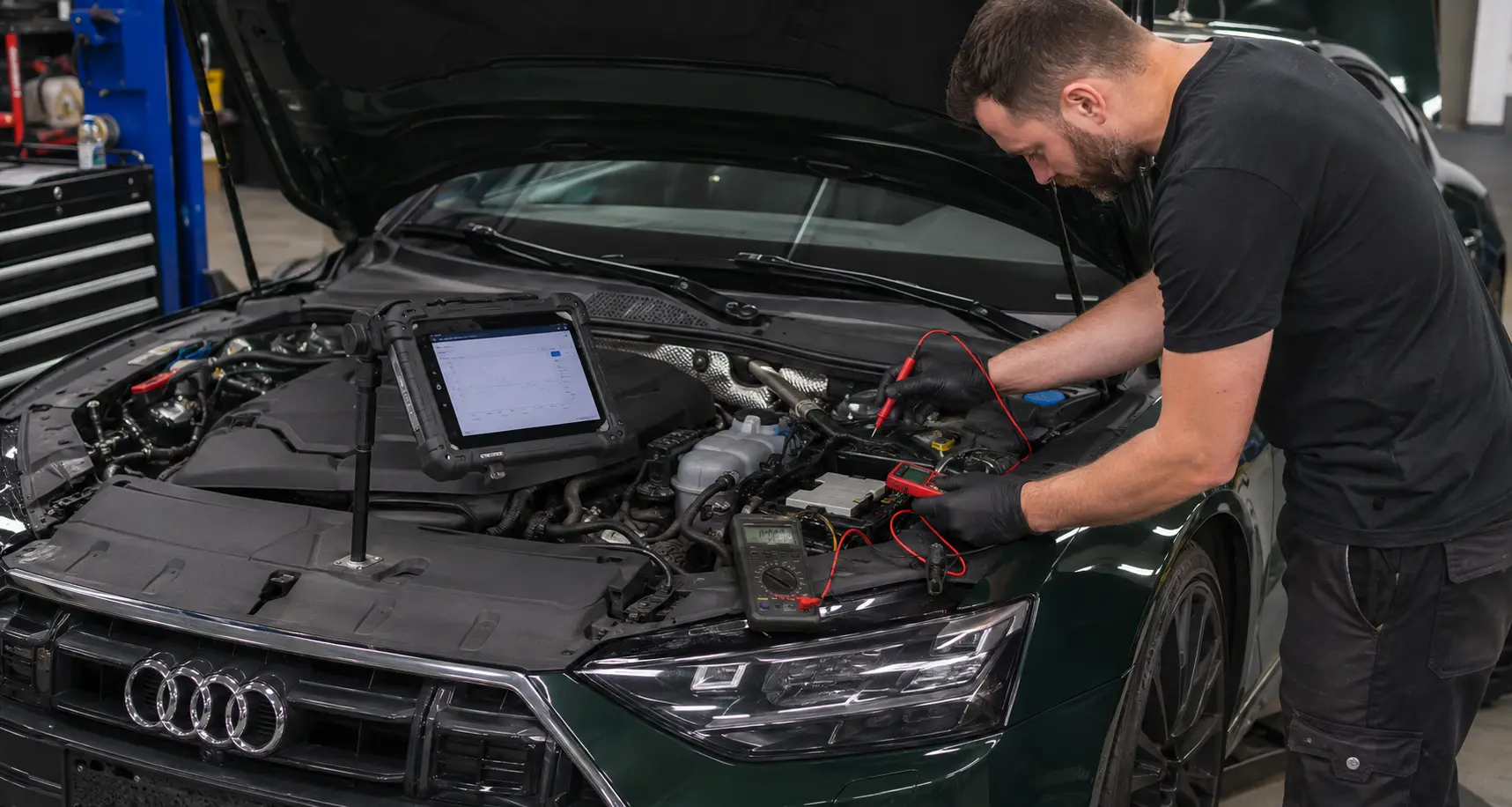
Engine mechanical-condition assessment
Abnormal noise, oil use or poor running may justify mechanical tests selected for the observed symptom and initial findings.
Engine oil-leak diagnosis and repair
Locate the highest active source and distinguish fresh leakage from old residue before resealing or replacing components.
Cylinder-head and head-gasket assessment
Coolant loss, overheating and exhaust symptoms can have several causes. Confirm the cause before approving major work.
Engine-mount inspection and repair
Excess vibration or movement may involve mounts, but engine-running and driveline faults need to be separated first.
Intake and crankcase-leak testing
Unstable idle, mixture faults or hissing may justify leak testing. Do not replace intake parts from a code description alone.
Misfire cause confirmation and repair
Establish whether ignition, fueling, wiring, intake leakage or mechanical condition is responsible before selecting a repair.
Engine repair-or-replacement assessment
After internal damage is confirmed, compare repairable components, replacement compatibility and the complete installation scope before authorization.
Correlation and boost control
Timing and turbo systems
Cold-start noise, correlation faults and low boost are not automatic replacement instructions. Timing and turbo routes need system-specific checks because accessories, leaks, sensors, controls and supporting oil or coolant paths can create overlapping evidence.
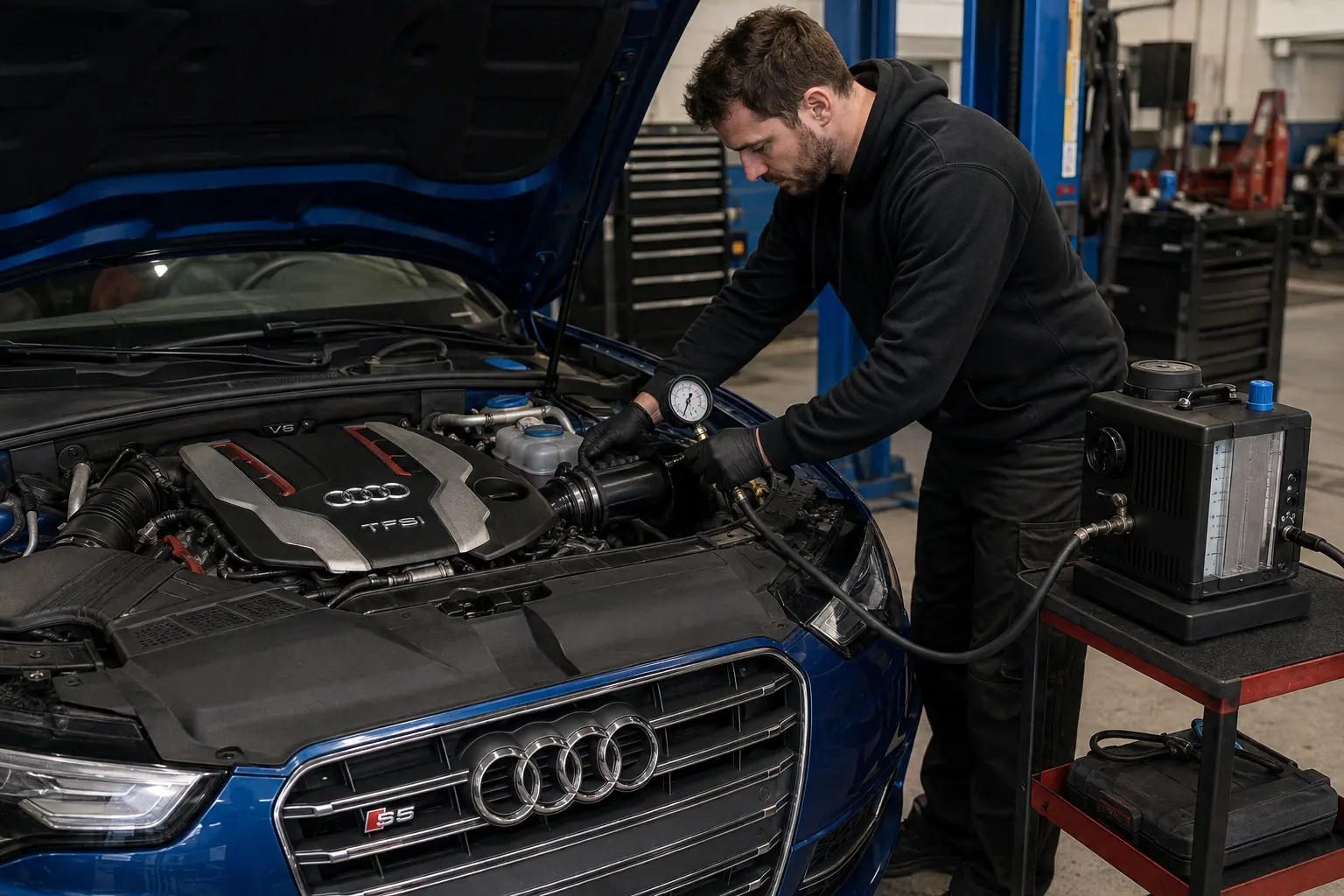
Timing-chain noise investigation
Startup rattle or suspected chain noise needs confirmation because accessories and other engine components can sound similar.
Camshaft and crankshaft correlation assessment
We compare camshaft and crankshaft data, then verify mechanical timing before deciding whether the chain, guides or tensioner need repair.
Confirmed timing-chain system repair
Set the scope from confirmed chain, guide, tensioner and related-component condition for that specific engine.
Underboost and overboost diagnosis
Reduced or inconsistent power needs intake, control and turbo checks before the turbocharger itself is condemned.
Boost-leak, wastegate and actuator testing
Boost-control faults can involve leaks, the actuator, wastegate, wiring or control inputs. Test the complete system before parts selection.
Turbo oil, smoke and condition assessment
Smoke or oil traces require source, feed and return checks before choosing repair or replacement.
Selection, shift and load
Gearbox and driveline
Describe whether a shift or vibration occurs cold, warm, in a certain gear, under acceleration or while slowing. Gearbox, clutch, mount, shaft, control and electrical faults can overlap, so the operating condition matters before repair scope is named.

Gearbox warning and shift-quality diagnosis
Tell us whether the shift problem appears cold, hot, in a particular gear or under load. We check fault data, fluid condition and mechanical behavior under the same conditions.
Gearbox fluid-leak diagnosis
Confirm the source and fluid before resealing because nearby engine fluid can be mistaken for gearbox oil.
Gearbox fluid-service assessment
Confirm gearbox type, history, approved fluid and procedure. Do not apply a universal flush to every transmission.
Clutch and mechatronic assessment
Selection faults or judder can involve clutch, mechatronics, control values or mechanical wear. Testing shows which repair is needed.
Driveshaft and CV-joint inspection
Clicking, clunks or load-related vibration may involve joints, shafts or mounts, so the source needs isolation.
Differential and all-wheel-drive assessment
Noise or binding needs location and mechanical checks. Do not label every driveline symptom as gearbox failure.
Friction, hydraulics and control
Braking system
Brake decisions use more than pad thickness. Disc condition, wear pattern, heat, caliper movement, hydraulic response, sensors and the driver’s reported behavior can change the scope. A serious performance change needs safety guidance before travel.

Brake-pad and wear-sensor service
Low friction material or a warning needs physical confirmation plus inspection of discs and related hardware.
Brake-disc measurement and service
Measure disc condition and wear before recommending replacement. Surface appearance on its own is not enough.
Brake-noise and vibration diagnosis
Squeal, scraping or vibration can involve friction parts, debris, hubs, wheels or suspension, so inspect before quoting.
Brake-pedal and hydraulic diagnosis
A soft, hard or sinking pedal is safety-sensitive and needs hydraulic and mechanical inspection before driving advice.
Brake-fluid service
Review history and fluid requirement. A pedal problem should not be reduced to a fluid-change booking.
Brake-caliper inspection and repair
Uneven wear, heat or pulling may involve a caliper, hose or another brake condition. Confirm the cause first.
ABS and electronic parking-brake diagnosis
Warning messages require system diagnosis. The display alone does not prove that a sensor or actuator has failed.
Ride, steering and road contact
Suspension and steering
Knocks and vibration travel through the body, which can make nearby joints sound alike from the cabin. State whether the change occurs over sharp bumps, during steering, under braking or at a certain speed so inspection can focus on the loaded parts.

Suspension-noise and ride diagnosis
Knocks, rattles or changed ride need inspection under the conditions that reproduce the symptom.
Shock-absorber and strut inspection
Excess movement, leakage or poor control may need attention, while tire and joint condition should also be checked.
Control-arm and bushing service
Movement, noise or uneven wear can involve bushes, arms or nearby joints. Confirm the loaded component before replacement.
Wheel-bearing and hub diagnosis
Humming or play can resemble tire or driveline noise, so the location and condition must be confirmed.
Air-suspension diagnosis where fitted
Uneven height, warnings or slow settling can involve leaks, sensors, controls or supply components. Test before replacement.
Steering-fault diagnosis
Heavy, inconsistent or noisy steering needs checks of the fitted steering system, suspension and electrical controls.
Alignment and tire-wear assessment
Pulling or uneven wear can involve pressure, tires, geometry or worn suspension. Verify equipment and condition before adjustment.
Engine temperature and cabin comfort
Cooling and climate control
Engine cooling and cabin air-conditioning manage different systems, but both rely on useful pressure, temperature, airflow and control checks. Weak cooling does not prove low refrigerant, and a visible coolant trace may not show the highest active source.
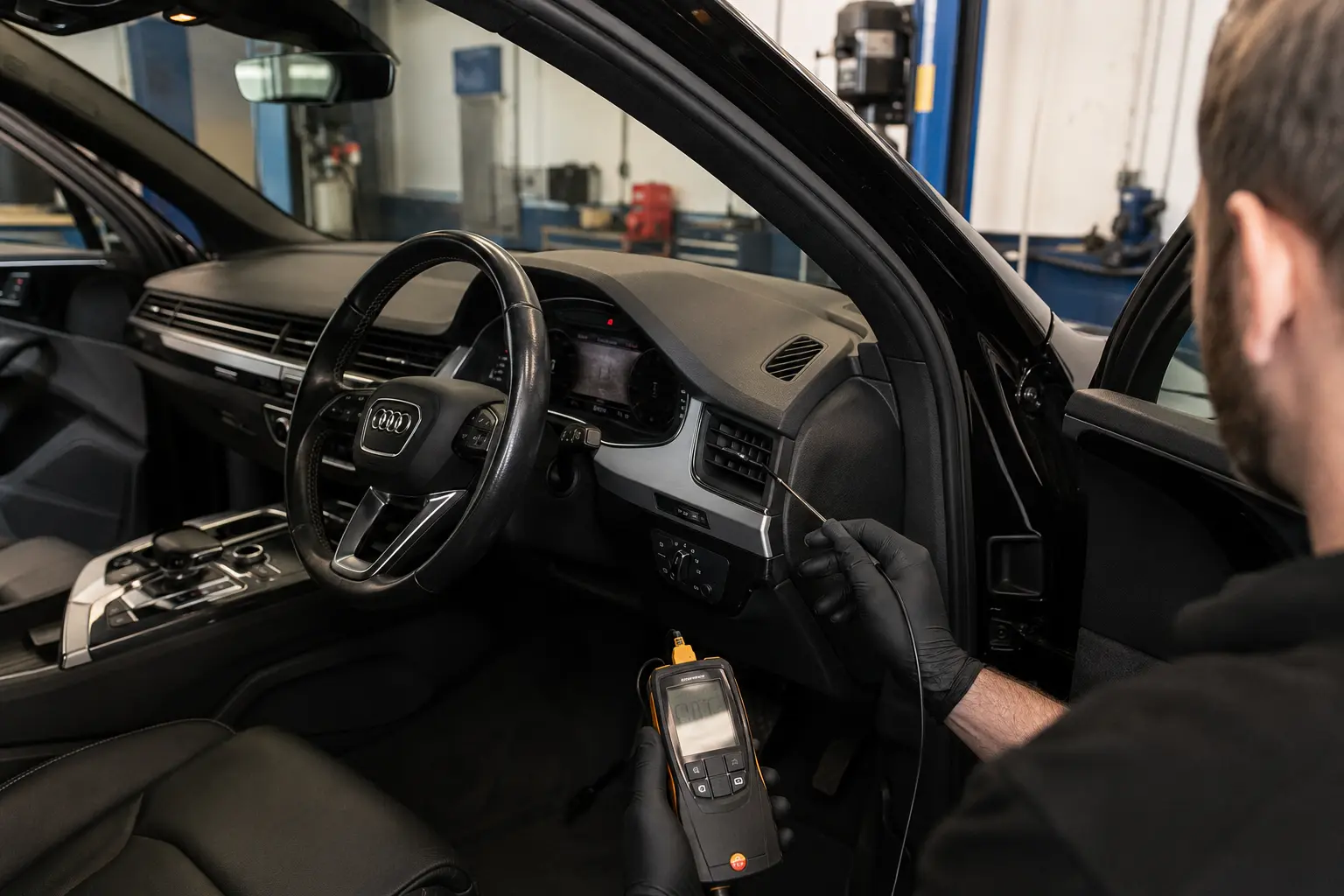
Coolant-leak diagnosis
Identify the active leak and assess related condition before quoting a hose, seal, radiator or other component.
Overheating diagnosis
Overheating can involve circulation, airflow, leakage, control or engine damage. The observed condition sets the safe next step.
Radiator, thermostat and fan assessment
Temperature-control symptoms need component and circuit checks instead of automatic thermostat replacement.
Water-pump and coolant-circulation assessment
Temperature variation or coolant loss may involve circulation, leakage or control faults. Confirm the cause before replacement.
Weak or no AC cooling diagnosis
For weak or inconsistent AC, we check vent temperature, system pressure, airflow and control operation to identify the fault.
AC refrigerant-leak assessment
Loss of cooling can involve leakage, but the source and repairability need confirmation before recharge or parts replacement.
AC compressor and pressure-control assessment
Noise, poor cooling or pressure faults can involve the compressor, controls or another system condition. Test before replacement.
Blower, vent and temperature-control diagnosis
Weak airflow or incorrect vent temperature may involve the filter, blower, flap controls or electrical supply.
Supply, circuits and communication
Electrical systems
A weak supply voltage can create several secondary messages, but that possibility still needs measurement. Share any recent battery replacement, water entry, jump-starting or previous electrical work because those events can change the order of circuit checks.
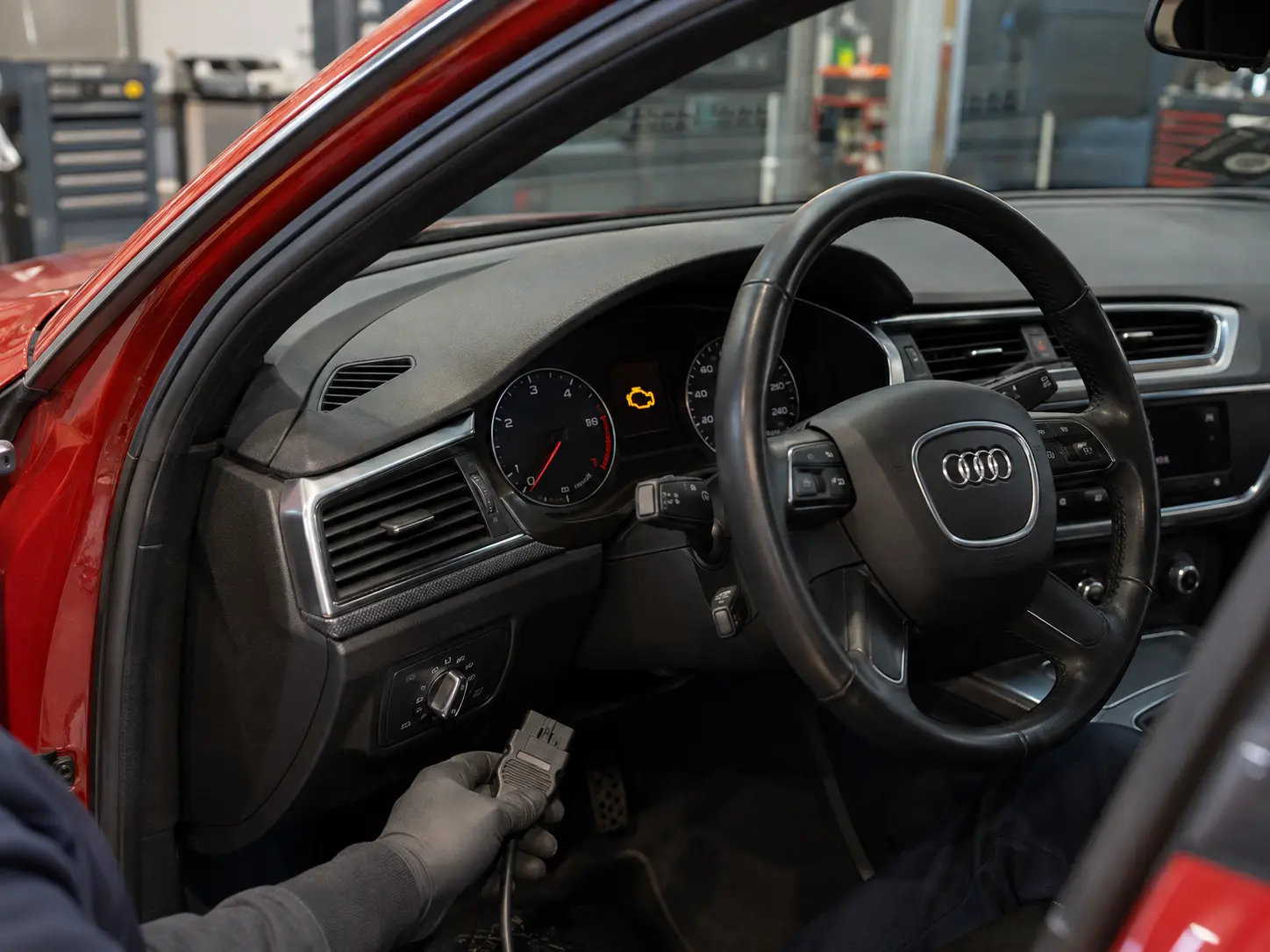
Battery and charging-system diagnosis
For slow starting or electrical warnings, we measure battery condition, charging output, voltage drop and the main connections.
Starter and no-crank electrical diagnosis
A no-crank condition can involve supply, control, connections or the starter. Isolate the electrical path first.
Parasitic battery-drain tracing
Repeated discharge needs measured circuit isolation. Replacing the battery does not resolve an underlying drain.
Lighting and accessory fault repair
Confirm whether the issue involves a lamp, switch, supply, wiring or control before selecting replacement parts.
Sensor, switch and wiring-circuit diagnosis
A sensor code can result from wiring, supply, communication or the measured system. Test the circuit before replacing the sensor.
Parts, labor and testing
What changes your Audi repair price
A defined maintenance item can often be priced once the vehicle specification and inclusions are confirmed. An intermittent electrical problem, unknown internal fault or leak with an uncertain source normally needs inspection before a repair total becomes meaningful.
Ask the estimate to separate the finding, proposed work and anything that remains conditional. Compare parts descriptions, labor, fluids, related seals and verification in both quotations before comparing totals.
- 01Diagnostic time needed to reproduce and test the concern
- 02Model, powertrain and access to the affected area
- 03The repair required and any related damage
- 04labor steps, fluids and workshop consumables
- 05Parts specification, compatibility and selected option
- 06Setup, function checks and post-repair verification
Findings you can understand
See why a repair is recommended
Useful workshop evidence explains the condition found, the work proposed and the relevant check afterwards. The exact record depends on the job. A fault investigation may use scan information and measurements. A leak may need cleaning and reinspection. Braking work can use condition notes and measured wear.
A useful component photograph shows the relevant condition, and the diagnostic record links each fault code to the test that explains it. The record should distinguish confirmed work, due maintenance, items to monitor and anything that could not be reproduced during the visit.
- Original complaint
- The warning, behavior, timing and conditions supplied by the driver.
- Relevant check
- The inspection, measurement or controlled test selected for that concern.
- Confirmed fault
- What the evidence confirms and where its limits remain.
- Your repair quote
- The proposed work, parts description and conditional items before authorization.
- Final checks
- The function, value, leak or road check that relates to the original complaint.
From concern to handover
Know what happens after booking
Call or WhatsApp your Audi model and the service or problem you want help with. We are in Al Quoz 4, Dubai, open Monday through Saturday, 9:00 AM to 7:00 PM. Tell us your preferred visit or ask about pickup arrangements.
We confirm appointment availability and the expected time for the booked work. Routine servicing and an intermittent fault investigation may need different amounts of time. Parts availability, testing and repair access can affect collection time, so we explain the expected handover before you approve the job. Mileage, previous invoices and dashboard photos are helpful if available. You do not need a VIN to make the first call.
- 01
Share the concern
Keep the original sequence, operating conditions and available photographs intact.
- 02
Confirm the visit type
Separate planned maintenance, inspection and diagnostic time before arrival.
- 03
Allow the first checks
Use visible condition, stored information and relevant measurements to define the next step.
- 04
Review before approval
Distinguish confirmed repair, due maintenance, monitoring and unresolved limits.
- 05
Keep the result
Retain the invoice, findings, parts description and check related to the complaint.
If a concern is intermittent, the first visit may end with a documented next test rather than immediate replacement. If a symptom returns after work, report whether it is identical or only similar and when it returned. That information keeps the follow-up attached to the original evidence.
Questions before choosing a service
Audi service questions
These answers help define the first booking. Inspection still decides the repair scope for the individual vehicle.
Which Audi models get minor service from AED 350?
Audi A1, A2, A3 and A4 minor service starts at AED 350 before VAT, or AED 367.50 including VAT. The price covers the listed oil-and-filter work and basic checks. Other models and S or RS versions have their own prices. Additional maintenance and repairs are quoted separately.
Which service should I choose if I do not know what is wrong?
Choose diagnostics and describe the symptom rather than naming a replacement part. Include the warning text, when the problem occurs, recent work and any change in driving behavior. Those details help select the first checks and identify the repair your Audi needs.
Does a fault code tell me which part to replace?
No. It records what a control unit detected under certain conditions. Wiring, supply voltage, leaks, control inputs, connected components or the part named in the description may still need testing. The code becomes useful when it is read with physical checks and the driver’s complaint.
Is an oil change the same as a full service?
No. An oil change covers engine oil and the oil filter together with the checks stated in that booked scope. A broader service may include other due filters, fluids and inspections. Ask for the inclusions in writing and compare them with the car’s recorded history.
Can I drive with an amber warning light?
Sometimes limited driving may be considered, but color alone cannot decide. A steady warning with normal behavior differs from a flashing warning, reduced power, overheating, severe vibration or changed braking and steering. Send the exact message and symptoms for advice before driving a significant distance.
Can I receive an exact repair price before diagnosis?
A clearly defined maintenance item may be priced after the vehicle and inclusions are confirmed. An unknown mechanical, electrical or intermittent fault normally needs inspection first. Ask what the initial quotation covers, whether diagnostic time is separate and what findings could change the total.
Should I book maintenance and a fault together?
Report both when booking. The workshop may need to reserve diagnostic time or make a safety decision before routine work begins. Combining the concerns without explaining them can leave the visit scoped only for maintenance and too little time for the fault investigation.
Does a pre-purchase inspection guarantee future reliability?
No. It reports the condition and functions that can be inspected or tested within the agreed scope at that time. It cannot reveal every concealed fault, certify mileage or accident history, or predict future component life. Read the scope and limitations before relying on the report.
Do all Audi models follow the same service schedule?
No. Requirements can vary with the model, engine, gearbox, drivetrain, age, use and market specification. Supply the vehicle details and available history so the applicable schedule, fluid specification and parts can be checked before work is authorized.