
Clutch and driveline diagnosis
Audi Clutch Replacement in Dubai
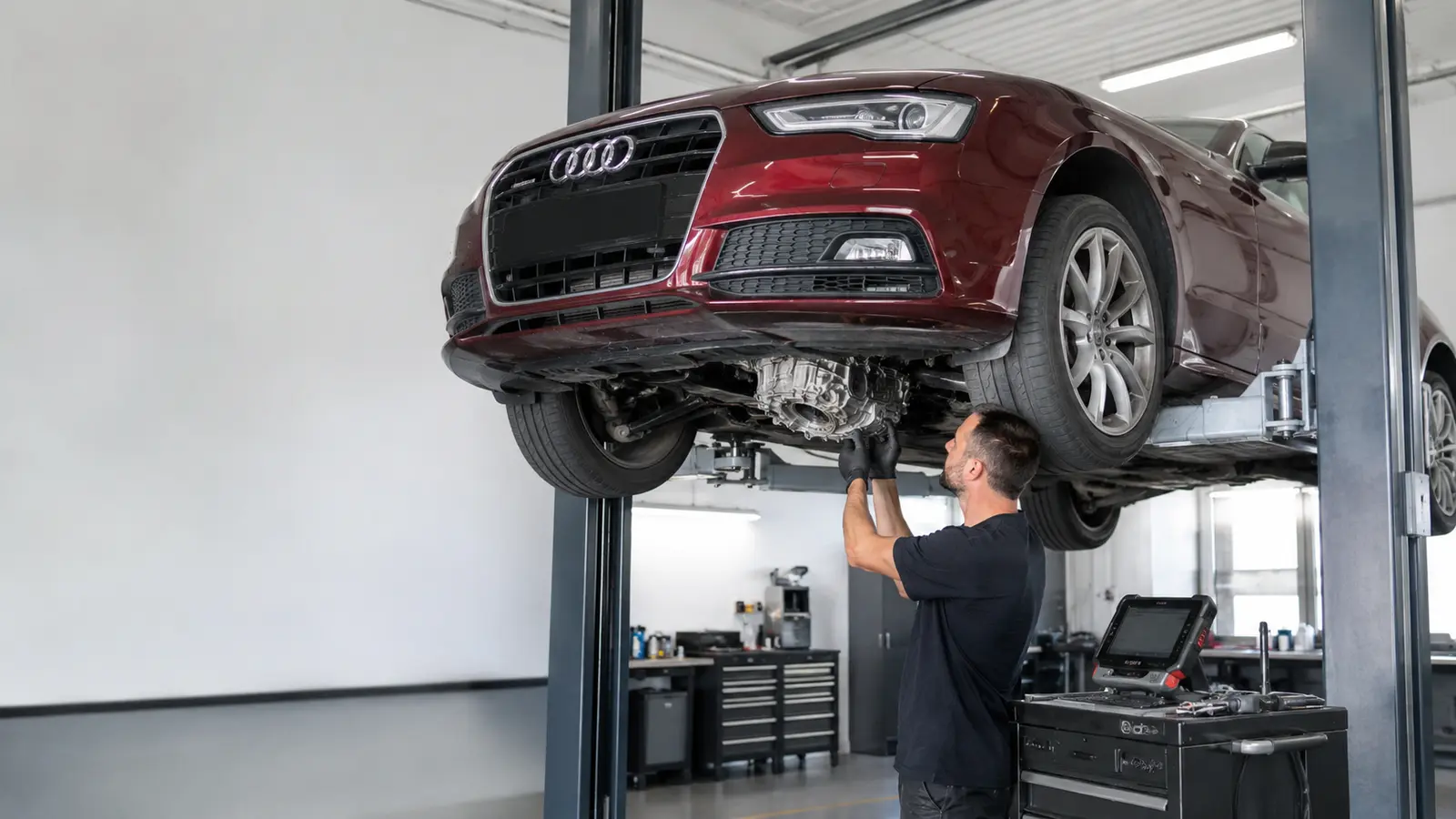
A meaningful clutch quote starts with the transmission type and the condition that creates the slip, shudder or engagement fault. Manual, dry dual-clutch and wet dual-clutch systems need different parts and procedures.
A worn clutch is one possibility. The same behaviour can come from the flywheel, hydraulics, mechatronics, mounts, engine running, an axle or the gearbox itself. We identify the vehicle and transmission before recommending a kit.
Identify the gearbox, confirm where the slip or shudder begins, then price the clutch, flywheel and related work separately.
Tell us when the problem happens
This builds a workshop-ready WhatsApp request. Nothing is stored or sent automatically.
Clutch or something else
The symptom starts the test
Shudder, harsh changes and delayed engagement do not approve a clutch. They identify the condition that the workshop must reproduce and measure.
- Likely clutch evidenceRepeatable slip under controlled load, drag, relevant wear data, release-system evidence or a clutch surface confirmed after access.
- Reasons to pauseLow voltage, engine misfire, mechatronic pressure, incorrect fluid condition, mount movement, axle play or an internal gearbox fault can create similar behaviour.
- Quote logicThe estimate should name the transmission, part tier, kit contents, flywheel decision, hydraulics, fluid, basic settings, VAT and what dismantling may still reveal.
Transmission identification
The badge is not a parts number
One Audi model can span manual, S tronic, Tiptronic, Multitronic, front-wheel-drive and quattro layouts across different generations and markets. A model name narrows the search, but it cannot select the clutch.
Inputs that identify the route
- Model, generation and production year
- Engine and powertrain
- Front-wheel drive or quattro
- VIN or data-sticker information
- Transmission code where available
- Selector and pedal configuration
- Scan-tool identity and installed part data
Driver-operated clutch
A friction disc and pressure plate connect engine torque through a pedal-operated release system. Flywheel and hydraulic condition can change the installed scope.
Dual-clutch family
Two clutches operate alternating gear paths. Some applications use dry clutches and others use oil-cooled wet clutches. The gearbox code decides the kit and procedure.
Different automatic route
A torque-converter automatic is not quoted like a conventional external clutch replacement. Converter, valve-body, control and internal clutch concerns belong on Audi Gearbox Repair.
Confirm before promising
Some older applications use a CVT launch-clutch arrangement, while rare systems may use an automated-manual clutch. The exact unit controls the diagnostic route.
Drivetrain system map
Find where torque delivery changes
The clutch sits in a longer path. A correct diagnosis asks whether the engine produced steady torque, the clutch transferred it, the gearbox selected and carried it, and the driven wheels received it without excess movement or slip.
Engine output
Misfire, torque reduction or unstable idle can feel like clutch judder before any friction part is condemned.
Clutch interface
Manual disc, dry dual clutch or wet dual clutch transfers torque through a system-specific release and control method.
Gearbox control
Mechatronic pressure, selector data, fluid condition and internal components decide engagement and shifts.
Driveline
Mounts, driveshafts, CV joints, differentials and all-wheel-drive components can introduce lash or vibration.
Driven wheels
Road load, wheel speed and the exact condition reveal whether engine speed and vehicle acceleration separate.
Driving decision
Use the severity first
No drive, burning smell with loss of motion, severe grinding, an active transmission-overheat warning, visible fluid loss or unsafe engagement needs workshop or recovery advice.
Clear slip under load, recurring shudder, worsening pedal operation or repeated warnings can deteriorate and should be inspected before ordinary use continues.
An occasional low-speed jerk, one warning after low voltage, isolated cold behaviour or an unverified previous quote needs evidence before a clutch is ordered.
Symptom to first test
The same feeling has several causes
The first useful checks reproduce the customer’s condition while preserving fault records. A code, warning or adaptation value is evidence to interpret, not permission to replace a clutch.
| Customer report | Possible clutch route | Important lookalikes | First useful checks |
|---|---|---|---|
| Revs rise without matching acceleration | Manual or dual-clutch slip | Engine torque reduction, control intervention or internal gearbox fault | Controlled-load road test when safe, full scan and supported live slip data |
| Judder moving off | Friction surface, flywheel or adaptation | Mounts, engine misfire or driveline lash | Cold and warm reproduction, engine data, mount movement and clutch data |
| Harsh low-speed shifts | Dual-clutch wear or setting | Mechatronic control, fluid, software or engine running | Identify gearbox, preserve faults, review fluid condition and measured values |
| Delay selecting Drive or Reverse | Dual-clutch engagement possible | Mechatronic pressure, selector input or internal leakage | Engagement data, temperature context, fault memory and relevant pressure checks |
| Difficult manual gear selection | Clutch drag or hydraulic fault | Selector cable, synchroniser or internal gearbox | Pedal and hydraulic operation, selection with engine off and running |
| Pedal sinks or feels inconsistent | Master, line, slave or release system | Pedal mechanism or fluid-loss route | Leak inspection, fluid level and controlled hydraulic operation check |
| Rattle at idle or shutdown | Dual-mass flywheel | Mount, pulley, exhaust contact or internal noise | Locate noise and record how it changes with clutch or operating condition |
| Noise when pressing the pedal | Release bearing or pressure mechanism | Gearbox bearing or pedal linkage | Stationary operating test and mechanical inspection before removal |
| Burning smell | Overheated friction surface | Fluid leak or electrical source | Stop-load assessment, leak inspection and safe-recovery decision |
| Gearbox or PRNDS warning | Protection or adaptation possible | Mechatronic, sensor, voltage or internal fault | Full-system scan before clearing any evidence |
| No drive | Severe clutch failure possible | Axle, differential, mechatronic, selector or gearbox | Do not keep driving. Scan and inspect the physical driveline. |
Diagnosis before replacement
Build the evidence in order
Each stage removes a different wrong-parts risk. The final route may still need gearbox removal for confirmation, but the estimate should explain why access is justified.
Record the exact condition
Note temperature, load, gear, direction, warning and whether the car can move safely. A symptom that only appears hot or while reversing must be tested in that context.
Identify the transmission
Use the vehicle specification, VIN-linked data, transmission code and scan-tool identity. Dry and wet dual-clutch parts are not interchangeable.
Preserve the fault record
Scan engine, transmission, ABS and relevant network modules before clearing faults. Voltage history and engine-running faults can distort gearbox behaviour.
Test cold and warm
Road test only when safe. Compare requested and actual gear, slip, clutch temperature, adaptations or wear values where the fitted system exposes useful data.
Check the surrounding hardware
Inspect applicable fluid circuits and leaks, plus mounts, axles, CV joints, driveshaft and differential play when the symptom points there.
Separate the mechanism
Manual cars need pedal, hydraulic, drag, release-noise and flywheel checks. S tronic diagnosis must separate clutch wear from mechatronic and internal gearbox faults.
Price the supported route
Present parts, labour, fluids, fasteners, setup, testing and uncertainties before ordering. Adaptation or fault clearing cannot repair worn friction material.
Manual clutch route
Price the kit and access together
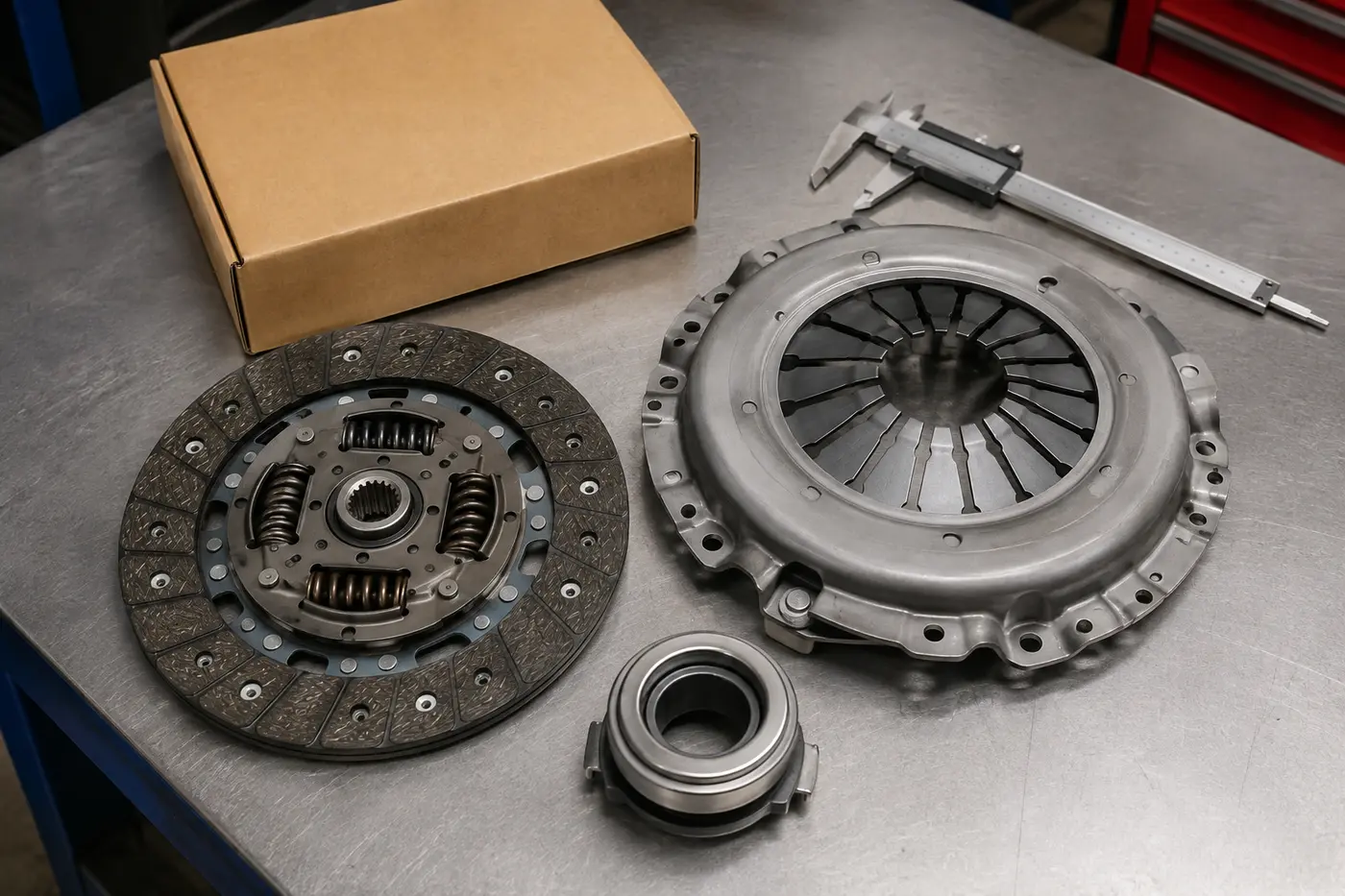
A conventional manual clutch uses a friction disc, pressure plate and release mechanism. The gearbox normally has to be separated from the engine to reach them, so the labour is substantial compared with the purchase price of one small component.
Replacing only a worn disc can be poor value when the pressure plate and release parts share the same access. That does not mean every nearby component is automatically sold. The written scope should state what the selected kit contains and which parts remain inspection-dependent.
- Clutch kitDisc, pressure plate and the exact release parts included by the chosen kit.
- Release bearing or concentric slave cylinderSome designs integrate the bearing and hydraulic slave. A leakage or wear decision matters because a concentric unit may share gearbox-removal labour.
- Master cylinder, line or external slaveThese can create pedal and disengagement faults without a worn friction disc, and some routes do not require gearbox removal.
- Dual-mass flywheelInspect against the relevant limits for movement, surface, heat and noise. Do not assume universal replacement or universal resurfacing.
Hydraulic and release system
A pedal fault may avoid a clutch kit
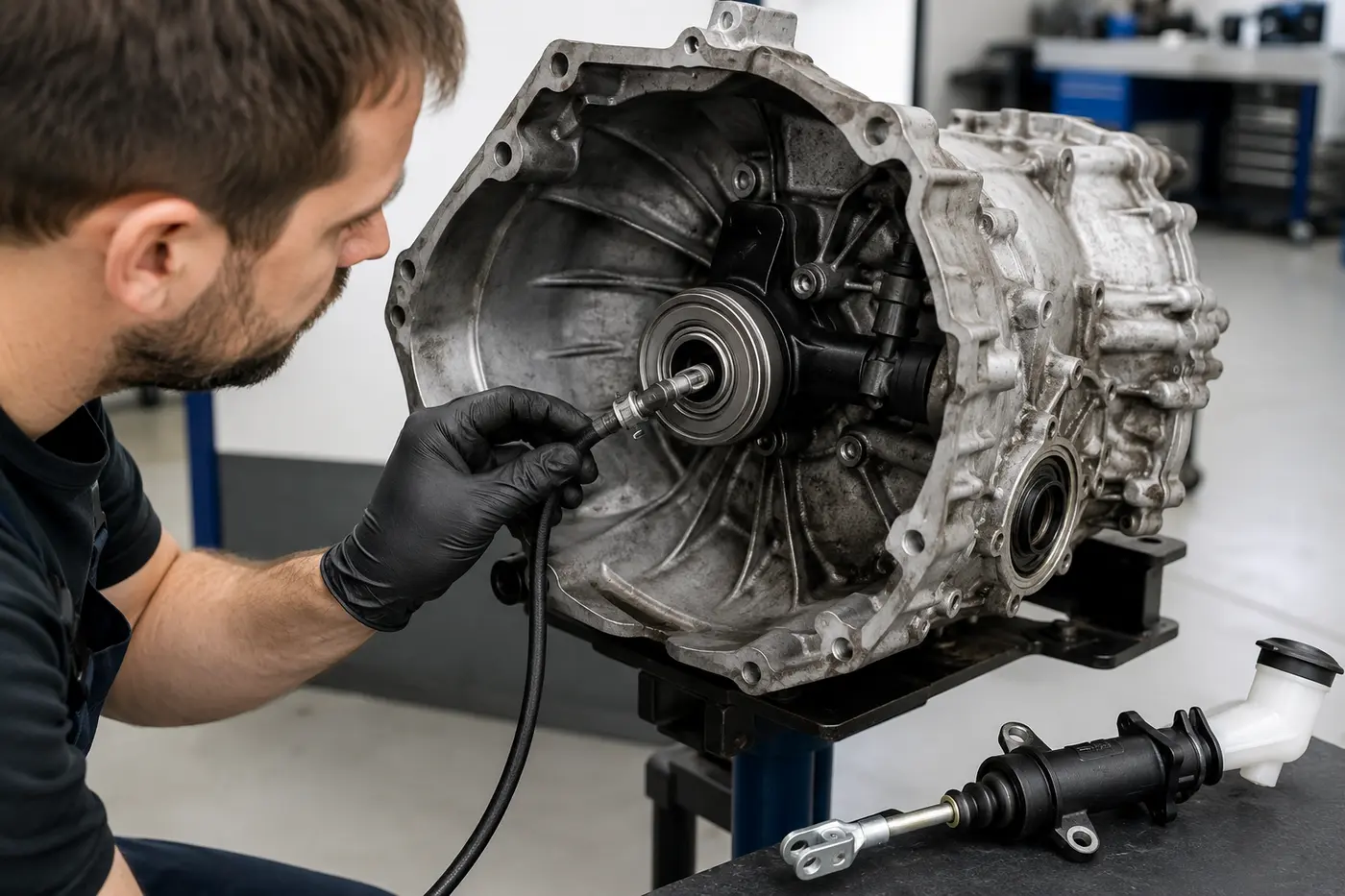
A pedal that sinks, changes height or disengages inconsistently can come from a master cylinder, line, external slave cylinder, concentric slave cylinder, release bearing, fork or pedal mechanism. The fluid-loss point and mechanical response decide the next step.
A concentric slave cylinder combines the slave and release bearing near the gearbox input. Because replacement often requires gearbox removal, inspect and quote shared-access parts before approval.
Bleeding can restore operation when air entered a sound hydraulic circuit for a known reason. It is not a repair for a leaking seal or a damaged release component. The estimate should say whether the job includes fluid, bleeding, leak recheck and a pedal-operation test.
S tronic clutch packs
Dry and wet are different jobs
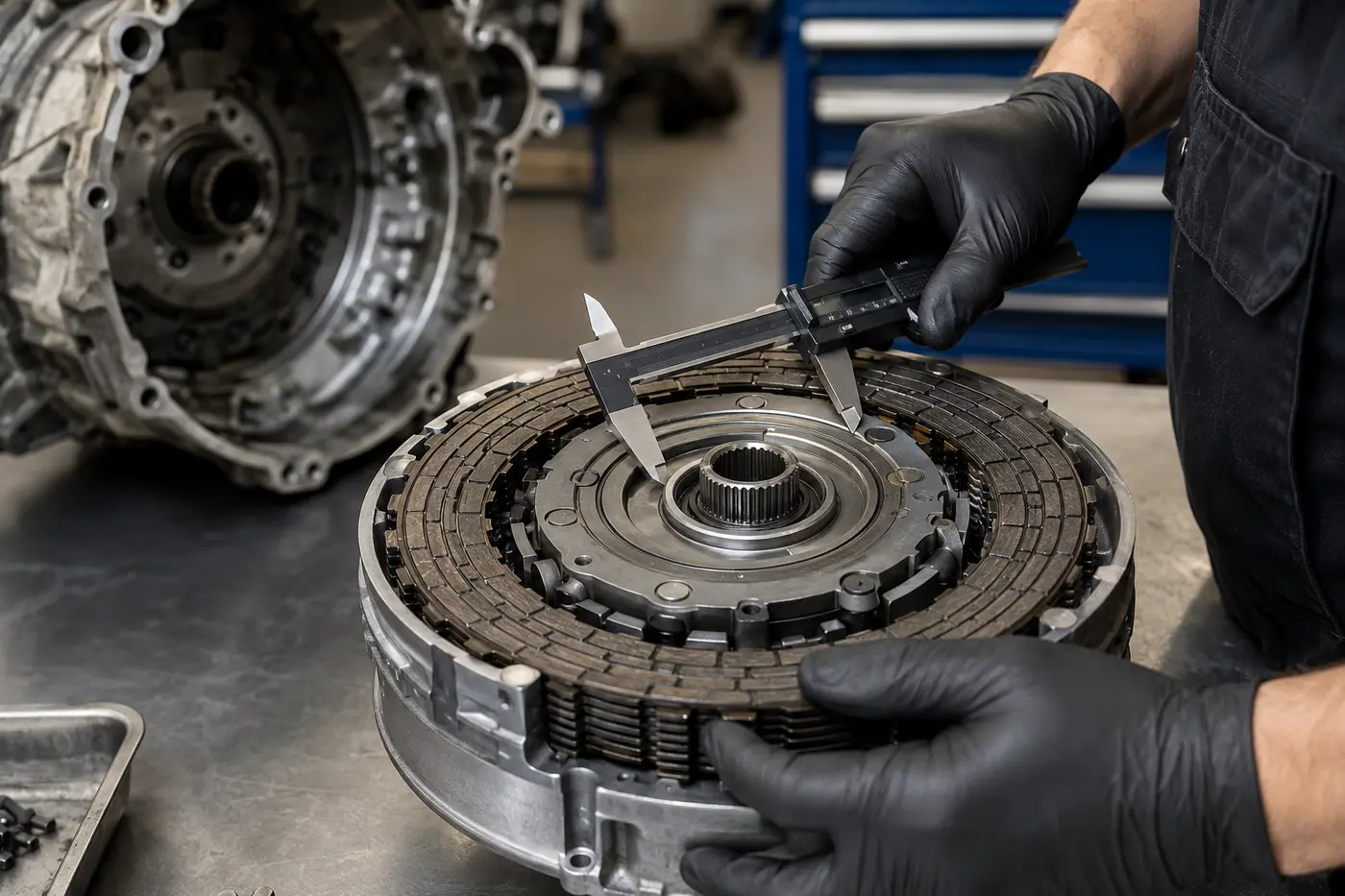
S tronic is Audi’s dual-clutch family, not one universal gearbox. Two clutches manage alternating gear paths, but clutch construction, layout, tools, fluids and post-installation settings depend on the exact transmission.
Dry dual clutch
The friction clutches are not cooled by their own oil bath. That does not mean the complete gearbox has no lubricants, separate fluid circuits or service requirements. Confirm the code, clutch part number, setting procedure and related gearbox condition.
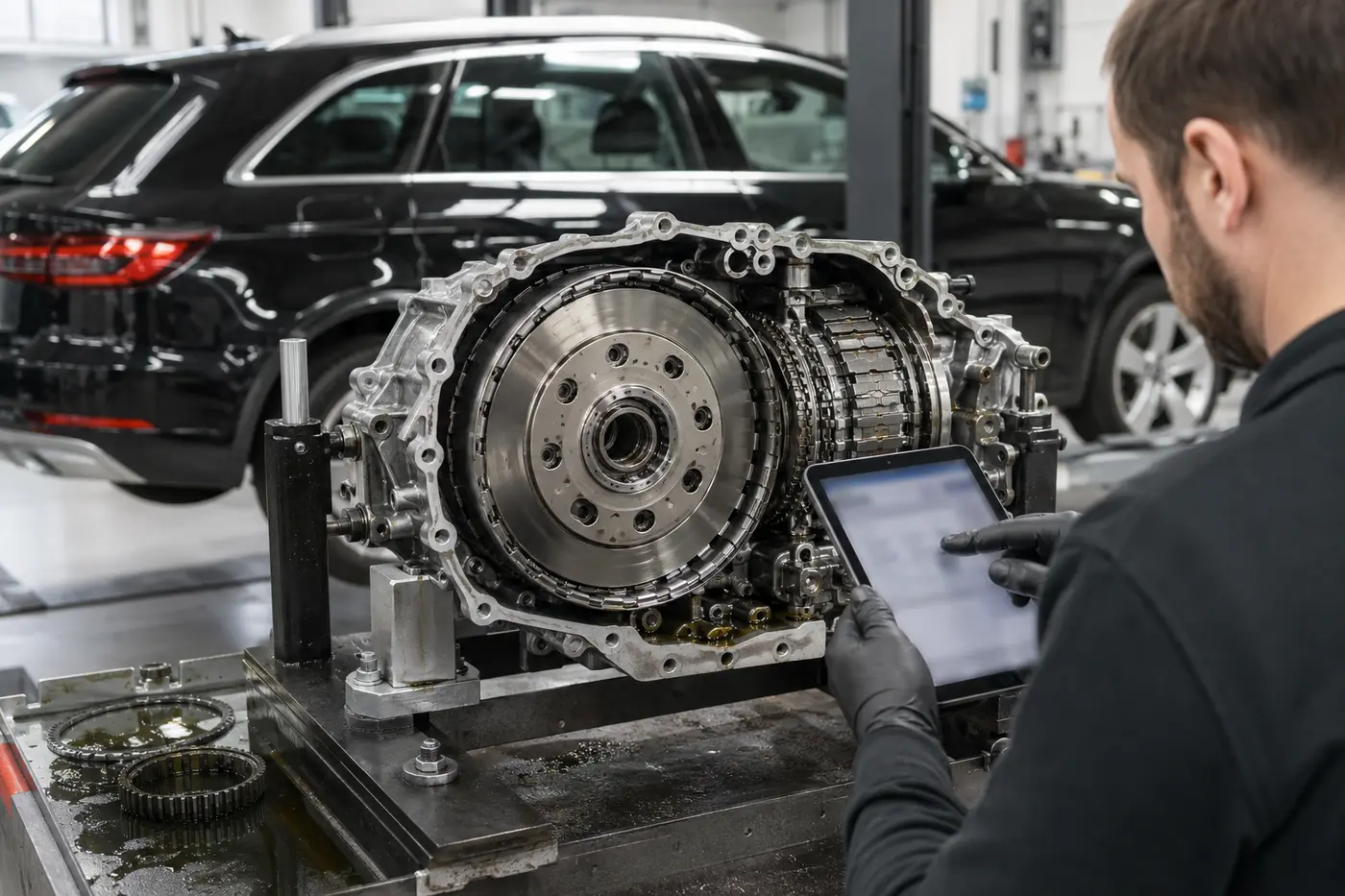
Wet dual clutch
Oil-cooled multi-plate clutches require the correct fluid decisions, contamination assessment and system-specific installation. The quote must state whether fluid and filter work, basic settings and post-repair measured-value checks are included.
Low-speed shudder, harsh shifts or a delay selecting a direction can involve clutch wear, but mechatronic pressure, a solenoid, sensor, fluid condition, engine running or an internal fault can look similar. Basic settings support a correct mechanical repair. They are not a substitute for replacing confirmed worn friction material or repairing a control fault.
Flywheel and contamination
Removal can change the final scope
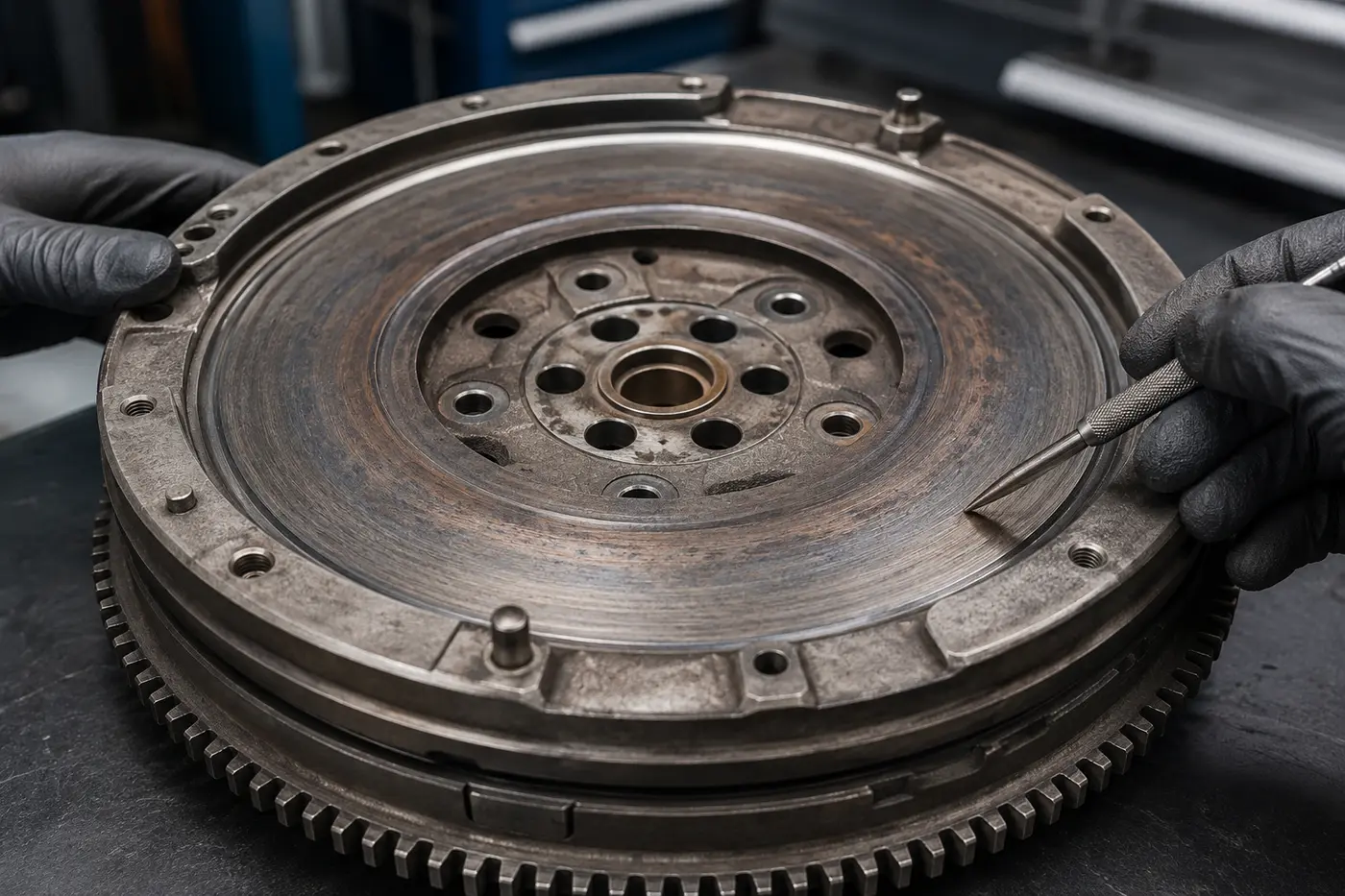
A dual-mass flywheel filters engine torsional vibration. Noise or judder can justify inspection, but replacement needs application-specific movement, heat, surface and spring evidence.
Heat damage, an unsuitable friction surface, abnormal movement or leakage from the flywheel can support replacement. Resurfacing is not automatically suitable for every dual-mass design. The quote should identify flywheel bolts and other single-use fasteners when required.
Oil on a friction surface changes the route. Confirm and repair the leak source before fitting new friction parts; seal replacement is evidence-led, not automatic.
Clutch lookalikes
Do not force every shudder into this service
A clutch-specific enquiry can finish with a different, cheaper repair or a broader gearbox route. That is a useful diagnostic result, not a missed sale.
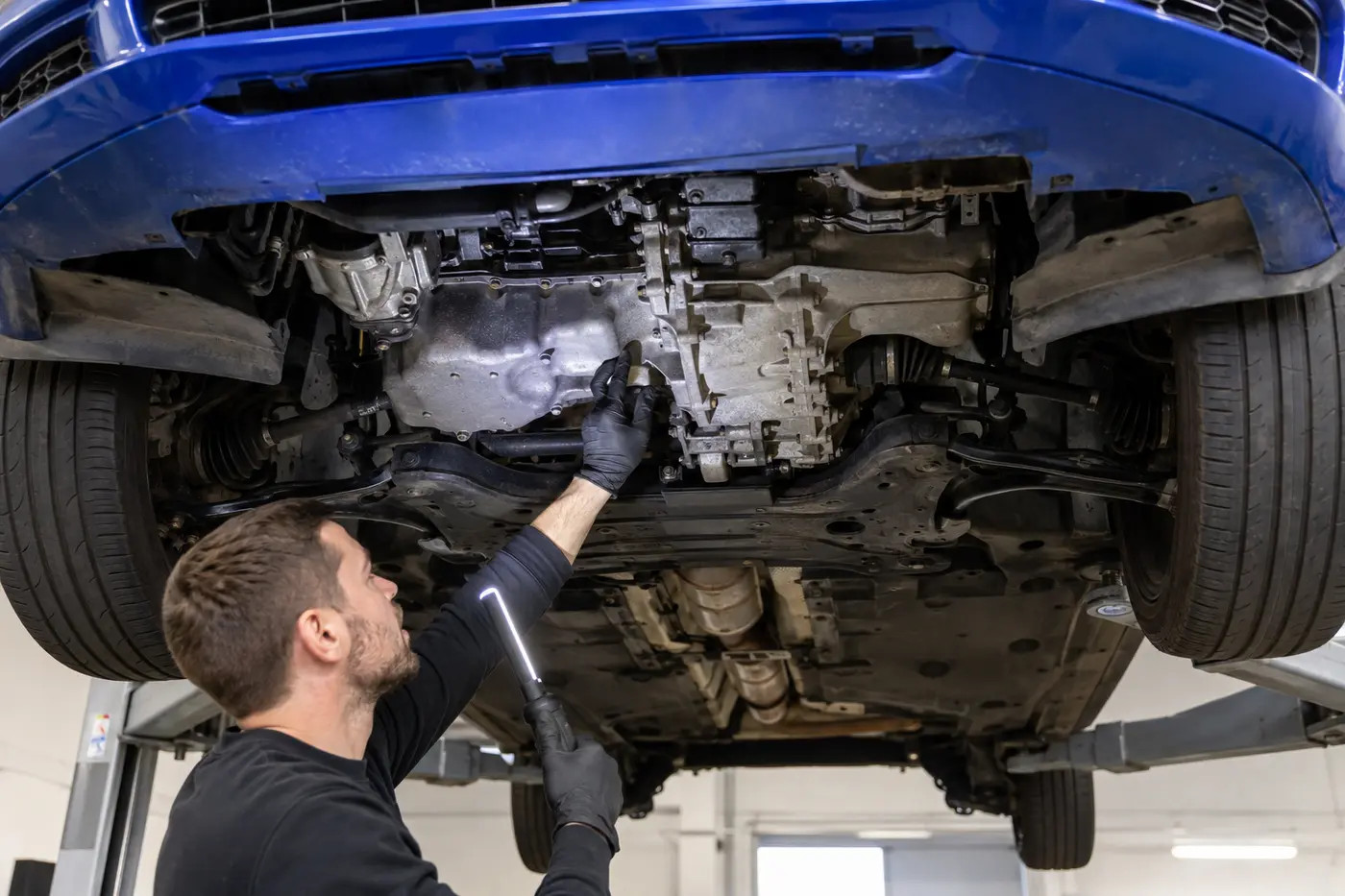
Mechatronic control
Pressure, solenoid, sensor or selector faults can delay or roughen engagement. Confirm the control route on Gearbox Repair when clutch wear is not supported.
Engine running
A misfire, torque reduction or unstable idle can create vibration as the clutch engages. Wider engine testing belongs with Audi Engine Repair only after the driveline evidence points there.
Mount movement
Engine and gearbox mounts can amplify a normal torque transition or create a thump without friction slip. Load movement and physical condition matter.
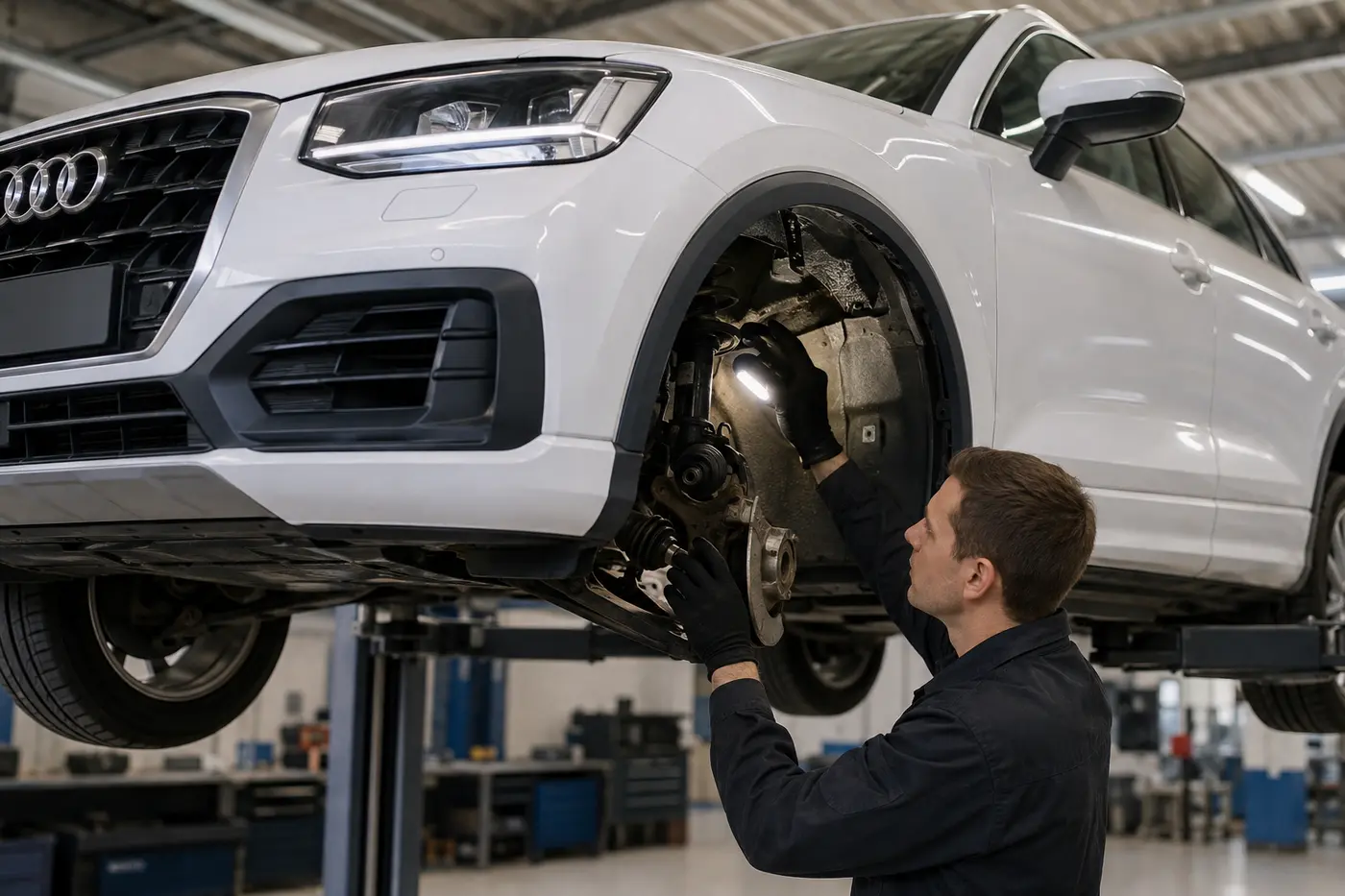
Axle and CV joint
An inner joint, driveshaft or axle fault may shudder under acceleration or cause a no-drive event. Physical inspection separates it from clutch slip.
Differential and quattro
A centre differential, final drive or all-wheel-drive coupling is not automatically the engine-to-gearbox clutch. The actual drivetrain layout controls the route.
Voltage and network faults
Low voltage or communication faults can cause one warning or irregular control behaviour. Preserve the event and use Audi Diagnostics when the cause is not isolated.
Tiptronic and Multitronic
Torque-converter and CVT systems use different internal clutch and control arrangements. They are not quoted as a normal S tronic clutch-pack replacement.
Fluid and internal gearbox
Incorrect level, leakage, debris, a bearing, gear or internal shaft fault can overlap with engagement complaints. Broader repair remains with the gearbox hub.
Parts decision
Trace the kit to the exact gearbox
Part tier matters after fitment is confirmed. Brand familiarity alone does not prove that a particular clutch, flywheel or hydraulic component suits the vehicle.
Audi Genuine
Selected through the vehicle details and current Audi part supersession. It is usually the highest purchase-price route. Correct fitting, related-fault repair and applicable setup still matter.
Established OE-quality brand
LuK, SACHS and Valeo make clutch and flywheel products for many European applications. BorgWarner components may be relevant to some dual-clutch systems. Use any name only after the exact catalogue and part number confirm fitment.
Quality aftermarket
This can reduce cost where the application, kit contents, origin, specification and written warranty are traceable. Unknown white-label parts should not be grouped with established manufacturers.
Used friction components
A used disc, pressure plate, release bearing or clutch pack is not a sensible standard repair. Wear and heat history are difficult to establish, while repeat gearbox-removal labour can exceed the saving.
Engine tuning, torque changes, repeated launch use, towing and heavy stop-start work can affect selection and wear. They do not justify pushing a performance clutch onto a standard road car. A used complete gearbox is a separate Gearbox Repair decision, not a used-clutch option.
Tentative installed prices
Compare the complete AED scope
These planning bands were market-checked in September 2026 against the supplied production ranges and include 5% VAT. They remain tentative until workshop labour and a VIN-relevant parts route are reconciled. A VIN-linked written estimate overrides every webpage range.
Why the bands are broadManual, dry dual-clutch and wet dual-clutch systems use different parts, access, fluids and settings. Flywheel, hydraulic, seal, mount, axle, contamination and parts-availability findings can move the total.
Installed unless stated| Service route | Tentative range | Assumption and inclusion | Main variables |
|---|---|---|---|
| Initial clutch and transmission assessment | AED 250 to 650 | Diagnosis, not parts. Symptom review, identification and first checks. | Road-test safety, warning state and time needed to reproduce. |
| Extended scan and cold or warm road-test diagnosis | AED 350 to 850 | Diagnosis with relevant module scan and measured-value review. | Intermittent behaviour, temperature and safe road-test time. |
| Manual clutch hydraulic bleed or minor line work | AED 250 to 700 | Labour, ordinary fluid and verification. No clutch kit. | Leak source, access and line condition. |
| Clutch master-cylinder replacement | AED 650 to 1,600 | Quality part, ordinary labour, bleeding and pedal check. | Part tier and pedal-area access. |
| External clutch slave-cylinder replacement | AED 700 to 1,800 | Quality part, ordinary labour, fluid and leak check. | Location, line connection and part source. |
| Concentric slave cylinder or release bearing with removal | AED 1,800 to 4,000 | Part and gearbox-removal labour. Clutch kit excluded. | Transmission access and whether other worn parts are approved. |
| Manual clutch kit replacement | AED 2,500 to 5,500 | Established brand or suitable aftermarket kit, ordinary labour and road test. | Kit contents, access, hydraulics and flywheel condition. |
| Manual clutch kit with dual-mass flywheel | AED 4,500 to 8,500 | Established clutch and flywheel route, ordinary labour and verification. | Part tier, bolts, release components and engine layout. |
| Dual-mass flywheel when separately justified | AED 2,800 to 5,800 | Installed flywheel route. Related clutch parts excluded unless quoted. | Access sharing, design, bolts and part tier. |
| Dry S tronic or DSG clutch-pack replacement | AED 4,000 to 8,500 | Verified clutch pack, ordinary labour, suitable setting procedure and verification. | Gearbox code, flywheel, tools, mechatronic condition and part tier. |
| Wet S tronic clutch-pack replacement | AED 5,500 to 12,000 | Verified clutch pack and ordinary installation labour. | Gearbox code, fluid circuit, contamination, filter and setup. |
| S tronic clutch pack with flywheel where required | AED 7,500 to 15,000 | Clutch, justified flywheel, ordinary labour and applicable basic settings. | Dry or wet system, part tier, fluid and related faults. |
| Clutch basic settings or adaptation after suitable work | AED 350 to 900 | Setup and verification only. No mechanical repair. | Fitted system, prerequisite faults and procedure time. |
| S tronic fluid and filter service where applicable | AED 900 to 1,700 | Correct identified fluid, filter and level procedure. | Gearbox, fluid circuit, capacity and filter access. |
| Rear-main-seal work while gearbox is removed | AED 700 to 1,800 additional | Confirmed seal route and shared access. Added to clutch job. | Engine, seal housing, bolts and proven leakage. |
| Gearbox input-seal work when confirmed | AED 1,000 to 2,800 additional | Confirmed seal, ordinary added labour and leak check. | Transmission design and internal access. |
| Single-use fasteners and installation hardware | AED 200 to 800 | Parts allowance, stated separately where required. | Subframe, flywheel, mount and driveline hardware. |
| Engine or gearbox mount replacement | AED 800 to 2,800 | One confirmed mount with ordinary labour. | Mount type, electronics, access and Genuine or alternative part. |
| CV joint or axle route mistaken for clutch shudder | AED 1,200 to 4,000 | Installed axle or joint route after physical diagnosis. | Side, complete axle versus joint and part tier. |
| Mechatronic diagnosis when clutch is unconfirmed | AED 300 to 850 | Diagnostic route only. No clutch or mechatronic part. | Fault complexity and hot or intermittent reproduction. |
| Mechatronic repair or replacement route | AED 4,500 to 10,000 or more | Broader Gearbox Repair route, not priced as a clutch job. | Unit, repairability, part source, coding and fluid. |
| Complete gearbox repair or overhaul | Written gearbox estimate | Not a clutch price. Use the broader Gearbox Repair decision. | Internal findings, core condition and repair strategy. |
| Recovery within Dubai | AED 250 to 800 | Vehicle recovery when it should not be driven. | Location, access and vehicle condition. |
Worked service example
Manual clutch, flywheel serviceable
A confirmed slip route may use the AED 2,500 to 5,500 clutch-kit band. The quote names kit contents and release parts. Flywheel or oil contamination discovered after removal would require approval before it changes.
Worked service example
Manual kit, DMF and concentric slave
A combined route may fall around AED 5,200 to 9,500 depending on parts and shared labour. Seal work is added only if leakage is confirmed. Exact access and part numbers prevent a reliable phone-only total.
Worked service example
Dry S tronic clutch wear
When identification and wear evidence support the pack, plan AED 4,000 to 8,500 with the specified fitting and basic-setting route. A flywheel or mechatronic finding can change the scope.
Worked service example
Wet S tronic pack and fluid
A wet-clutch route may plan at AED 6,400 to 13,700 when the clutch pack, applicable fluid and filter work, labour and settings are combined. Contamination or internal damage needs a separate gearbox decision.
Worked service example
Shudder without clutch replacement
If measured clutch behaviour is sound and a mount is moving, the route can be AED 800 to 2,800 instead. A mechatronic finding moves to the AED 300 to 850 diagnostic band before a wider repair is priced.
Approval checklist
Know exactly what the estimate includes
Two clutch quotes are comparable only when they cover the same vehicle, parts and closing tests. Ask for omissions to be written down as clearly as inclusions.
Vehicle and parts
- Exact vehicle and transmission assumed
- Part brand and confirmed part numbers
- Complete clutch-kit contents
- Flywheel included, excluded or inspection-dependent
- Release and hydraulic parts included or excluded
Installation scope
- Gearbox removal and refitting labour
- Seals and leak sources supported by findings
- Single-use fasteners and installation hardware
- Correct fluid and filter where applicable
- Basic settings, adaptation or programming required
Commercial boundaries
- 5% VAT treatment
- Dismantling findings that may create a variation
- Part, labour and customer-supplied-part warranty terms
- Repeat-labour position if a supplied component fails
- Post-repair scan, road test and handover record
Availability, superseded part numbers, special-order lead time and previous repairs can affect timing. A workshop can give a conditional plan after identification, but should not promise universal turnaround before the exact system and parts route are known.
Final testing and handover
Test the original complaint again
The closing check must match the approved work and the condition that brought the car in. A short road test cannot promise future clutch life, but it can verify that the repaired system behaves correctly now.
- Retain the pre-repair fault record
- Confirm fluid level and check for leaks where applicable
- Check clutch pedal and hydraulic operation on manual cars
- Run required basic settings only for the fitted system
- Verify Drive and Reverse engagement where applicable
- Check controlled pull-away and reversing behaviour
- Check relevant upshifts and downshifts
- Repeat cold or hot conditions that caused the complaint
- Run a full-system post-repair scan
- Recheck abnormal noise, vibration and warnings
- Complete a road test aimed at the original symptom
- Hand over the estimate, part and warranty record
Clutch replacement questions
Answers before you approve
How much does Audi clutch replacement cost in Dubai?
Installed planning bands are AED 2,500 to 5,500 for a manual kit, AED 4,000 to 8,500 for a dry S tronic pack and AED 5,500 to 12,000 for a wet pack. Related parts can change the total; the ledger includes 5% VAT.
How do I know whether my Audi has a manual clutch or S tronic dual clutch?
A clutch pedal confirms a conventional manual control, but an automatic selector does not prove S tronic. The model, production year, VIN-linked specification, drivetrain and transmission code identify whether the car uses S tronic, Tiptronic, Multitronic or another system.
Does jerking mean the clutch needs replacement?
No. Dual-clutch wear or adaptation can cause jerking, but mechatronic control, fluid condition, engine misfire, mounts, axle play and internal gearbox faults can feel similar. The first step is to reproduce the exact condition and compare scan, measured-value and physical evidence.
What is the difference between a dry and wet S tronic clutch?
A dry clutch does not run its friction plates in their own cooling oil bath. A wet clutch uses oil-cooled multi-plate elements. They require different kits, installation methods, fluid decisions and settings, so the exact gearbox code must be confirmed.
Can adaptation fix a worn Audi clutch?
No. Basic settings or adaptation can commission suitable work and align control values for the fitted system. They do not replace worn friction material, repair a leaking hydraulic component or correct a mechatronic or internal mechanical fault.
Does the dual-mass flywheel need replacement with the clutch?
Not automatically. It should be assessed for application-specific movement, spring behaviour, surface condition, heat evidence and noise. Replacement is justified by the measured or inspected condition and the relevant parts guidance, not by a blanket rule.
Can an oil leak damage a new clutch?
Yes. Engine oil or gearbox fluid on the friction surface can cause slip or judder and shorten the new clutch’s life. The leak source must be confirmed and included in the approved plan. That does not mean every seal is replaced without evidence.
Can a mechatronic fault feel like clutch failure?
Yes. Mechatronic pressure, solenoid, sensor and selector faults can create delayed engagement, rough shifts or no drive. That route belongs on Audi Gearbox Repair when clutch wear is not supported by the diagnosis.
Is a Tiptronic clutch replacement the same service?
No. Tiptronic normally describes a torque-converter automatic with internal clutch elements and hydraulic control. It is not quoted like a manual clutch kit or external S tronic clutch pack. Diagnosis and wider work belong with Gearbox Repair.
Can I drive an Audi with a slipping clutch?
Clear worsening slip can overheat the friction system and leave the vehicle unable to transfer drive. Avoid heavy load and arrange prompt advice. Stop and arrange assessment for loss of drive, a burning smell with poor motion, severe grinding, fluid loss or an overheat warning.
Is a used Audi clutch worth fitting?
Used friction discs, pressure plates, release bearings and clutch packs are weak standard choices. Their remaining life and heat history are difficult to establish, while gearbox removal must be paid again if the part fails. A used complete gearbox is a separate Gearbox Repair decision.
Does clutch replacement require programming or basic settings?
Some S tronic clutch work requires the system-specific fitting procedure, basic settings or adaptation and measured-value confirmation. A conventional manual clutch may need no electronic commissioning. The exact transmission and approved work decide the requirement.
Send the right clutch brief
Start with the transmission and symptom
Share when the revs, pedal, engagement, warning or noise changes. We can then advise whether the next route is recovery, diagnosis, hydraulics, a manual clutch, an S tronic clutch pack or broader gearbox work.
Browse Audi Repair Services or use Contact Audi Specialist for workshop details.