
Audi Q3 service center · Al Quoz 4, Dubai
Audi Q3 Repair and Service in Dubai
Book Q3 servicing or fix the warning, shudder, coolant leak or AC problem interrupting your day. Get a free workshop inspection, a clear repair estimate and pickup and delivery, with approval before paid work starts.
Q3 minor service from AED 650
AED 682.50 including VAT for listed 1.0–2.0 petrol models. Includes engine oil, oil filter, basic inspection and reminder reset.
- Free pickup and delivery
- Free workshop inspection
- Written repair quote

Audi Q3 repair services for everyday problems
A brief description is enough to get started. We will identify the cause, show you the appropriate repair and separate urgent work from items that can wait.
Jerking or slow takeoff
Gearbox, clutch, engine and mount checks for shudder, delayed movement, harsh shifts or a transmission warning.
Leaks or loss of power
Cooling, oil-leak, ignition and intake repairs for falling fluid levels, EPC warnings, rough idle or reduced acceleration.
Knocking or brake noise
Brake, tire, steering and suspension inspection for vibration, pulling, uneven wear or noise after a curb impact.
Weak AC or electrical faults
AC performance, battery, starting, screen and parking-sensor repairs, including faults that appear only in traffic or after parking.
Audi Q3 service packages and prices
For listed 1.0–2.0 petrol Q3 applications. Starting prices include the stated parts and standard labor. Choose by the service history and items due, rather than buying the largest package automatically.
| Service package | Before VAT | Including 5% VAT | What you receive |
|---|---|---|---|
| Minor service | From AED 650 | From AED 682.50 | Required engine oil, oil filter, basic inspection and service reminder reset. |
| Interval service | From AED 950 | From AED 997.50 | Minor-service work plus engine air and cabin filters. |
| Major service | From AED 2,600 | From AED 2,730 | Interval-service work plus petrol spark plugs and applicable transmission-fluid servicing when due, as specified on the quote. |
Get a better Q3 service price
Have a service list or another estimate? Send it over so we can compare the included work and give you our best available price.
What is priced separately?
Brake parts, tires, batteries, leaks and other fault repairs are additional. Brake fluid, separate quattro coupling work and extra filters or fluids are included only when named. The gearbox and required service procedure are checked before the major package is confirmed.
Which Q3 models need another quote?
Diesel, plug-in hybrid, RS Q3 and unlisted engines use their own requirements. The AED 350 offer for A1 through A4 does not apply to Q3. See the Audi service price guide for wider model comparisons.
Audi Q3 repair cost estimates
The following ranges are before VAT and help you plan common work. Repairs are quoted after checking the fault and selecting compatible parts. A low advertised part price is not the same as a complete fitted repair.
| Repair or assessment | Estimated AED | Scope and exclusions |
|---|---|---|
| Genuine brake-pad replacement | 850–1,600+ per axle | Compatible pad set and standard fitting. Discs, separate sensors and caliper faults are extra. |
| Water pump or thermostat work | 1,500–4,500 | Confirmed component, seals, normal access and coolant allowance. Additional pipes and related damage are separate. |
| S tronic oil and filter service | 800–2,000 | Specified fluid and applicable filter work for the fitted gearbox. Clutch and mechatronic repair are excluded. |
| Quattro coupling service | 450–1,000 | Applicable coupling fluid and filter or screen work as quoted. A failed pump or other driveline repair is additional. |
| Initial AC diagnosis | 100–250 | Agreed temperature, pressure and relevant electrical checks. Refrigerant, dismantling and repair parts are separate. |
The free workshop inspection does not include every detailed test. We explain the fee for additional diagnosis before starting. The written estimate then identifies parts, labor, fluids, any coding or alignment, and the VAT-inclusive total.
Audi Q3 gearbox repair and takeoff shudder
A Q3 that hesitates leaving a parking space or shudders after traffic needs the symptom checked under those conditions. Engine running quality, mounts, clutch behavior, controls and the fitted transmission can all affect how takeoff feels.
Service a healthy gearbox
Choose fluid and filter servicing when it is due for that transmission and the condition supports maintenance. We select the correct fluid and procedure. A service cannot be sold as a guaranteed fix for worn clutches or damaged internal parts.
Repair the affected component
Electrical, control, clutch or other specific faults may allow a targeted repair. The quote should distinguish the diagnosed work from optional service items and include required fitting, fluids and adaptation.
Compare overhaul or replacement
For substantial internal damage, compare rebuilding the existing gearbox with a compatible replacement. Unit condition, total installed price, downtime and written coverage matter. A cheap used unit can cost more if fitting has to be repeated.
Not every Q3 uses the same gearbox or drivetrain. Imported specifications can differ, and S line trim does not identify the transmission. We check those details. On quattro cars, tight-turn noise or vibration also calls for tire, joint and coupling checks before blaming the gearbox. Read about our Audi gearbox repair options.
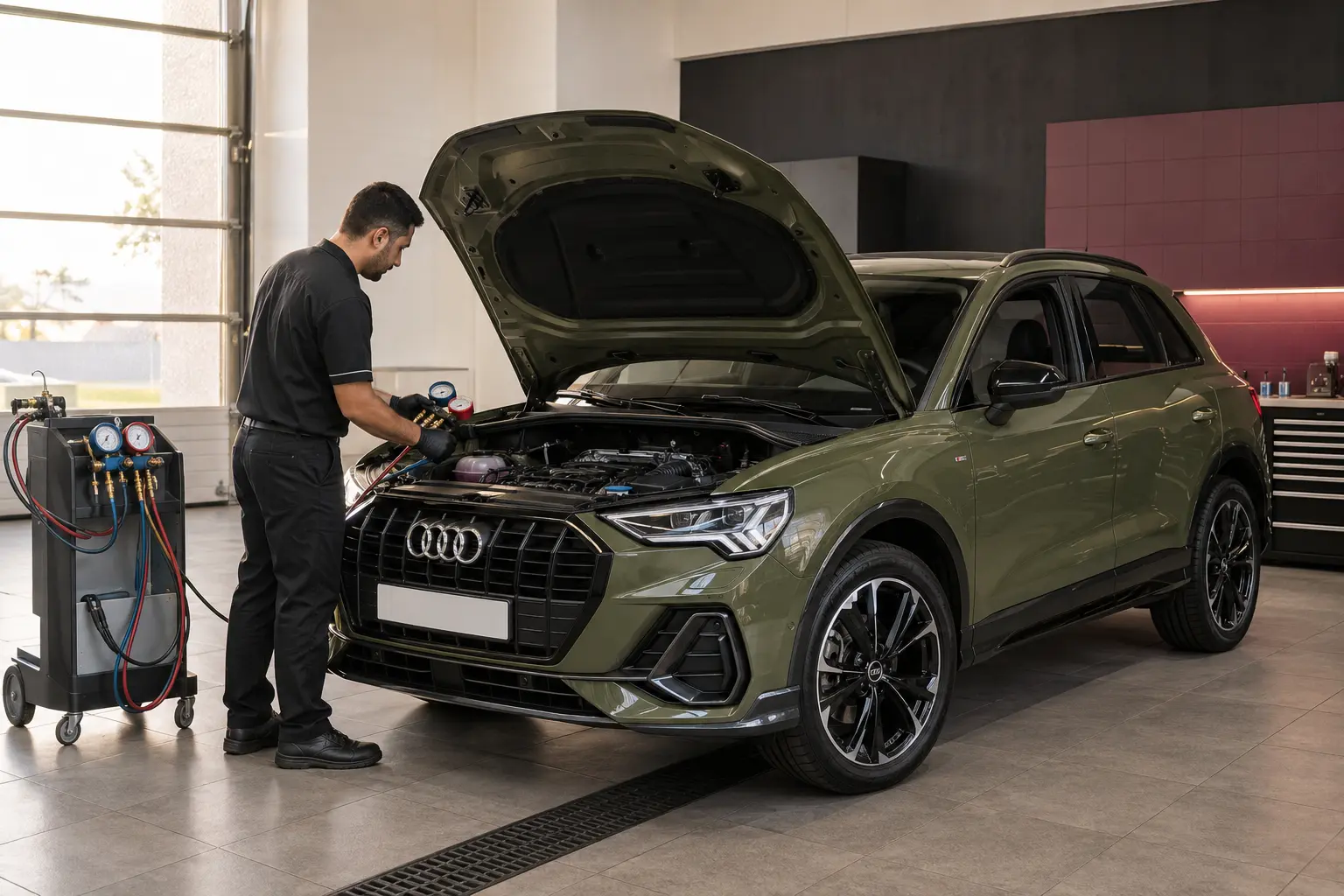
Audi Q3 coolant leaks and AC repair
If coolant keeps dropping, a top-up is not the repair. We inspect for staining and leakage, assess pressure and temperature behavior, and identify the source before quoting a pump, thermostat housing, hose or other component. The lowest wet area may be below the actual leak.
Weak cabin cooling needs a separate test. Warm air in traffic can involve fan operation, condenser airflow, refrigerant loss or compressor control. Poor airflow can come from the filter, blower or flaps. Those problems need different work.
We explain whether your Q3 needs a contained leak repair, refrigerant service, an electrical repair or a replacement component. The final quote should include the relevant seals, coolant or refrigerant and the checks needed after repair.
Use our Audi cooling-system service for engine temperature concerns or Audi AC repair for cabin cooling. If the temperature rises or steam appears, stop safely and arrange assistance.
Audi Q3 brakes, tires and suspension
A knock over a ramp, steering vibration and braking judder can have different causes even when they seem to come from the same wheel. We inspect the tire, wheel, brake and suspension together so alignment or new pads are not used to mask another fault.
After a curb strike, check the sidewall, wheel and steering position as well as the noise. An alignment adjusts wheel angles; it cannot repair a damaged tire, bent component or worn joint. Any required mechanical repair comes first.
For brake replacement, pad and disc measurements determine whether pads alone are suitable. We also check abnormal wear, caliper movement and relevant warning sensors. A complete quote specifies one axle or both, the parts selected and anything additional.
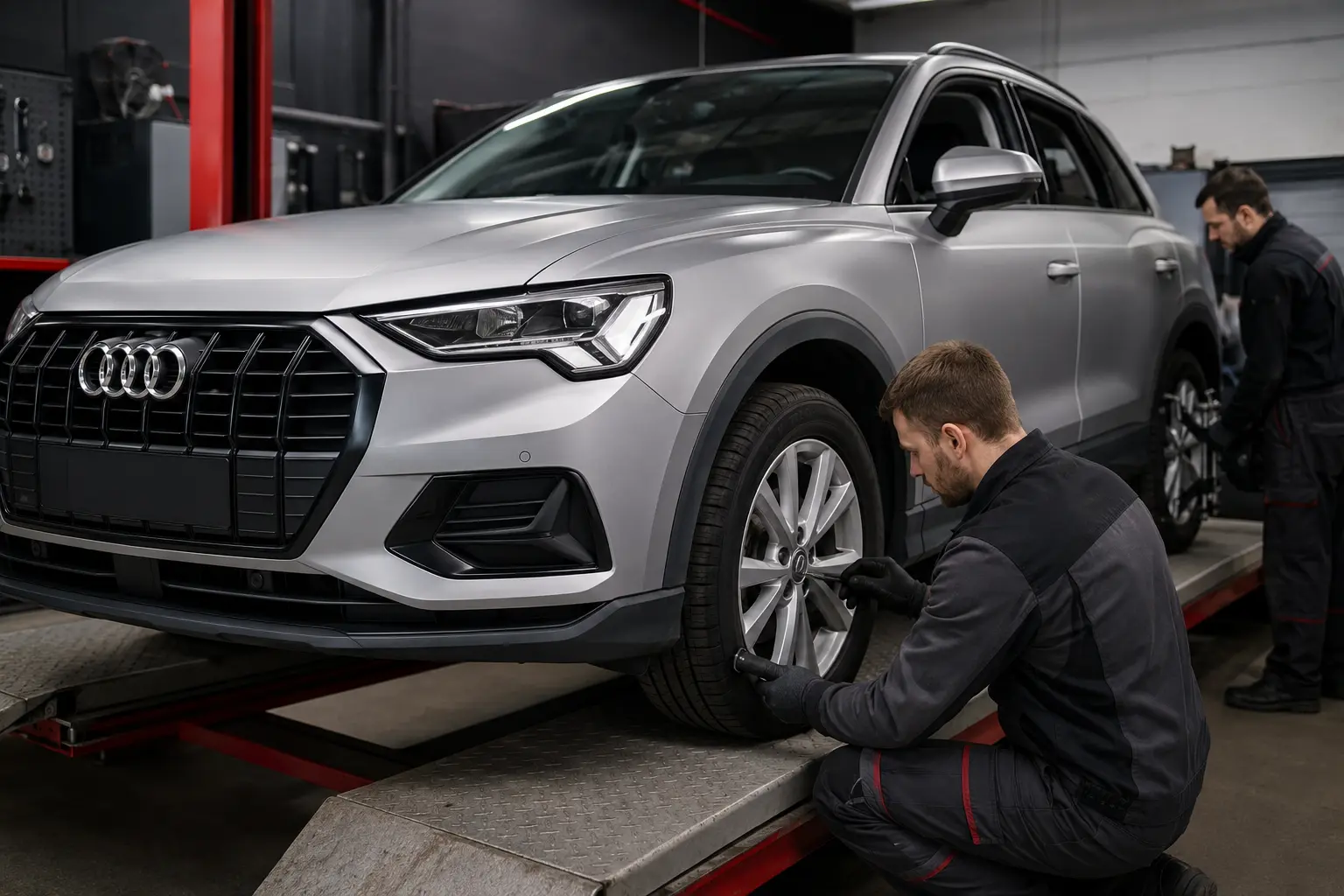
Ask us to compare the condition and specification of all four. Size, construction and wear need to suit the vehicle and drivetrain requirements. One visibly damaged tire can require a broader replacement decision, but the recommendation should follow measured condition.
Our Audi suspension repair service explains the options for joints, arms, bushings and dampers.
Audi Q3 engine warnings and electrical faults
EPC light or poor acceleration
Loss of power can involve ignition, fuel supply, air leaks, sensors or boost control. An underboost message alone does not prove a failed turbocharger. We connect the fault information with physical tests before proposing a replacement.
Oil use and an oil leak also need separate assessment. We inspect the visible source and available history, then explain whether a seal, breather repair or deeper engine test is justified.
Battery, parking and screen problems
Starting trouble, several warnings or a screen that resets can involve unstable power. We test battery and charging condition and investigate any recurring drain. The replacement battery must match the car and receive required registration or adaptation.
Parking faults after bumper work need the sensor mounting and wiring checked. A camera or assistance message after glass or alignment work may require a different inspection or calibration.
Intermittent problems can take longer to reproduce than a permanent failure. Share when it happens if you know, but leave the technical investigation to us. Dedicated engine repair and electrical repair pages explain the relevant work in more detail.
Estimated Audi Q3 repair totals
These estimates illustrate possible repair budgets. They are not records of completed customer jobs, and the actual quote depends on the car and confirmed work.
Estimated repair · 2017 Q3 front pads
A compatible Genuine pad set and normal front-axle fitting could cost AED 1,100 before VAT, or AED 1,155 including VAT. This assumes the existing discs and calipers are serviceable. Wear sensors and disc replacement are separate.
Estimated repair · 2020 Q3 coolant leak
A confirmed pump or thermostat repair with suitable parts, seals, normal access and coolant could cost AED 2,600 before VAT, or AED 2,730 including VAT. The selected component must be named. Further pipe leaks or overheating damage are outside this estimate.
Audi Q3 maintenance for your mileage and use
A low-mileage Q3 still has time-based maintenance needs. Frequent short trips and long parking periods also deserve attention to battery condition, fluid history and tires. We use the appropriate schedule alongside the car’s condition rather than applying one interval to every owner.
Check what was already done
Invoices can prevent repeating recently completed plugs, filters or gearbox work. If the history is incomplete, we assess what can be verified and explain what is due or uncertain. A service reminder reset is not proof of completed maintenance.
Keep faults separate from servicing
A warning, leak or noise deserves its own recommendation. We can combine the visit where practical, but the quote should show the maintenance package and repairs separately so the total remains easy to understand.
After a repair, monitor the original symptom and follow the handover advice. Report a returning warning or falling fluid level rather than repeatedly clearing codes or topping up. Keep the itemized invoice, selected parts and written coverage with the service history.
Considering a used Q3? A pre-purchase inspection can help you budget for brakes, tires, leaks, transmission behavior and electronic functions. Road testing and lift access depend on safety and seller permission. The report should explain any inspection limits rather than promise that every hidden fault has been ruled out.
Q3 generations, Sportback and hybrid repairs
Older and later Q3 models
Earlier and newer generations differ in electronics, engine options and transmissions. Older cars may need more attention to aging seals and previous repairs, while later equipment can add calibration requirements. We check the actual configuration instead of assuming it from the registration year.
Sportback and RS Q3
Sportback rear-body parts, glass, seals and tailgate equipment can differ from the SUV. RS Q3 adds distinct performance hardware and pricing. An S line appearance package does not mean the car uses RS Q3 brakes or powertrain components.
TFSI e and e-hybrid
Plug-in versions combine conventional servicing with additional charging and high-voltage systems. Describe the symptom and we will arrange the appropriate assessment. Specialized testing is quoted separately, and owners should not inspect orange cables or open high-voltage components.
Is it safe to drive your Q3 to the workshop?
Do not continue driving with overheating, a red oil-pressure warning, severe misfire, serious brake or steering changes, a damaged tire or loss of drive. Stop safely for smoke, a strong fuel smell or an electrical burning smell, then contact us for guidance.
For a less urgent warning, tell us what the car is doing now. A dashboard photo helps if it can be taken safely. Never open a hot coolant tank or keep driving a worsening fault just to reach the garage. Our Audi warning-lights guide explains the main warning categories.
Book Audi Q3 service or repair in Al Quoz 4
Call or WhatsApp with the work you want or the symptom you have noticed. We arrange inspection or pickup, explain the findings and give you a quote to approve. Technical details can follow when needed for the job.
Genuine Audi parts are normally fitted. Suitable OEM or aftermarket choices can be discussed on request, with the part selection and applicable parts and labor coverage made clear. We explain expected completion after checking the work and availability, then carry out the relevant post-repair checks.
Our workshop is open Monday to Saturday, 9 AM to 7 PM. If you are searching for Audi Q3 repair near you, free pickup and delivery can help you arrange the visit. Find us in Al Quoz 4, Dubai, using the workshop contact and directions page.
Audi Q3 repair and service FAQs
What is the Audi Q3 service starting price?
Minor service for listed 1.0–2.0 petrol Q3 applications starts at AED 650 before VAT, or AED 682.50 including VAT. Interval service starts at AED 950 and major service at AED 2,600 before VAT. Hybrid, diesel, RS Q3 and unlisted applications are quoted separately.
Can I get the AED 350 service for my Q3?
The AED 350 minor-service offer covers Audi A1 through A4. Q3 uses its own service prices. Share the work required and we can give you the best available Q3 price with the inclusions clearly stated.
Does a Q3 gearbox warning mean I need a new gearbox?
No. A warning can involve electrical supply, controls, sensors, clutch operation or internal condition. We diagnose the fitted transmission before comparing maintenance, targeted repairs, rebuilding or replacement.
Why is my Q3 AC warm when I stop in traffic?
Fan operation, refrigerant condition, compressor control, condenser airflow or another fault can affect cooling at idle. We test the system under the complaint conditions. A gas refill is appropriate only when the inspection supports it and any required leak repair is addressed.
Do you repair Q3 Sportback and RS Q3 vehicles?
Contact us for repair or servicing of either version. Body parts, rear equipment, engine, brakes and transmission requirements vary. RS Q3 work receives a performance-model quote rather than the regular Q3 package price.
Can you collect my Q3 from home?
Free pickup and delivery are available. Message your location and preferred appointment to arrange it. If the car will not start or cannot move safely, tell us so recovery can be discussed separately.
Is every diagnostic test included in the free inspection?
No. The workshop inspection is free. Detailed leak testing, electrical diagnosis, dismantling or other paid investigations are explained and priced before you approve them.
How long does Q3 repair take?
The expected completion time follows the inspection, parts check and agreed work. A routine service is different from tracing an intermittent fault or repairing a transmission. We explain expected timing before the job proceeds and update you if an approved repair reveals additional work.
What should I send to get a Q3 quote?
Start with the service you want or a short description of the problem. Year, mileage, a warning photo or a previous quote can help when available. You do not need to find engine codes or diagnose the fault before contacting us.
Model information: Audi Q3 overview. Use the Audi owner’s manual for your vehicle’s instructions. The images illustrate workshop procedures; they are not photographs of the estimated repairs above.