
Repair the cover, protect the systems
Audi Bumper Repairin Dubai
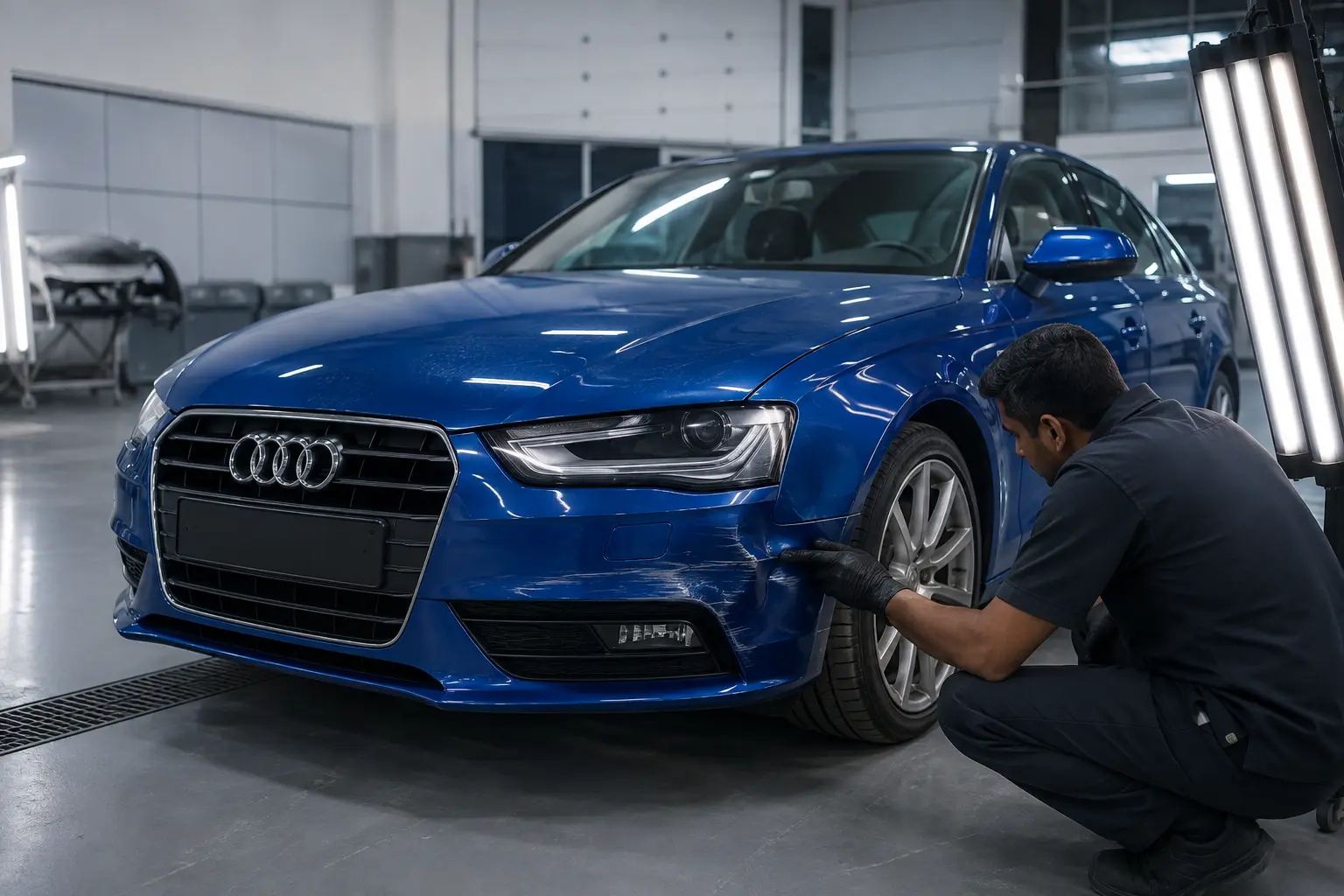
An Audi bumper scuff, dent or crack does not automatically mean replacement. Local repair, reshaping, plastic repair and refinishing may preserve the original cover when its structure and mounting points remain suitable. Replacement becomes the safer route when damage, torn mounts or distortion prevents a secure fit. Parking sensors, washer parts, cameras, radar brackets and wiring must be checked before a cosmetic quote is treated as complete. After refinishing has cured and been inspected, a separate paint-protection plan can be considered for the repaired surface.
Quote preparation
Show the damage clearly
Model, year, bumper corner, impact type and fitted equipment help us plan the first inspection. Add one full-corner photograph, one straight-on image and one close detail in daylight. The builder shows the complete message before WhatsApp opens.
Photographs support triage, but a secure repair or replacement decision may still require the cover to be inspected off the car.
Bumper damage map
Six layers of the decision
A bumper is not just the visible painted skin. The repair route depends on the cover, mounting system, parts behind it, nearby panels, finish and any driver-assistance equipment.
Scuff and transfer
Foreign paint may polish away; a cut through the colour or clear coat needs refinishing. Sanding depth and edge position affect whether a local repair is suitable.
Dent and distortion
Heat and controlled reshaping may recover some thermoplastic covers. Stretched, sharply creased or repeatedly repaired plastic can remain unstable.
Crack and split
Material, crack position and access to the reverse side determine whether plastic repair can restore suitable continuity. A cosmetic front fill alone is not the same repair.
Tabs and retainers
A good-looking cover can still sit loose when side guides, tabs, brackets or screw points are torn. Fit and security must be part of the quote.
Reinforcement and absorbers
The beam, impact absorber, ducts, liners and supports may carry damage that is not visible from outside. A meaningful impact can justify removal for inspection.
Sensors and brackets
Parking sensors, wiring, cameras or radar equipment can be displaced even without a dashboard warning. Bracket geometry matters as much as an electrical fault code.
Lamp, grille and wing
Broken lamp tabs, grille clips, wheel-arch liner and fender alignment can change the scope. The bumper should not be forced to hide a neighbouring fit problem.
Colour and texture
Metallic orientation, pearl layers, gloss level, textured trim and adjacent-panel condition affect blend and matching decisions.
Before paint is priced
Inspection separates cosmetic and functional damage
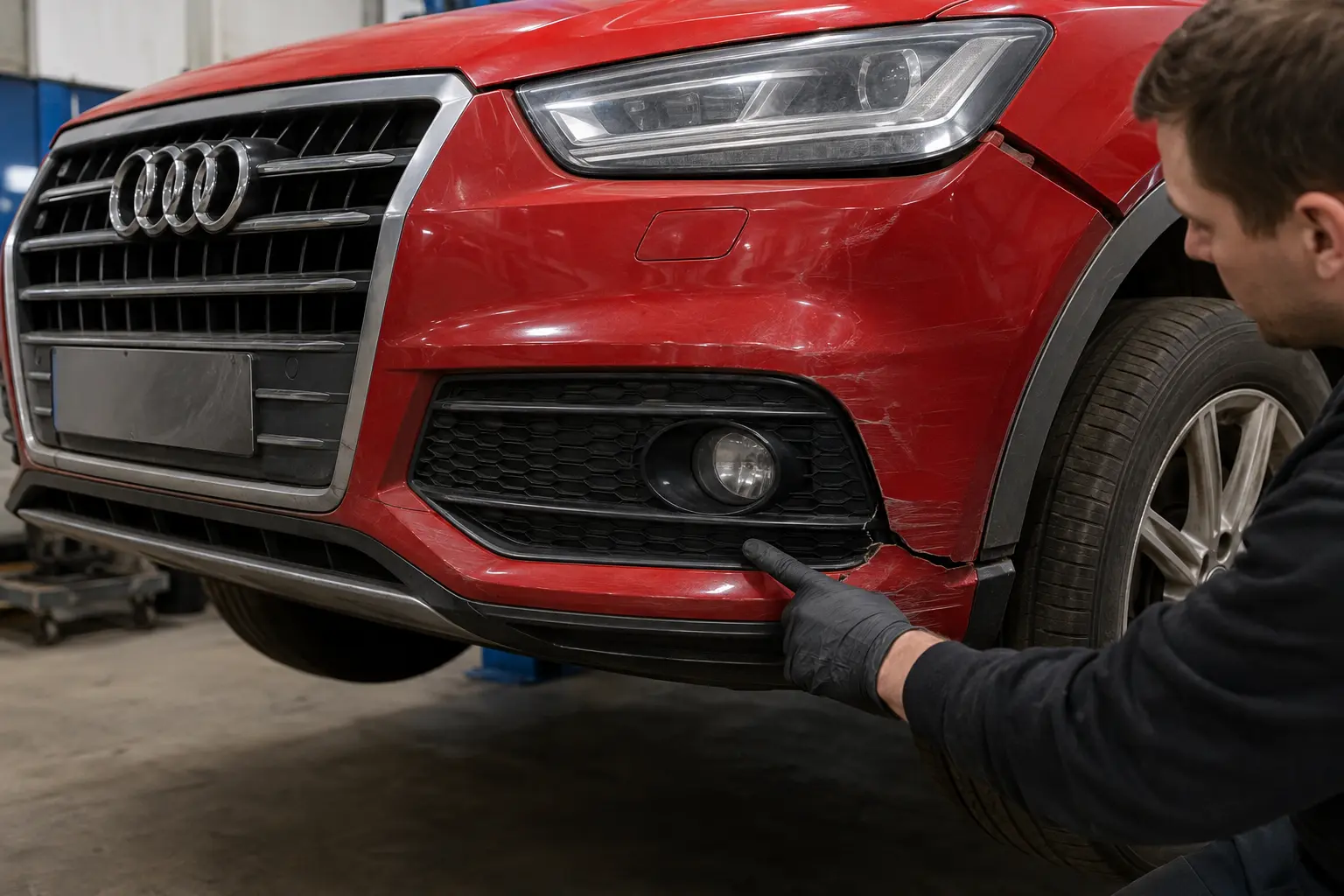
A light parking scuff may affect only the clear coat or transfer another vehicle’s paint. A deeper gouge can expose primer or plastic. A corner that has popped out may simply have released from a side retainer, or it may have torn the cover tab, broken the retainer, distorted the wing edge or damaged the wheel-arch liner.
We begin with clean, well-lit inspection rather than judging through dirt or polish. Panel gaps are compared side to side. The cover is checked for ripples, stress whitening, previous filler, cracks around sensor holes, movement at mounts and contact with lamps, tyres or undertrays. Saved fragments can identify a grille insert, bracket or trim piece.
Where the impact was strong, the cover may need removal. That exposes the absorber, reinforcement, ducts, washer hoses, wiring, sensor holders and brackets. The removal charge should be explained before work starts; if it reveals no additional damage, the original repair decision can continue.
This page is limited to bumper diagnosis, repair, refinishing and replacement. Broader multi-panel or structural collision work belongs to a complete Audi body-shop assessment rather than being hidden inside a bumper quote.
Repair or replace
Use the least invasive suitable repair
Local finish repair
Suitable for limited surface damage when colour, position and existing finish allow a controlled repair area. It is not automatically appropriate across a sharp body line, a complex pearl colour or a panel with widespread deterioration.
Reshape and refinish
A recoverable dent can be warmed and reshaped before preparation and paint. The cover must hold its profile and align with neighbouring panels; heat should not be used to disguise stretched or brittle material.
Plastic crack repair
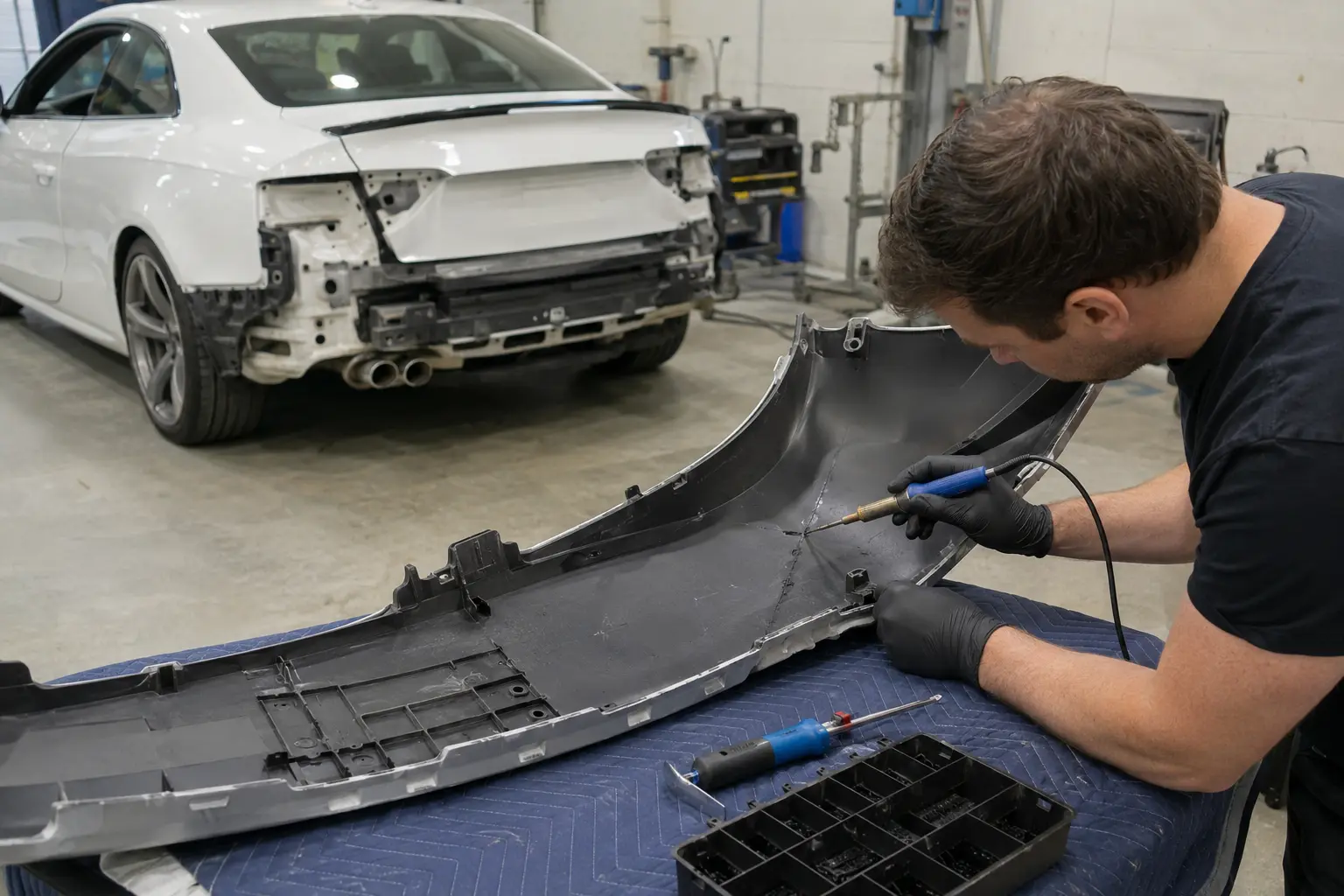
A repairable split is prepared from both sides where access allows, reinforced with a method compatible with the plastic and finished without leaving the mounting area weak. Material identification and crack location matter.
Tab or mount repair
Some broken tabs can be rebuilt or replaced with an approved repair piece. Heavily loaded, missing or repeatedly failed mounting zones can make replacement more reliable.
Replacement cover
Replacement is considered for extensive tearing, missing material, severe distortion, unsafe mounting, incompatible previous repairs or economics that no longer favour restoration. The new cover still needs preparation, paint and transfer of equipment.
Parts-tier decision
Genuine, recognised OE-quality and suitable aftermarket options vary by model and equipment. Fit, material, sensor provisions and finish preparation must be compared, not just the unpainted purchase price.
Repair from the material outward
Plastic repair must survive refitting
A front-surface filler can make a crack disappear briefly while leaving the split unsupported. A proper route begins by identifying the plastic, cleaning contamination, preparing the crack and gaining enough rear access for a compatible repair. The shape is stabilised before the finish is rebuilt.
Edges around parking-sensor holes, grille openings and mounting tabs deserve special attention because they carry local stress. A repaired crack that crosses a high-load mount may not be a sound long-term choice if the cover will flex every time it is removed or clipped into place.
Previous repairs influence the result. Excess filler, unknown adhesive, heat distortion or multiple paint layers add labour and may change the recommendation. We explain when repair remains reasonable and when a quality replacement cover offers better fit and durability.
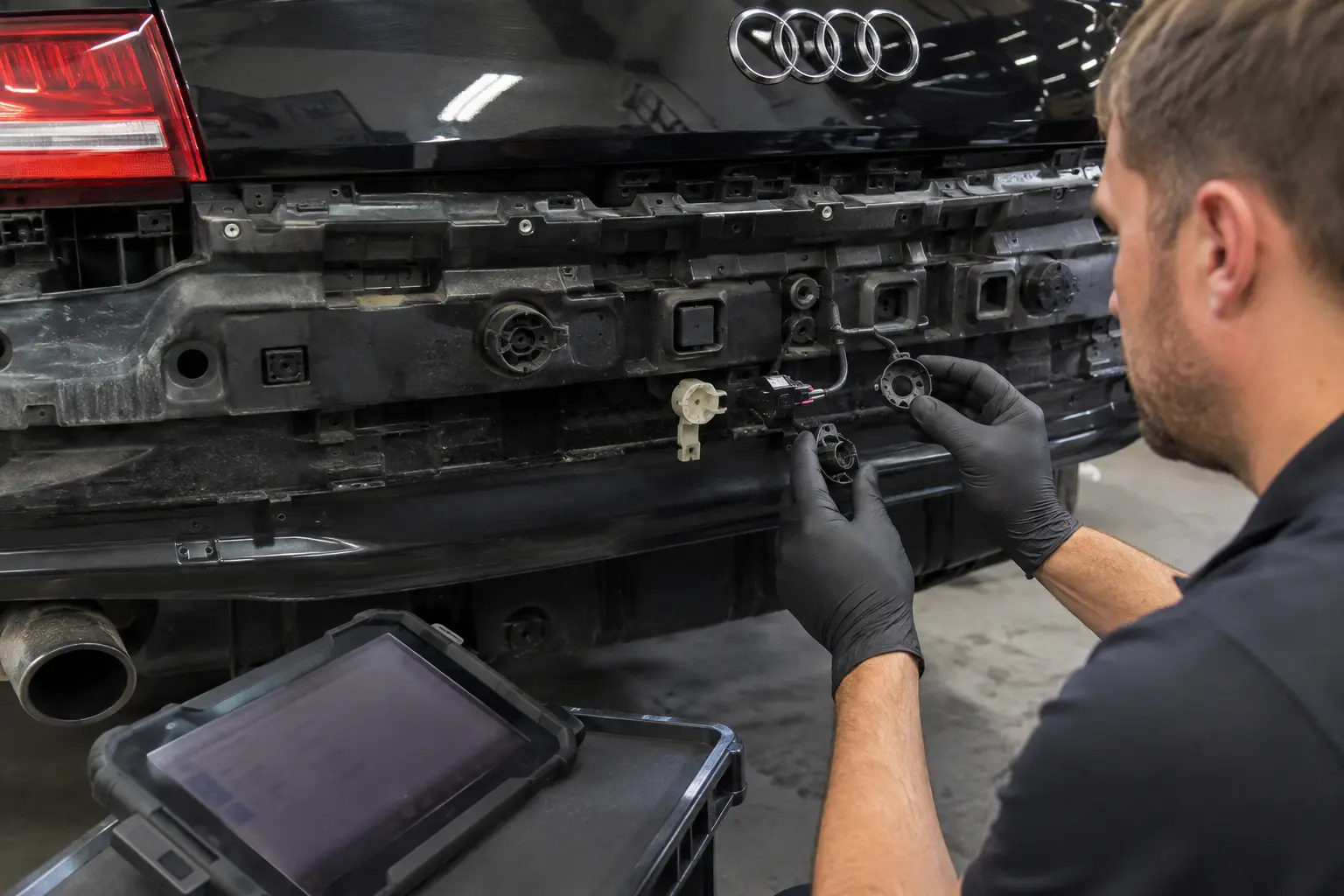
Equipment behind the cover
Sensors can change a simple bumper job
Parking sensors sit in holders whose angle and depth affect operation. Paint build around the face, a cracked holder, pinched wiring or a connector left loose can create false detection or an intermittent fault. Sensor openings should not be enlarged casually to make a non-matching cover fit.
Depending on model and specification, the bumper area may also include washer jets, hoses, tow-eye covers, cameras, harnesses, antenna components or radar equipment and its bracket. A bracket can be distorted by an impact while the device still communicates, so a fault-code scan alone does not prove alignment is correct.
Calibration or aiming is not automatically added to every bumper repair. It is assessed from the fitted system, the repair location, any device or bracket removal, manufacturer requirements and the vehicle’s post-repair behaviour. If separate calibration is required, it should appear as a distinct approved item rather than a vague inclusion.
- Record warnings and parking-sensor behaviour before dismantling.
- Inspect holders, tabs, brackets, loom routing and connector locks.
- Protect sensor faces and apertures during preparation and paint.
- Confirm washer operation and check for leaks where fitted.
- Scan relevant systems when the impact or equipment justifies it.
- Road-test or function-test the repaired area before handover.
Finish quality
Colour matching is a controlled comparison
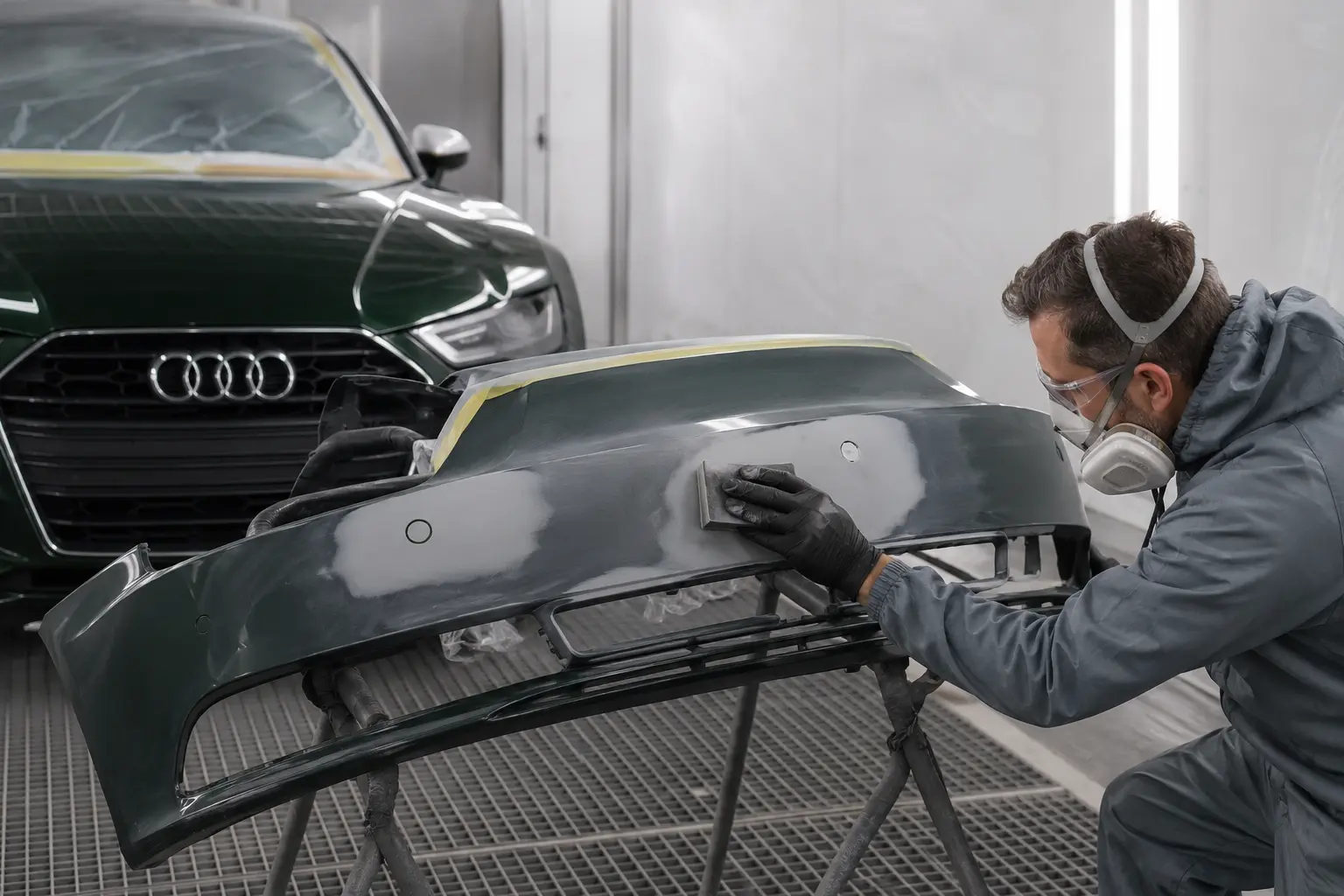
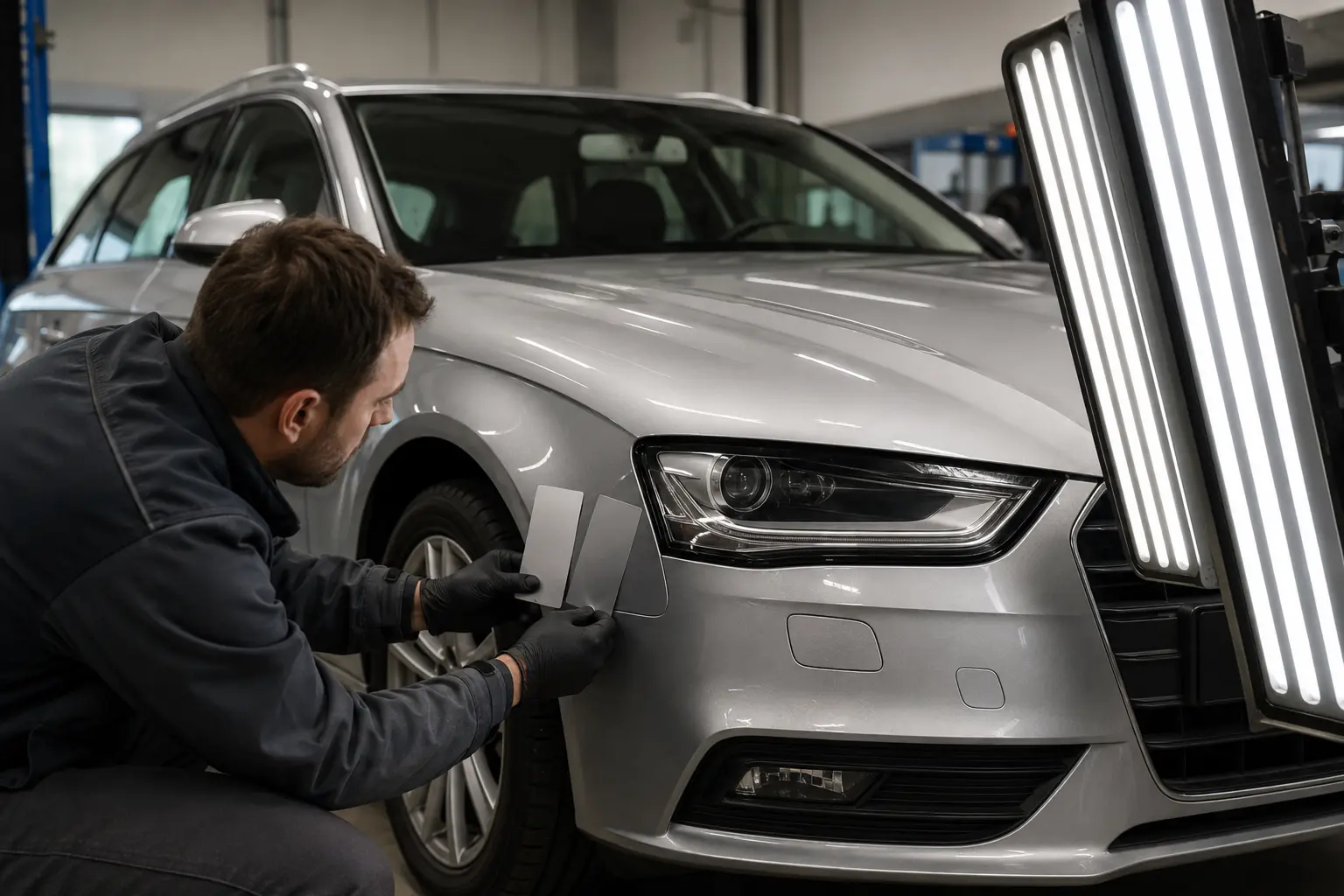
The paint code is a starting point, not the complete match. Age, previous paint, sun exposure, metallic-flake orientation, pearl ground coat and the visual difference between plastic and metal can affect the result. Test cards and controlled lighting help select or adjust the formula before the bumper is sprayed.
Preparation includes cleaning, decontamination, sanding, plastic adhesion treatment where required, primer, surfacing and masking. Texture and unpainted lower trim should remain consistent. A full bumper refinish may be more predictable than a tiny local repair when damage crosses a contour or the colour is difficult to fade invisibly.
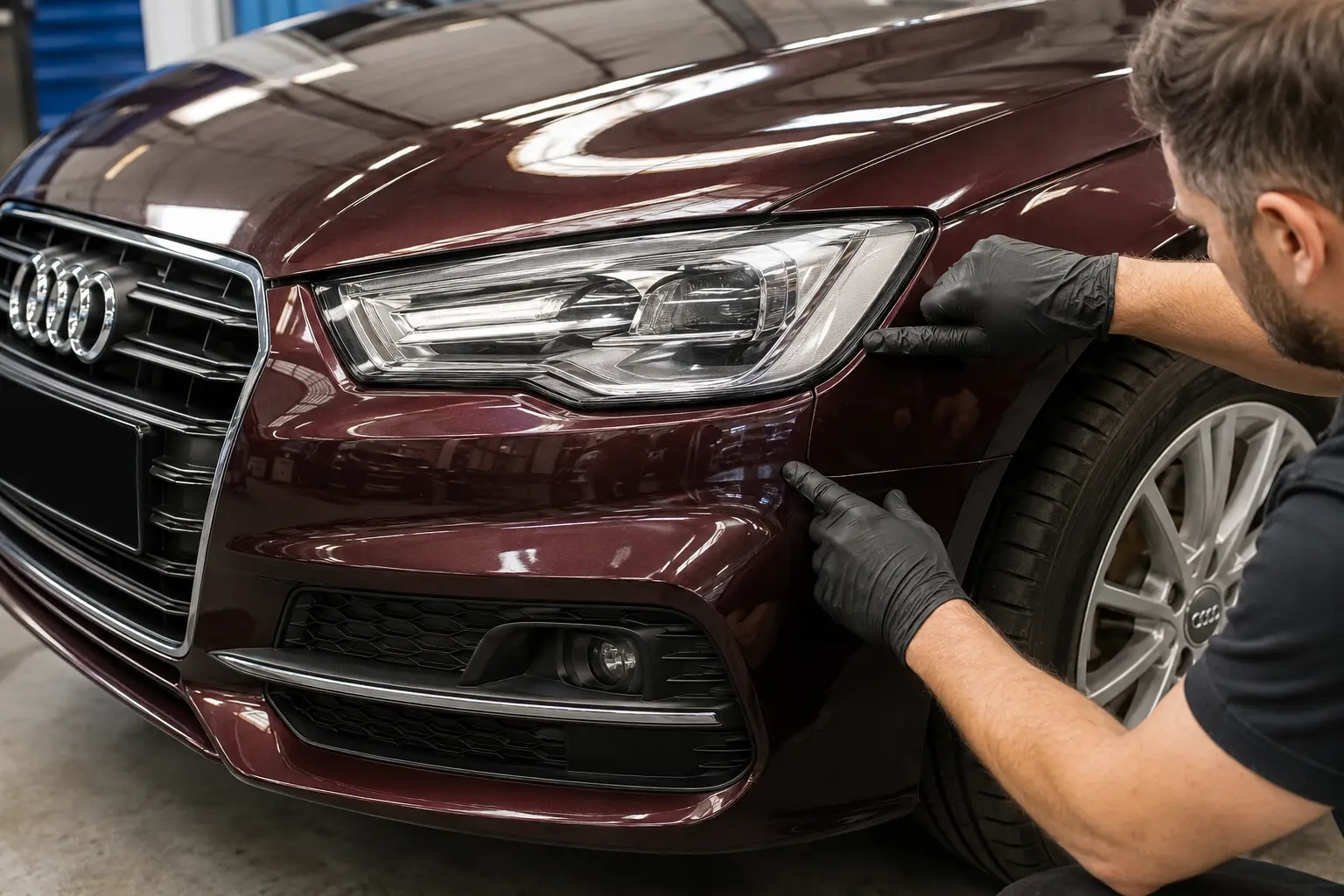
Adjacent-panel blending is considered, not forced into every quotation. On some colours and repair positions, a well-selected formula can match acceptably without blending. On others, a controlled blend into a neighbouring panel gives the more consistent visual result. That decision should be discussed before paint is applied.
From assessment to handover
A bumper repair in eight stages
- Identify the vehicle and equipment
VIN, model year, bumper style, trim and sensor provisions are confirmed before parts are ordered.
- Clean and inspect
Surface damage, distortion, gaps, mounts and nearby panels are examined under useful light.
- Agree inspection depth
Cover removal is authorised when hidden damage or equipment cannot be assessed externally.
- Choose repair or replacement
Material condition, mounting safety, finish, parts quality, labour and future fit are compared.
- Repair and prepare
Plastic, tabs and shape are stabilised before primer and surface preparation.
- Match and refinish
Paint is selected, tested and applied with the agreed blend scope.
- Refit and function-check
Guides, clips, liners, grilles, sensors, washers and wiring are secured and tested.
- Inspect under handover light
Colour, texture, panel gaps, surface quality and warnings are reviewed before delivery.
Tentative Dubai guide
Audi bumper repair prices
These AED ranges are planning figures, not a quotation. They assume normal workshop access and a repairable vehicle. Exact model, bumper specification, damage, previous work, parts tier, paint, calibration requirements and VAT treatment must be confirmed in writing.
| Scope | Tentative AED range | Typically includes | Main variables |
|---|---|---|---|
| Damage assessment | 150–300 | Clean visual inspection and repair-route advice | Equipment and hidden-damage risk |
| Remove and refit for inspection | 250–650 | Controlled bumper-cover removal and refitting | Model, liners, grilles and wiring |
| Light scuff correction | 350–750 | Limited preparation and local finish correction | Depth, colour and repair location |
| Corner paint repair | 650–1,200 | Preparation, paint materials and local refinish | Pearl/metallic colour and contour |
| Full bumper refinish | 950–1,800 | Preparation and complete painted-face refinish | Existing paint, texture and colour system |
| Dent reshape and refinish | 900–1,700 | Controlled reshaping, preparation and paint | Stretch, crease and access |
| Plastic crack repair | 850–1,750 | Compatible plastic repair and refinish allowance | Material, length and load area |
| Tab or mount repair | 350–950 | Repair or replacement piece where suitable | Location, missing material and load |
| Side retainer or guide replacement | 250–700 | Quality retainer and fitting | Model and adjacent damage |
| Parking sensor holder repair | 250–750 | Holder/adhesive provision and alignment check | Sensor type and cover access |
| Parking sensor diagnosis | 250–600 | Scan, visual and circuit-focused checks | Intermittency and wiring access |
| Replacement cover preparation and paint | 1,400–2,800 | Preparation, paint materials and refinishing labour | Cover condition and colour complexity |
| Replacement cover installed | 2,500–7,500+ | Quality cover, preparation, paint and installation allowance | Genuine/OE-quality/aftermarket tier and equipment |
| Radar or camera calibration route | 600–1,800 | Separate calibration when genuinely required | System, bracket work and setup |
Arithmetic shown clearly
Three hypothetical estimates
These examples explain how scope affects cost. They are not customer case studies and do not replace an inspection.
Front-corner scuff and paint cut
Assessment AED 150 + preparation and repair labour AED 350 + paint materials and local refinish AED 550 = AED 1,050 before any separately stated VAT. No sensor, clip or adjacent-panel work is included.
Repairable crack with one broken guide
Remove/refit AED 400 + plastic repair AED 650 + side guide AED 250 + full bumper refinish AED 1,100 = AED 2,400 before any separately stated VAT. The estimate assumes the reinforcement and sensor holders pass inspection.
Replacement cover with sensor transfer
Quality replacement cover AED 2,200 + preparation and paint AED 1,450 + equipment transfer and fitting AED 650 + scan/function check AED 250 = AED 4,550 before any separately stated VAT. Calibration, grille damage and hidden brackets are excluded unless approved.
Finish and function
The handover checklist
The repaired bumper is inspected in useful light from normal standing angles, then close enough to review repaired edges and texture. Panel gaps are compared around lamps, grille, wing and tailgate where relevant. Corners should remain engaged with their retainers, undertrays and liners should be secure, and tow-eye or trim covers should fit correctly.
Parking sensors, washers, cameras or other affected equipment are function-checked. The handover identifies repaired versus replaced parts, the parts tier, paint scope, any adjacent damage left outside the estimate, and whether calibration or a later recheck is required.
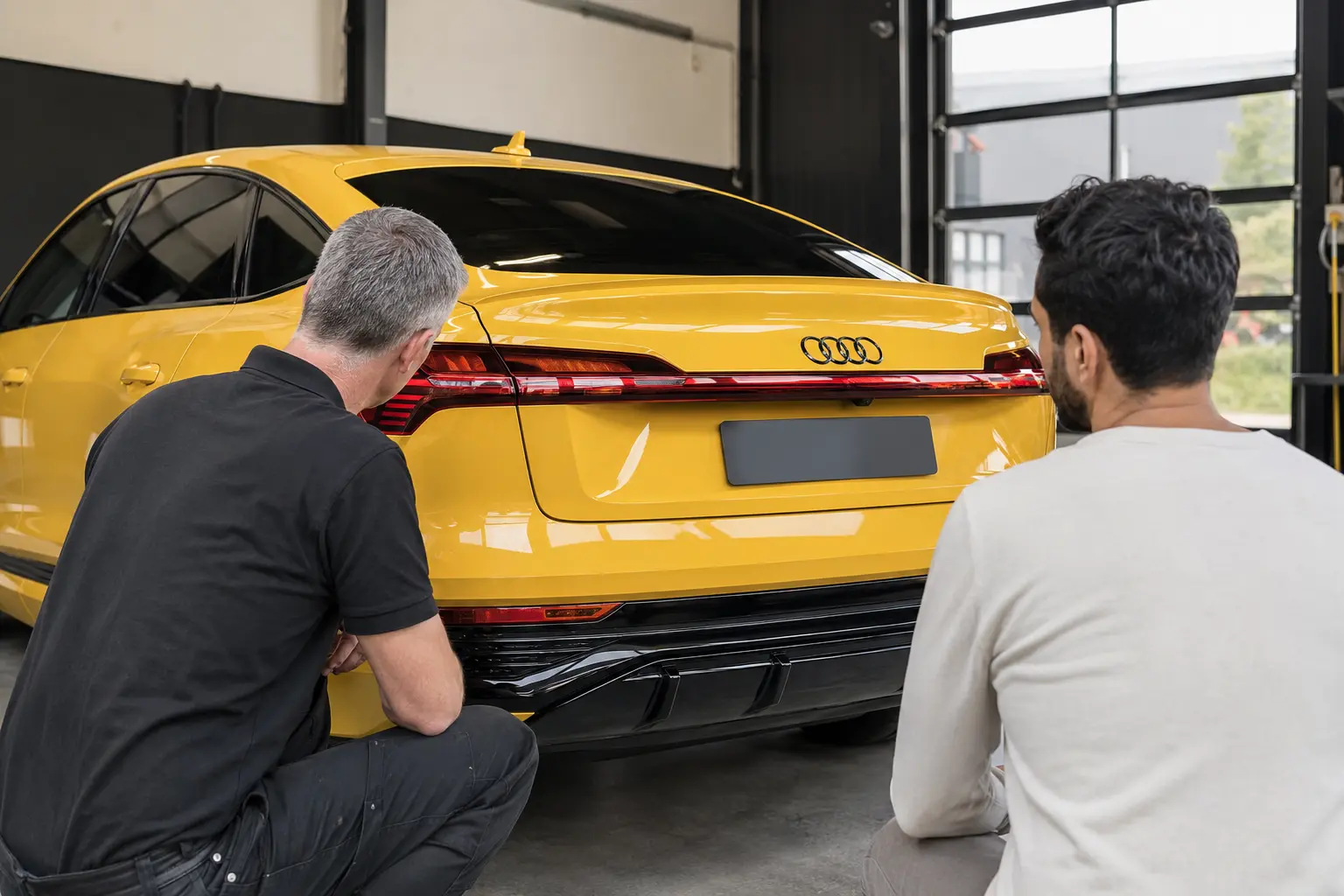
Before approving bodywork
Audi bumper repair FAQs
Can a cracked Audi bumper be repaired?
Often, yes, when the material, crack position, available rear access and surrounding mountings support a durable repair. Extensive tearing, missing plastic or damage across a highly loaded mount can favour replacement.
Does a dented bumper always need replacement?
No. Many thermoplastic covers can be reshaped if they are not severely stretched, sharply creased, brittle or already overloaded with previous repair material.
Can you remove paint transfer without repainting?
Sometimes. Transfer sitting on the clear coat may clean or polish away. A scratch that cuts through the finish, changes texture or exposes primer or plastic needs a different repair.
Why has the bumper corner popped out?
The cover may have released from its side guide, or the guide, tab, screw point, liner or nearby wing edge may be damaged. Forcing it back without inspection can break the remaining mount.
Will the bumper colour match the rest of the car?
Paint code, variants, test cards and controlled lighting are used to choose the formula. Age, previous paint, metallic orientation and the difference between plastic and metal can influence the final match.
Do parking sensors need replacement after an impact?
Not automatically. The sensor, holder, wiring, connector and mounting angle should be inspected and function-tested. A warning may come from a broken holder or harness rather than the sensor itself.
Does every bumper repair require calibration?
No. The requirement depends on the fitted camera or radar system, impact location, bracket movement, component removal and manufacturer procedure. It should be assessed for the exact vehicle.
Can a replacement bumper arrive ready to fit?
Some parts arrive primed, but preparation, colour matching, painting, trim transfer, sensor provision and fit checks are still normally required. Used painted covers may not match or share the same equipment.
Is an aftermarket bumper always cheaper overall?
The purchase price can be lower, but fit, material, sensor holes, grille compatibility and preparation labour affect installed value. Compare a complete fitted and painted estimate, not the bare cover alone.
How long does Audi bumper repair take?
A limited cosmetic repair may be quicker than crack repair or replacement, but drying, parts supply, dismantling, hidden damage and calibration can change the schedule. Timing is confirmed after inspection.
Can I drive with a loose bumper?
Do not drive if the cover can detach, touches a tyre, obstructs a lamp, drags underneath or has loose sharp pieces. Arrange safe transport or advice before movement.
What photographs help with a first estimate?
Send a straight-on view, the complete damaged corner, a close detail and the opposite side for alignment comparison. Include the model, year, warnings, loose pieces and any sensor or washer equipment visible.
Approve a complete scope
What a bumper estimate should say
A useful estimate distinguishes the visible repair from every item that can change fit, function or finish. A single “bumper repair” line is difficult to compare when one quotation includes removal, paint materials and sensor checks while another does not.
Repair limit
The document should identify front or rear, the damaged corner, whether the cover stays on or is removed, which cracks, dents or mounts are included, and what happens if dismantling reveals damage behind it. Adjacent lamp, grille, wing, tailgate, undertray or wheel-arch work should be named separately.
Parts and finish
Replacement estimates should state genuine, recognised OE-quality, suitable aftermarket, used or customer-supplied parts. Preparation, primer, colour, clear coat, texture, blend area and paint-material allowance should be visible. If the exact colour decision waits for a test card, that dependency should be written rather than guessed.
Equipment and handover
Sensor transfer, new holders, loom repair, washer hoses, scan checks and any calibration route should be included or excluded clearly. The final scope should cover secure mounting, panel-gap review, warning check and equipment operation, with VAT treatment and any supply delay shown before approval.
If hidden damage is possible, a staged estimate is often more honest: authorise cleaning and removal first, document what is found, then approve the repair or replacement route. That prevents a low cosmetic figure from becoming an unexplained invoice after the cover is off. It also protects the customer from paying for parts that an external inspection could not yet justify.