
Audi key decisions in Dubai
Audi Key Replacement and Key Fob Repair in Dubai
Battery, shell, electronics, remote pairing and immobiliser programming are different jobs. Start with the exact key and symptom.
A complete Audi replacement key is not the same job as a coin-cell battery. A key that stops locking the doors may need a battery, shell, button, circuit repair or synchronisation, while a new spare key or all-keys-lost situation may require a compatible key, blade work and vehicle-specific security programming. The key and vehicle must be identified before the quote is meaningful.
For cutting, adding or replacing a security key, bring proof of identity and legitimate vehicle authority. Do not send security PINs or full identity documents through this form.
Four routes, one intake
Choose the job by function
One fob can contain independent functions. The useful question is which function still works and which does not.
Coin-cell and contacts
Use this route when remote range fades, response becomes intermittent or a key-battery message appears. Confirm the exact battery, polarity, seating and contacts before adding programming.
Shell and electronics
Use this route for worn symbols, split housing, a failed microswitch, corrosion, impact or a repairable circuit fault while the key identity remains usable.
Remote and security setup
Remote synchronisation concerns locking communication. Immobiliser adaptation concerns engine-start authorisation. The quote must identify which task it includes.
Complete key supply
A new spare, one lost key or all keys lost may combine compatible hardware, a mechanical blade, remote function and vehicle-specific security work.
Key anatomy
One key can fail in several ways
An Audi key may provide door access, remote locking, proximity detection and engine-start authorisation. One working function does not prove the others. The repair follows the failed function and key generation.
Cut profile and physical fit provide manual access. A correctly cut blade does not by itself authorise engine start.
The housing, rubber membrane, button caps, battery cover, key ring and flip mechanism can wear without damaging every electronic function.
The coin cell powers remote or proximity electronics as designed. Its type, polarity, seating and contact pressure must match the key.
The transmitter circuit, microswitches, solder joints and board tracks handle remote commands and may be separately repairable.
The transponder or integrated security element supports vehicle-specific start authorisation and is not treated as a button-battery repair.
Advanced Key functions can involve the fob, vehicle antennas, door-handle sensors, receivers, modules and vehicle voltage.
A loose or broken cover can disturb contact or allow contamination. The cover must retain the correct cell without forcing the housing.
A replacement shell must hold the electronics and security parts securely. Similar external shape is not enough to prove fit.
Symptom-led triage
Match the symptom to the first check
The table helps avoid replacing a complete key for a minor fob fault or blaming the fob for a vehicle-side problem.
| Symptom | First useful check | Possible key route | Possible vehicle route |
|---|---|---|---|
| Remote range becomes short | Compare the second key, then inspect coin-cell condition, polarity and contacts. | Correct battery, contact work or fob repair. | Receiver, antenna or local interference assessment if both keys behave alike. |
| Buttons feel damaged | Inspect the outer shell, membrane and internal switch response. | Shell, button, microswitch or board repair. | Usually unnecessary unless a second healthy key also fails at the car. |
| Key unlocks but will not start | Record the dashboard message and compare engine-start authorisation with another key. | Transponder compatibility or programming assessment. | Immobiliser reader, module, ignition, network or voltage diagnosis. |
| Engine starts but remote fails | Check battery, buttons, board and remote communication separately. | Battery, circuit repair or remote synchronisation where applicable. | Receiver, antenna, door wiring or body-module diagnosis. |
| Key not detected intermittently | Compare the second key and distinguish proximity entry from start authorisation. | Coin-cell, key electronics or compatible replacement route. | Proximity antenna, handle sensor, vehicle battery or network fault. |
| One key works and one does not | Repeat the same functions and positions with both physical keys. | Repair or replace the failed key. | Less likely, although function-specific faults can still need confirmation. |
| No key works | Confirm vehicle 12-volt supply and scan the receiver or security system before replacing every key. | Test each available key and avoid blind replacement. | Audi electrical diagnosis of voltage, receiver, network or security control. |
| Water-damaged key | Stop repeated button presses and inspect internally for residue and corrosion. | Board repair attempt or complete replacement if damage is severe. | None unless the vehicle shows the same fault with another known key. |
| All keys are lost | Confirm ownership, vehicle identity, location, access and exact key system. | Complete supply, blade and approved programming route. | Mechanical access, recovery or module route where the approved procedure requires it. |
Small battery, limited scope
Key-fob battery replacement
The key-fob coin cell is separate from the Audi’s main or auxiliary battery. It may restore range when weak, but cannot repair solder, switches, corrosion, incompatibility or a receiver fault.
Identify the key, confirm its specified battery, check polarity, seating and contacts, refit the cover correctly and test the agreed remote functions. Synchronisation is added only when the platform and symptom require it.
Range has reduced gradually, the second key behaves normally and the shell or buttons are not physically damaged.
The remote still fails with a confirmed correct cell, the key has been wet or dropped, contacts are broken, or the engine-start function behaves differently.
If the car itself has unstable voltage, slow cranking or broad electrical warnings, use Audi battery replacement and testing rather than treating the coin cell as the cause.
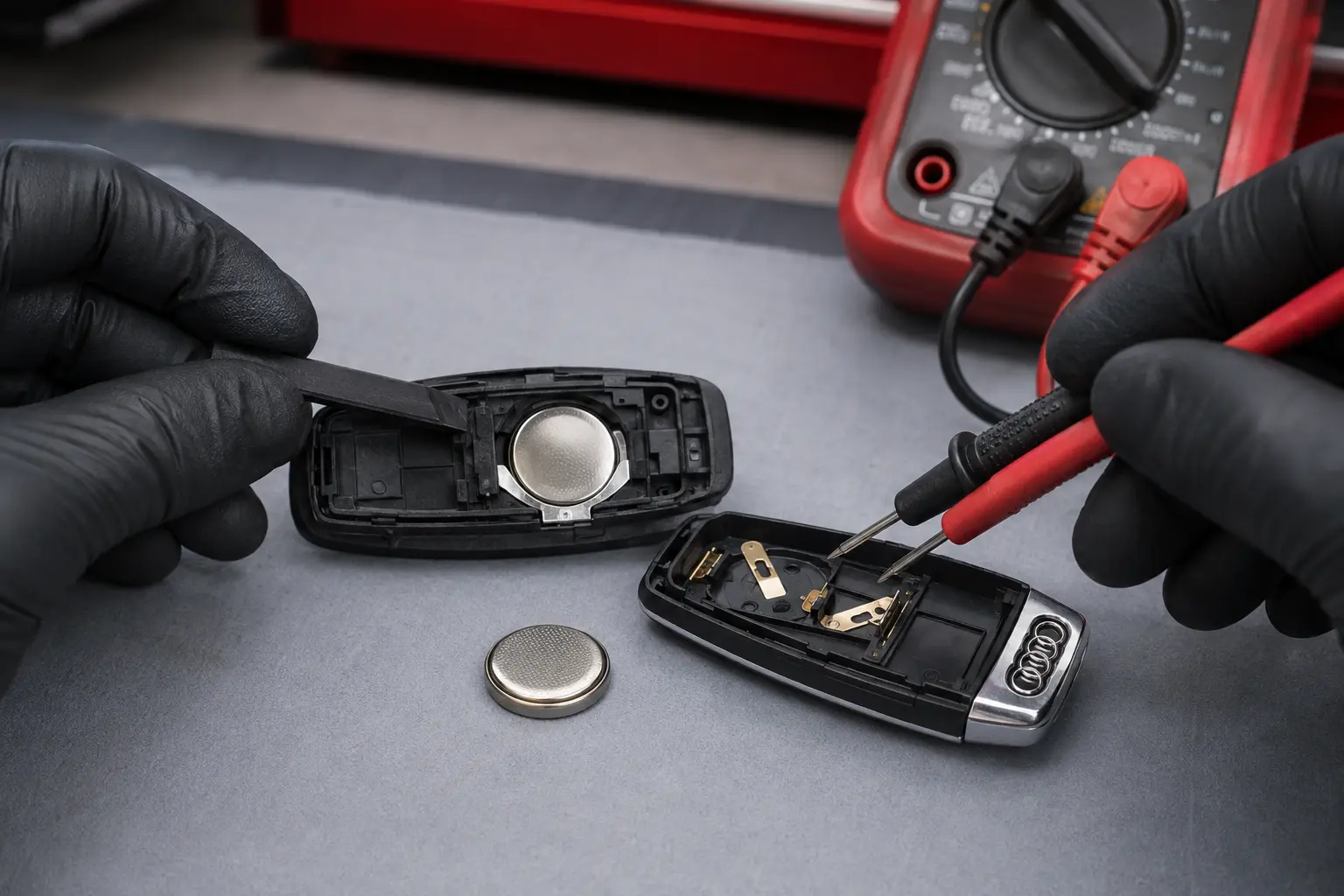
Preserve the usable key
Shell, button and circuit repair
Repair is valuable when the key’s compatible electronics and security identity remain sound. The estimate must separate cosmetic housing work from an internal electrical repair.
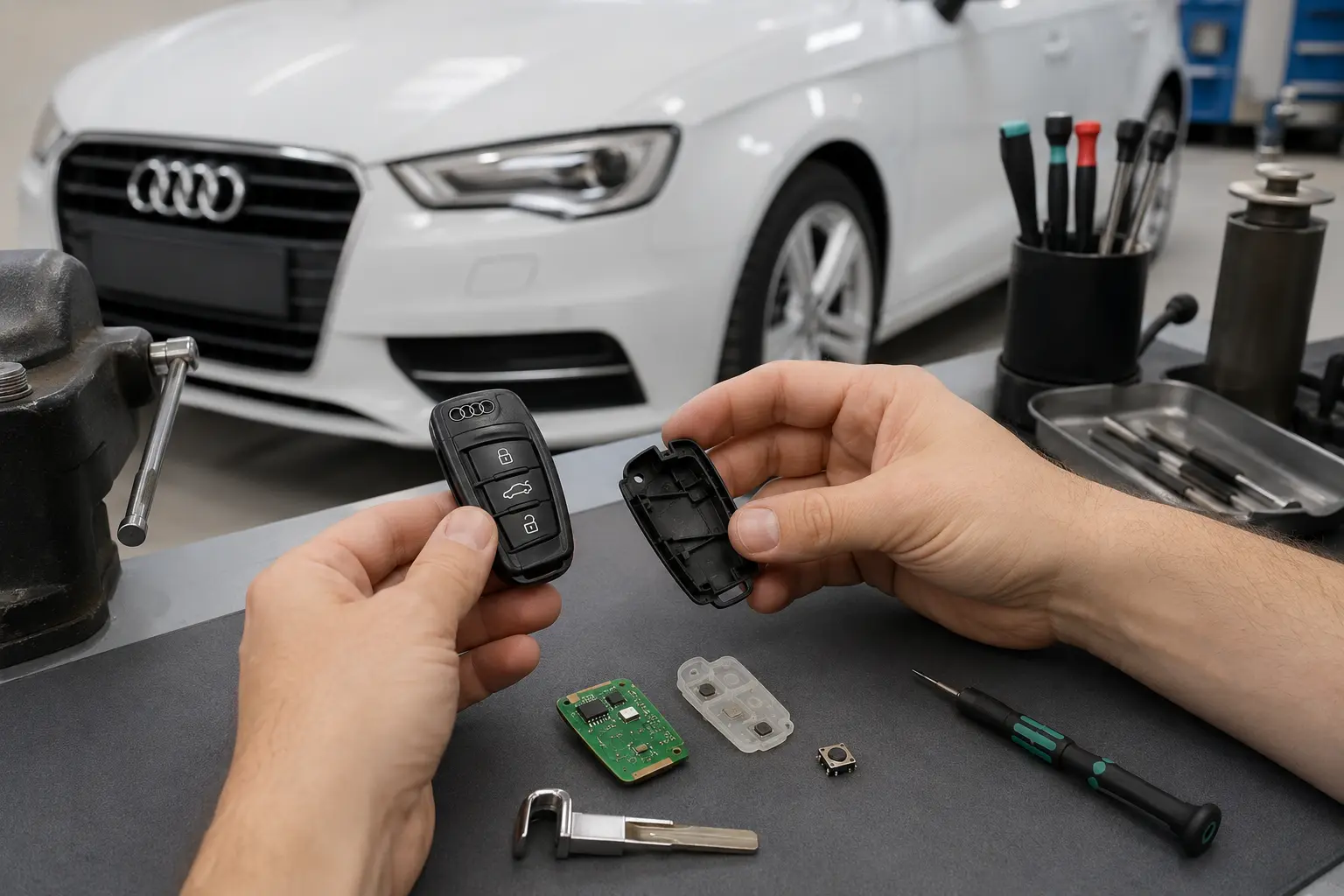
Housing and button work
Worn symbols, a split shell, broken cover, loose key ring, damaged flip mechanism or torn membrane may not require new electronics. The microswitch must be distinguished from the outer button. Usable electronics and security parts can sometimes move into a correctly matched housing.
Buttons, internal retention, blade mechanism and tolerances must match. A lookalike case can press switches, loosen the battery or fail to retain the security component.
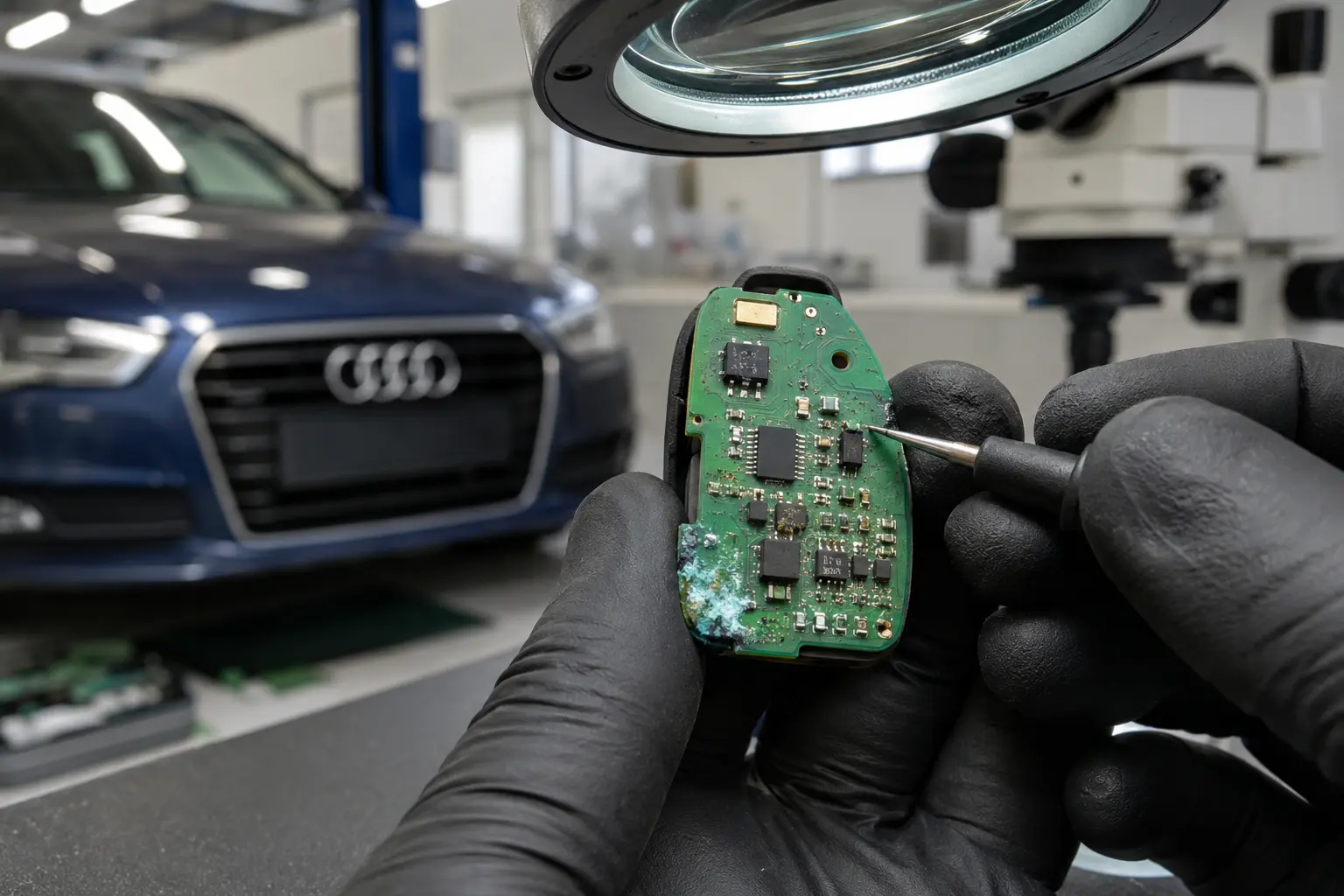
Electronic and water-damage work
Contacts, microswitches, solder joints, tracks and the power path are checked for repairable damage. Impact can crack a joint; liquid can leave residue and continuing corrosion.
Do not keep pressing buttons or apply uncontrolled heat. If the housing opens normally and safely, isolate the coin cell and arrange inspection. Severe corrosion or security-element damage may require replacement. Repairability cannot be promised before inspection.
Use the right term
Synchronisation is not immobiliser programming
Remote synchronisation concerns locking communication on a compatible key, with methods varying by platform. Immobiliser adaptation authorises engine start and can require vehicle-specific security procedures, legitimate access and the vehicle.
Pairing, coding, adaptation, synchronisation and programming are not empty synonyms. The quotation should name remote function, engine-start authorisation, recognised-key checks, supported lost-key removal or diagnosis.
Remote synchronisation
Relevant when remote lock or unlock communication is lost but the key may still be compatible and capable of starting the engine. Battery condition, key electronics and the receiver path remain part of triage.
A generic sequence is not published because procedures vary and online steps may not suit the vehicle.
Immobiliser adaptation
Relevant when a compatible key must be accepted for engine start or when a complete security key is being added. Ownership, VIN, vehicle identity and the supported platform route are confirmed first.
No promise is made that every Audi, used key or aftermarket key can be adapted.
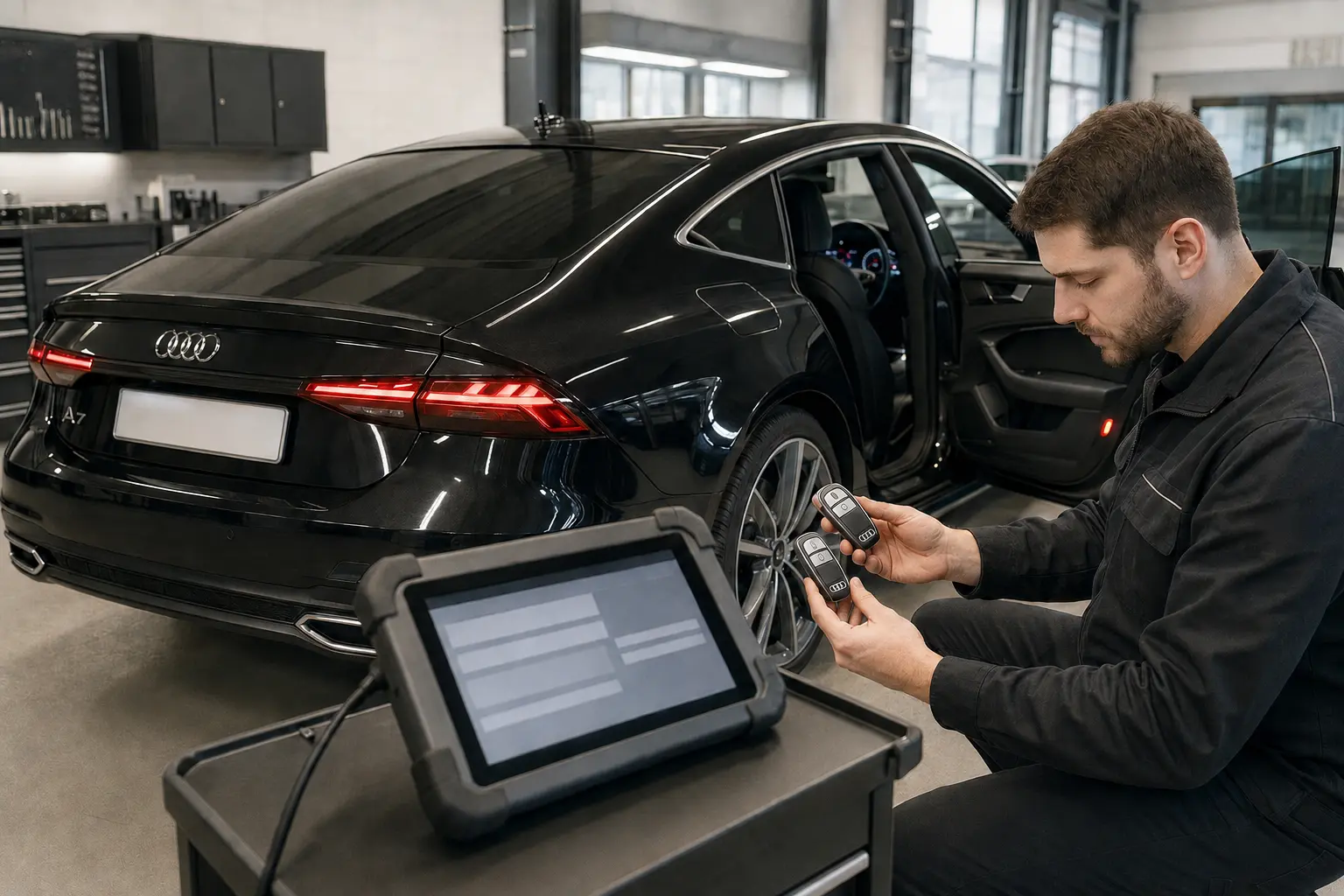
Spare, lost and all keys lost
The available key changes the route
Adding a spare while one key works is usually simpler than all-keys-lost recovery. Frequency, electronics, transponder, blade and programming must still match. Appearance or a cut blade does not prove compatibility.
Add a spare while one key works
Identify the car and working key, select a Genuine or compatible route, confirm blade and programming scope, then test both keys. Planning before the last key fails reduces access complications.
Replace one lost key
Record the remaining keys and exact request. Where supported, the quote may include removing the missing key from recognised use and rechecking retained keys. This is not universal.
Handle all keys lost
Confirm identity, authority, VIN, location, access, key system, supply, blade and security route, plus workshop attendance or recovery. No bypass instructions are provided.
Separate a broken blade
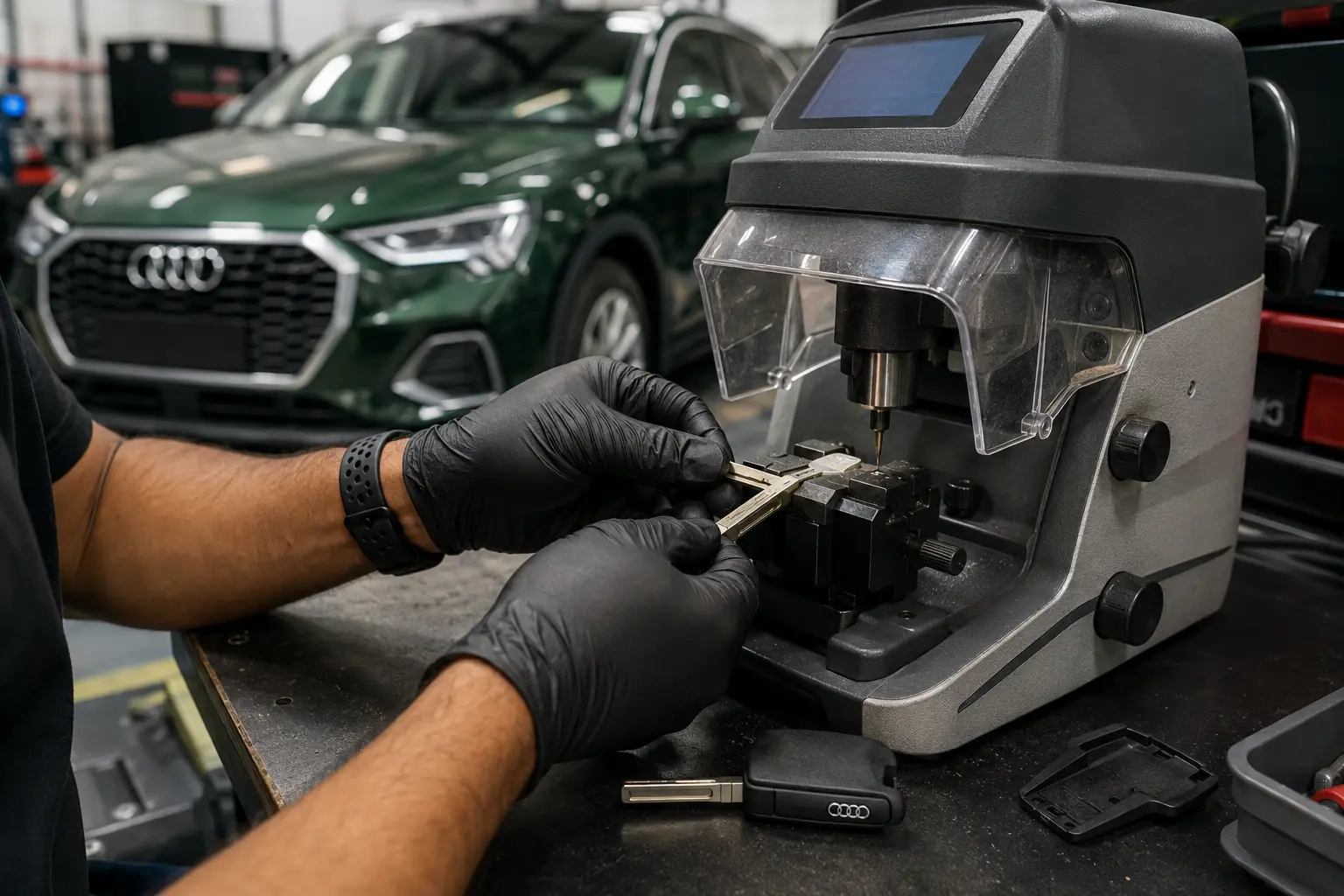
A blade can be cut or transferred where suitable, but electronics remain separate. A correctly cut profile does not authorise engine start.
When the key is not the cause
Key fault or vehicle electrical fault
If one key works and another fails, suspect that key. If every key fails, or response changes by door or position, assess the vehicle before ordering a key.
Vehicle causes include receivers, proximity antennas, handle sensors, access modules, wiring, locks, start circuits, network communication and unstable 12-volt supply. “Key not detected” is an outcome, not a diagnosis.
Broader module, receiver, wiring, voltage and communication faults belong to Audi Electrical Repair. When the concern involves larger start-authorisation or network behaviour, Audi Diagnostics provides the wider fault-finding route. This page remains responsible for identifying the physical key, its repairability, compatible replacement and approved key programming scope.
Parts and key choices
Know what the quote is supplying
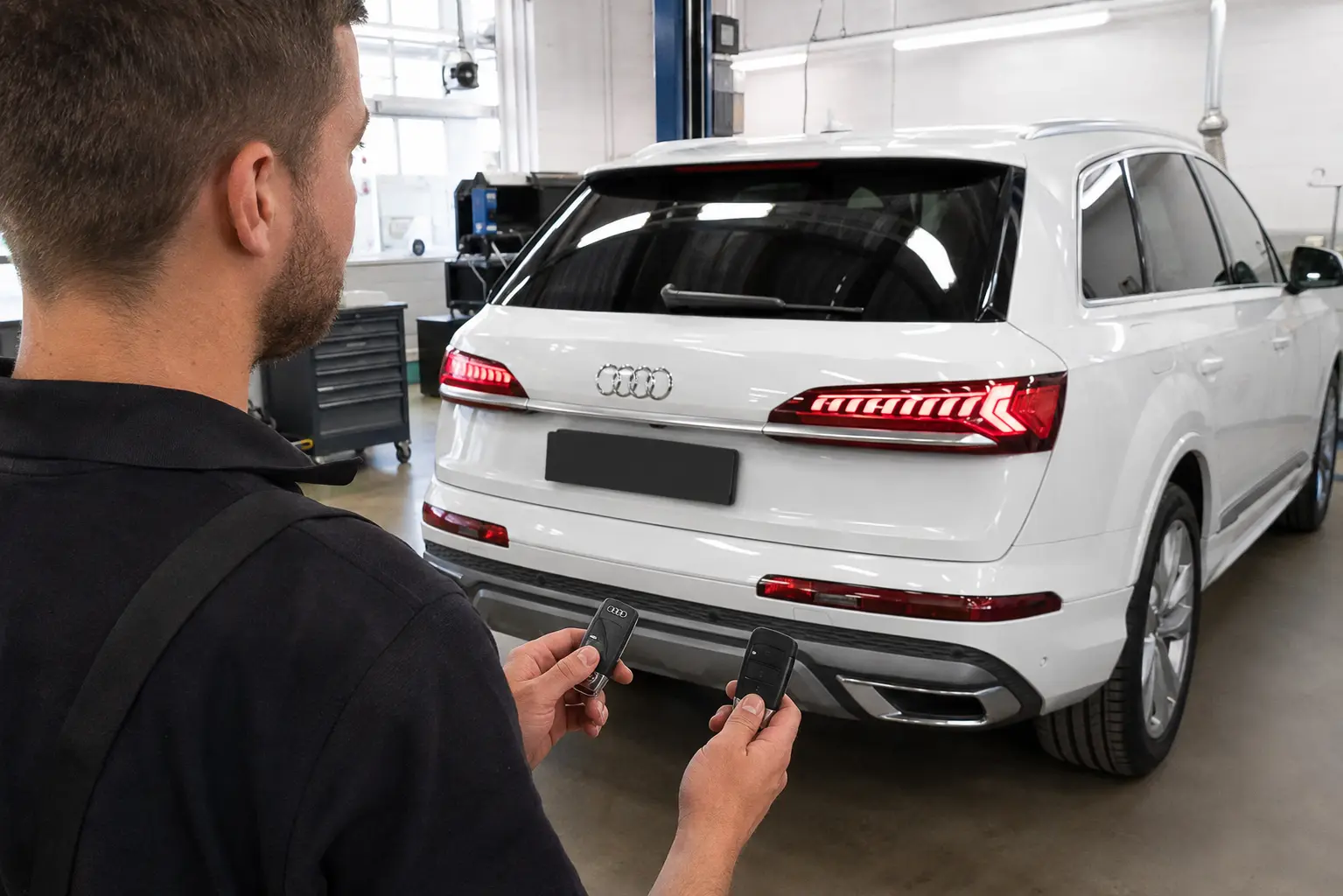
The lowest part price is not automatically the lowest completed-job cost. Compatibility, blade work, remote function, engine authorisation, attendance and final testing determine the real scope.
Repair the existing key
Best when the electronic identity remains sound and the fault is the battery, shell, button, contact, microswitch, solder or repairable board.
Replacement shell
Useful when housing damage is physical. Button layout, internal retention, battery cover, blade mechanism and fit must match. Electronics and security parts may be transferred only when appropriate.
New compatible key
A budget route only when frequency, electronics, transponder, blade, buttons and programming compatibility are confirmed. It is not described as OEM or Genuine without proof.
Genuine Audi key
Usually the highest-cost route. VIN ordering, local supply, lead time and programming requirements change by model. Universal local stock is not promised.
Used key limitations
A previously programmed key may be locked, incompatible, the wrong frequency or security generation, or unsuitable for adaptation. Physical similarity does not make it a normal cheap option.
A complete-key quote should list shell, coin cell, electronics, security element, blade, cutting, remote synchronisation, immobiliser adaptation, supported lost-key removal, attendance, testing and VAT.
Tentative September 2026 planning bands
Audi key replacement prices in Dubai
These provisional planning ranges were checked against public Dubai market signals on 2 September 2026. They are not offers. VIN, key generation, condition, availability, security route and attendance can change the scope.
| Service route | Tentative AED | Key type and included scope | Vehicle and programming assumption | VAT treatment |
|---|---|---|---|---|
| Key-fob inspection and function test | 100 to 250 | Existing flip, slot, push-button or proximity key. Function comparison and visible condition check only; no supplied battery, shell, blade or electronics. | Vehicle or a known working comparison key may be needed. Programming is excluded. | Confirm whether included in the written quote. |
| Coin-cell battery replacement | 50 to 150 | Existing fob, correct coin cell, installation, polarity and contact check. No shell, circuit repair, blade or complete key. | Basic remote retest included. Synchronisation and immobiliser work excluded unless quoted. | Confirm before approval. |
| Battery-contact cleaning or minor repair | 100 to 300 | Existing key with accessible contacts. Cleaning or minor contact correction; severe corrosion and board work excluded. | Vehicle test may be requested. No complete programming included. | Written quote must state treatment. |
| Replacement shell or button housing | 150 to 450 | Compatible shell for retained working electronics and security parts. Blade transfer or cutting must be stated separately. | Assumes existing identity is reusable. Remote and immobiliser programming usually excluded. | Confirm in the job total. |
| Flip mechanism or battery-cover repair | 150 to 500 | Existing flip key or removable cover. Physical parts and repair scope depend on housing design; electronics not automatically included. | Mechanical function test included where possible. Programming excluded. | Confirm before work. |
| Internal button or microswitch repair | 200 to 550 | Existing remote board with repairable switch or button path. Shell replacement and extensive track repair are separate. | Approved button functions retested. Immobiliser adaptation excluded. | Shown only in the final written quote. |
| Circuit-board and solder repair | 300 to 900 | Existing key electronics with repairable joints, tracks or power path. Security-element damage may require a complete replacement. | Vehicle comparison can be required. No blanket programming inclusion. | Confirm in writing. |
| Water-damage inspection and repair attempt | 300 to 1,000 | Opening, internal assessment, cleaning and repair attempt where viable. Outcome is not guaranteed; replacement parts are quoted if needed. | Final vehicle function test may be needed. Complete key programming excluded unless added. | Confirm with approved scope. |
| Mechanical blade cutting | 150 to 400 | Compatible mechanical insert or blade cutting. Shell, remote electronics and security element are excluded unless listed. | Mechanical fit only. Engine-start authorisation is not included. | Confirm in written total. |
| Remote synchronisation | 150 to 450 | Existing compatible remote where the model-specific route applies. Battery and electronics must be serviceable. | Vehicle usually present. Immobiliser adaptation is excluded. | Confirm before approval. |
| Key and vehicle diagnostic session | 250 to 650 | Comparison of key functions, vehicle response, available keys and relevant fault information. No parts automatically included. | Vehicle required for shared receiver, antenna, voltage or security checks. Programming excluded. | Quote states whether tax is included. |
| Immobiliser adaptation labour | 500 to 1,500 | Labour for a confirmed compatible key and supported vehicle-specific authorisation route. Key, shell and blade may be separate. | Vehicle and legitimate authority required. No claim that every platform is supported. | Confirm with security-work quote. |
| Compatible aftermarket spare complete route | 800 to 1,800 | New compatible non-Genuine key. Quote must state shell, electronics, transponder, blade and cutting. | One working key assumed. Remote and immobiliser work included only when written. | Confirm complete installed total. |
| Higher-spec proximity compatible route | 1,300 to 3,000 | New compatible smart or proximity key with matching frequency, buttons and security generation. Blade content varies. | Vehicle attendance and supported programming normally required; Advanced Key diagnosis may be separate. | Written quote confirms treatment. |
| Genuine Audi replacement key route | 2,000 to 5,000 or more | Genuine Audi complete key route subject to VIN supply and availability. Blade, ordering and programming inclusions must be itemised. | Vehicle-specific programming and lead time are confirmed before order. Local stock is not assumed. | Confirm before parts order. |
| All-keys-lost complete route | 1,500 to 5,500 or more | Compatible or Genuine supply route, mechanical access or blade work, security procedures and final tests as itemised. | Vehicle location, identity and legitimate authority required. Recovery may be additional. | Confirm on complete written estimate. |
| Lost-key removal where supported | 400 to 1,200 | Approved attempt to remove or disable a missing key from recognised use, plus remaining-key recheck. Platform capability varies. | Vehicle and every retained key required. Replacement key supply is separate unless listed. | Confirm with security scope. |
| Keyless antenna or handle diagnosis | 300 to 900 | Vehicle-side Advanced Key assessment after key comparison. No key, antenna, handle or module part included. | Vehicle required. Broader work routes to Electrical Repair. | Confirm diagnostic total. |
| Receiver, handle or antenna repair route | 700 to 2,800 or more | Vehicle-side parts and labour vary widely. This is not a complete-key price and parts must be identified separately. | Electrical diagnosis required. Coding or calibration included only when stated. | Written repair quote confirms tax. |
| Vehicle access or recovery support | 250 to 800 | Location-dependent access or transport support. Key supply, blade cutting and programming remain separate unless bundled. | All-keys-lost location and safe access decide the route. | Confirm with attendance charge. |
VAT treatment The written estimate must state whether 5 percent VAT is included before approval. Model year, key type, security generation, parts route, attendance and working-key count remain variables.
Worked service examples
Weak battery and short remote range
One key loses range while the second works. Plan AED 50 to 150 for its coin cell, fitment, contact check and retest. Shell, blade and programming are excluded; VAT must be stated.
Shell and buttons are damaged
The key starts the engine, but its housing and internal button are damaged. Plan from AED 150 to 450 for housing and AED 200 to 550 for switch work, adjusted after inspection. Blade transfer, testing and VAT must be stated.
Add a spare while one key works
A compatible non-Genuine spare may plan at AED 800 to 1,800. The scope must list electronics, transponder, blade, cutting, remote function and adaptation. Bring the working key and vehicle for comparison and testing.
All keys lost
Plan AED 1,500 to 5,500 or more, plus AED 250 to 800 for separate access or recovery. Identity, authority, location, security generation, supply, blade, programming, recognised-key handling and VAT decide the total.
Practical security checks
Ownership and lost-key handling
Before security-key work, confirm customer identity, ownership or legitimate authority, VIN, vehicle identity, working keys and the requested action.
Bring the original documents requested for the confirmed job. Do not upload full identity or registration documents through the public builder.
Bring every key that should remain in use. The vehicle-specific process can affect how retained keys are checked.
Adding a spare, replacing one lost key and handling all keys lost are different approvals and should not share a vague programming line.
Where supported, discuss whether removal from recognised use is available and whether every remaining key must be presented again.
Final testing and handover
Test every approved function
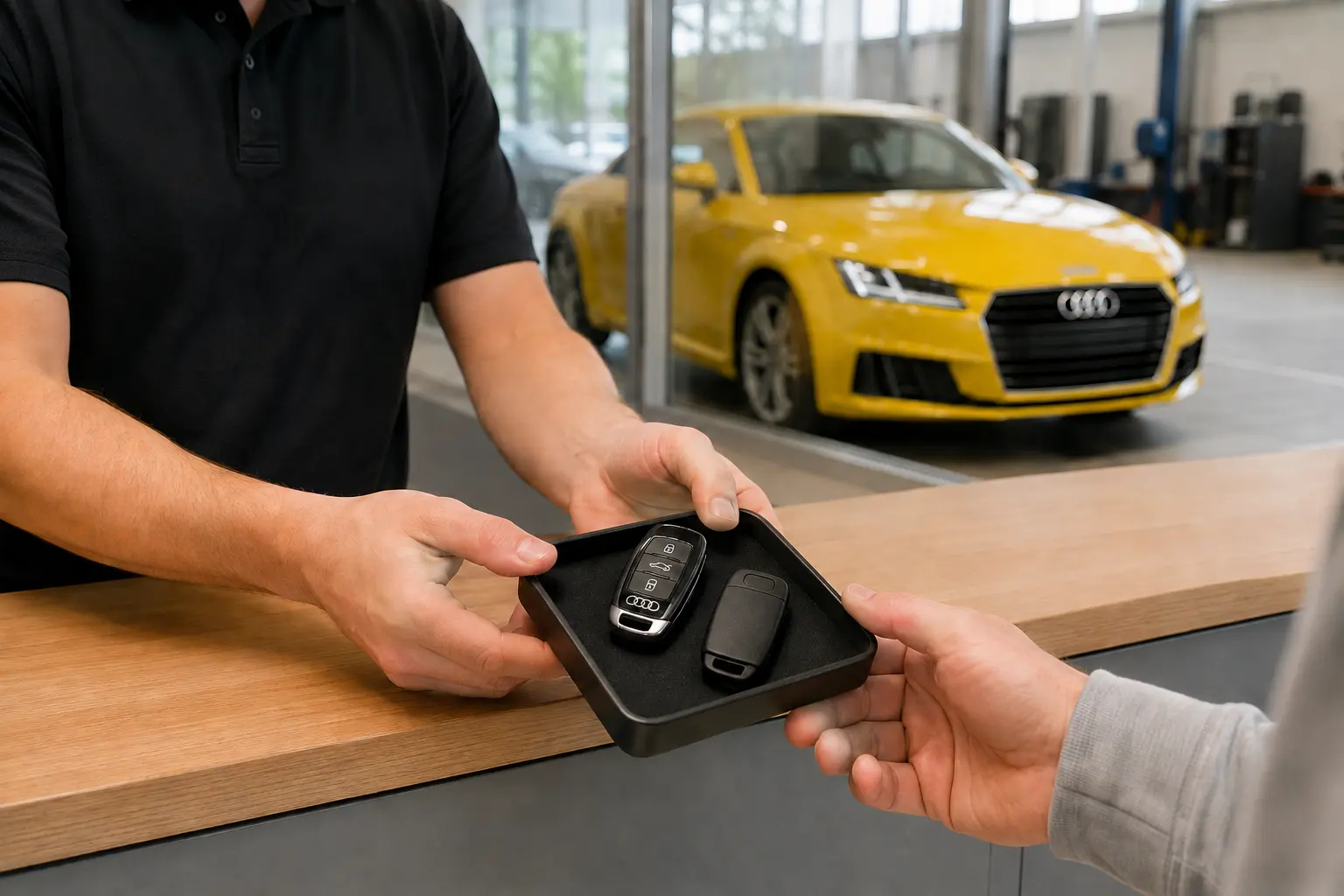
One remote button does not prove every security or keyless function. Handover follows the agreed scope and tests relevant old and new keys.
The invoice names the part, work, programming or synchronisation, exclusions, testing and VAT. If the key passes but the car fails, move to vehicle-side diagnosis.
Direct owner answers
Audi key replacement questions
These answers define the first quotation route. The VIN, physical key, working-key count and vehicle response still decide compatibility.
How much does Audi key replacement cost in Dubai?
Plan AED 800 to 1,800 for a compatible spare, AED 1,300 to 3,000 for higher-spec proximity, and AED 2,000 to 5,500 or more for Genuine or all-keys-lost routes. Scope and VAT must be stated.
How much is an Audi spare key?
A compatible spare may plan at AED 800 to 1,800; proximity or Genuine routes can cost more. Model, year, photographs and working-key count determine the quote.
Is a key-fob battery replacement the same as a new key?
No. A coin cell powers the existing key. A complete replacement adds electronics and security parts, often with blade, remote and immobiliser work.
Can worn buttons or a cracked shell be repaired?
Often, if electronics and security identity remain usable. Inspect the button, membrane, microswitch, housing, cover and flip mechanism before replacing electronics.
Can a water-damaged Audi key be repaired?
Sometimes. Residue, corrosion, tracks, switches and security parts decide repairability. Avoid button presses and heat; severe corrosion may require replacement.
Can you program every Audi key?
No. Confirm platform, security generation, frequency, electronics, prior key state, legitimate access and the available procedure first.
Is remote synchronisation the same as immobiliser programming?
No. Synchronisation concerns remote locking; immobiliser adaptation authorises engine start. The quote must name the included task.
Can a used Audi key be programmed to another car?
Do not assume so. A used key may be locked, bound, the wrong frequency or security generation, or incompatible with the platform.
Do I need the vehicle present for key programming?
Commonly yes, for security authorisation, comparison and testing. Confirm the vehicle-specific route before booking.
What documents are needed for a replacement key?
Confirm identity, ownership or authority, VIN and requested action. Bring requested originals; never upload PINs or full documents through the public form.
What happens when all Audi keys are lost?
Confirm authority, location, access, key system, supply, blade, approved programming and recovery needs. It differs from copying a working spare.
Can a lost key be removed from the car’s recognised keys?
Sometimes, where supported. The vehicle and remaining keys may be required. The quote must include any recognised-key check and missing-key removal.
Why does the car say key not detected after a battery change?
Check battery type, polarity, seating and contacts. Electronics, synchronisation, antennas, handle sensors, receiver behaviour or vehicle voltage may also cause the message.
Why does the remote work but the engine not start?
Remote locking and start authorisation are separate. Check the transponder, reader, adaptation, start circuit, module communication and voltage; record the dashboard message.
Start with the exact key
Request the right key-service route
Send the Audi model, year, key style, number of working keys and the functions that still work. The first answer can then separate a coin cell, shell or board repair, synchronisation, a complete spare or replacement, and a wider vehicle-side electrical fault.
For the wider workshop structure, browse Audi repair services or use the contact and booking page.