
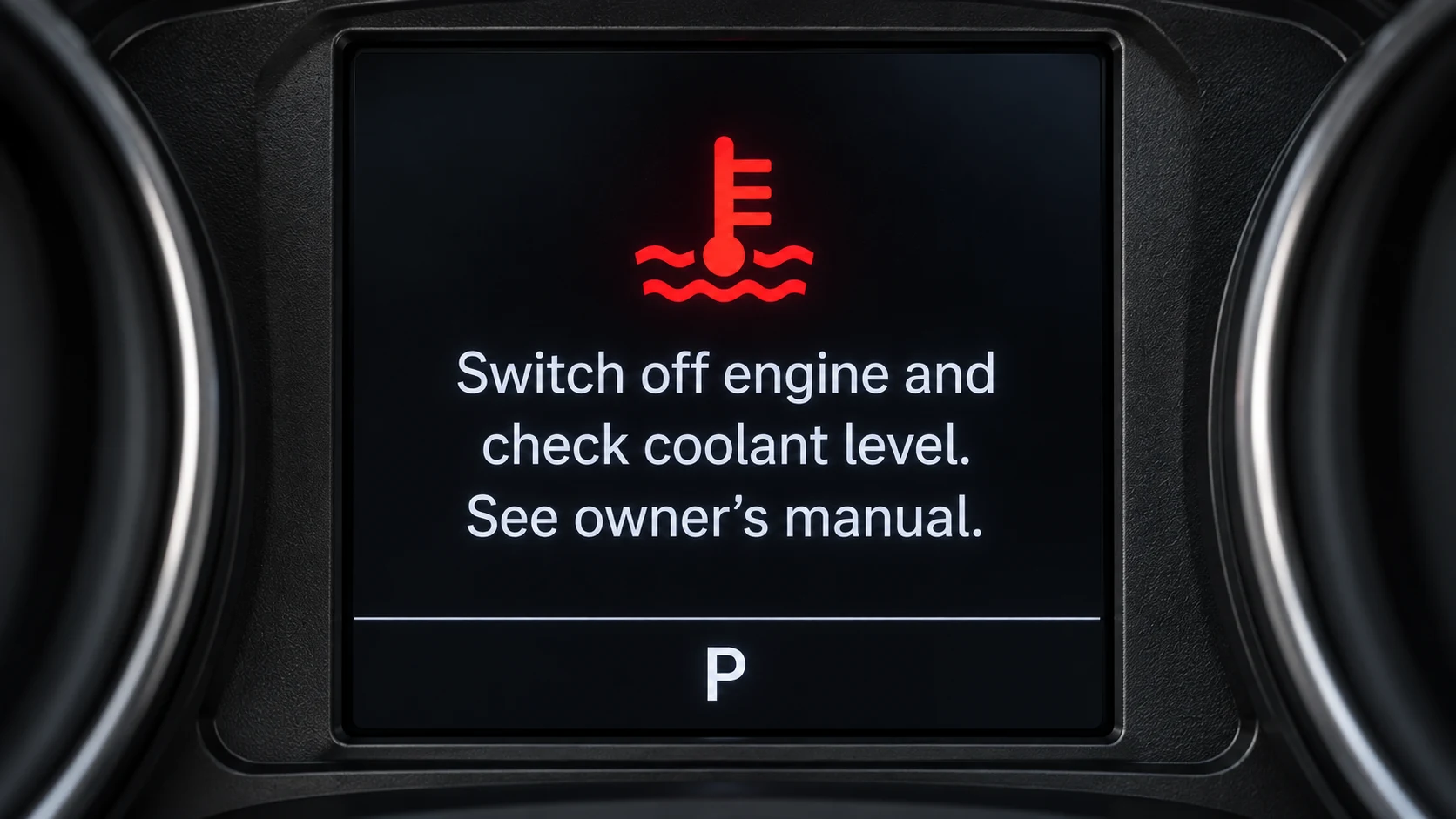
An Audi coolant warning light can mean low coolant, overheating or a fault in the system that measures coolant level or temperature. Read the exact dashboard message. If it tells you to stop, the warning is red, the temperature is rising or you see steam, stop safely and switch off the engine. Never open the coolant cap while hot.
A normal temperature gauge or a full-looking tank does not make the warning safe to ignore. Follow your Audi’s owner manual and get advice before continuing.
Once you’re safely parked, send a photo of the dashboard message and your Audi’s model and year. Tell us if the temperature is rising or you can see a leak. You do not need to identify the faulty part before contacting us.
What to do when it appears
Read the exact message and temperature indication, then move to a safe place. Switch the engine off for a red warning, rising temperature, steam, visible coolant loss or a rapidly falling level. Do not continue driving an overheating engine.
With the engine fully cold and the car on level ground, inspect the expansion tank from outside. Note the level, fresh wetness and dried residue. Do not choose coolant by colour. Confirm its specification from the model, year, engine, VIN or official information, and never mix unknown products blindly.
Do not use stop-leak as a routine repair. It can hide the loss and complicate diagnosis. Repeated topping up is not a repair either; the source and its effect on temperature still need checking.
Can you continue driving
There is no safe universal distance. The decision depends on the warning colour and wording, temperature behaviour, visible level, loss rate and whether the vehicle can be controlled normally. The dashboard’s instruction to stop takes priority over every scenario below.
Red warning, steam or overheating
Move to a safe place, switch off and arrange assistance. The same applies if the dashboard tells you to stop, the tank is empty or coolant is escaping quickly. Do not drive to the workshop.
Normal temperature, warning still on
A normal gauge does not rule out coolant loss or another fault. Follow the exact dashboard instruction and owner manual. Contact the workshop before continuing; a photo can help explain which warning you are seeing.
The warning has disappeared
Restarting or topping up may hide the symptom temporarily. Note when it happened and whether coolant was added. A returning warning needs diagnosis, even if the car seems normal between incidents.
For e-tron and plug-in hybrid models: follow the vehicle’s exact message. These cars can have several cooling circuits. Do not open or work on high-voltage cooling components yourself.
When coolant is escaping rapidly, the expansion tank is empty, the temperature cannot be controlled, or the vehicle has already overheated, Audi recovery assistance is safer than trying to reach the workshop under its own power.
Recognise the coolant warning
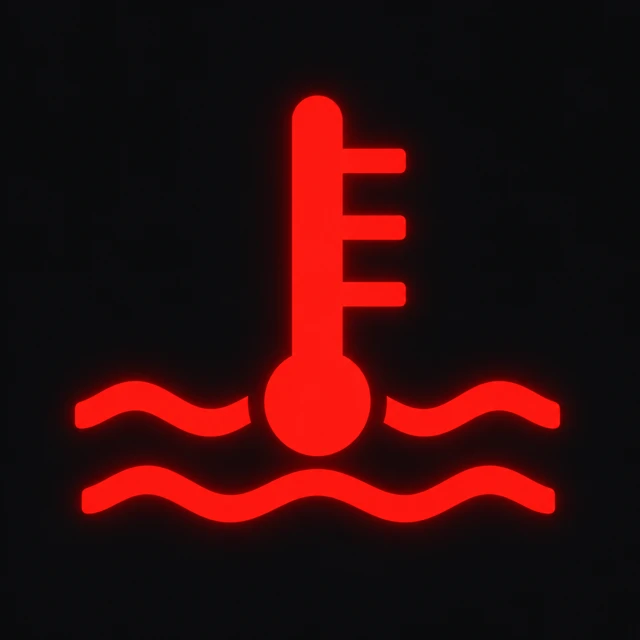
Look for a thermometer above wavy lines. Read the message beside it to understand what your Audi is asking you to do.
A red warning or an instruction to switch off means stop safely and switch off. Do not open the coolant tank while hot. A full tank or normal temperature display does not override the warning.
What the coolant warning means
The warning does not tell you which part needs replacing. It may be reporting a low coolant level, an excessive temperature or an unreliable sensor reading. The wording matters because those problems need different checks. The Audi warning-lights guide compares coolant warnings with other dashboard alerts.
There are four things a technician needs to distinguish. Low coolant level means the level is below range. Active leakage means coolant is escaping. Faulty detection means a sensor, connector, wiring or control problem may be reporting the wrong level or temperature. Overheating means the engine or another cooled system is too hot. They can overlap, but they are not interchangeable.
A stored fault code is not proof of component failure. It must be compared with the coolant level, physical condition, temperature data and a test of the suspected system.
Why the coolant warning comes on
Different faults can produce the same warning. Engine layout, model year, market specification and powertrain decide which causes apply.
Coolant level and external leakage
The level may be low because coolant is escaping from the expansion tank, cap, hoses, flanges, connectors, radiator, heater circuit or another joint. Applicable engines can also leak from a water pump, thermostat housing, coolant module or turbocharger coolant line. Airflow, belts and undertrays can move fluid away from its source.
Filling and trapped air
A warning after cooling-system work may follow an incorrect fill, incomplete bleeding or trapped air affecting level and circulation. Audi layouts differ, so one engine’s filling procedure cannot be assumed for another.
Level sensing and electrical faults
The coolant-level sensor, connector or wiring can produce a false low-level warning. Contamination can also affect some level-detection designs. The check must separate an electrical fault from real coolant loss before the tank or sensor is replaced.
Temperature and thermal-management faults
A genuine temperature rise can involve circulation, thermostat control, radiator heat rejection, cooling fans, an incorrect temperature signal or a wider engine problem. Internal coolant loss is possible, but it should be tested only when supported. The exact engine and fault evidence determine which tests apply.
Dubai heat, slow traffic and long idling increase cooling load and can expose a marginal problem, but they do not identify the fault. Choose parts and coolant using the exact vehicle specification, not a general recommendation for Dubai weather.
When the coolant level looks full
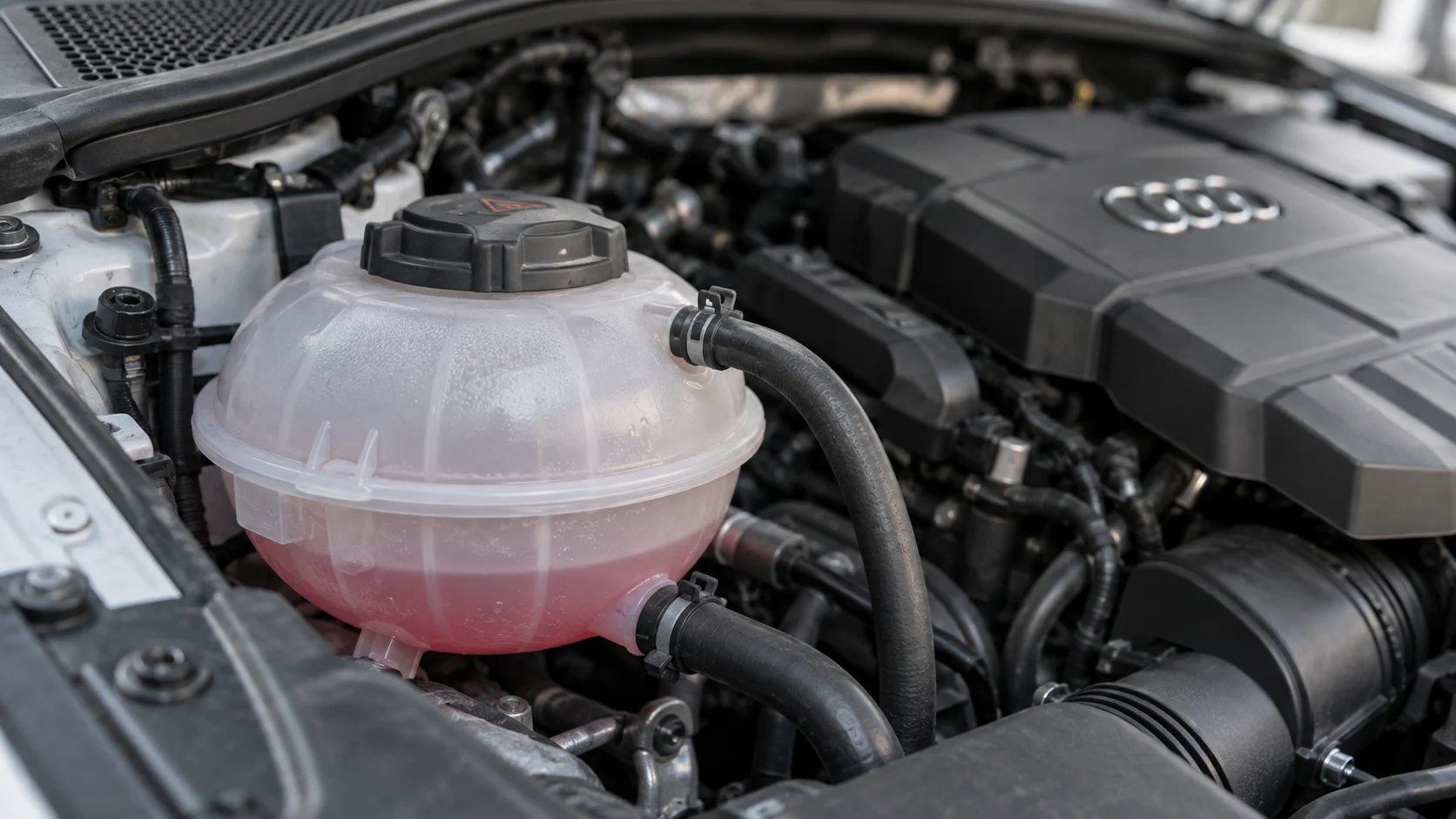
Coolant can sit at the correct level while the warning stays on. It does not prove that the level sensor signal is correct, that coolant is circulating properly, that the system was bled correctly, or that the reported temperature agrees with the real temperature. The level can also look different when hot, which is why it should be judged only through the cold checking procedure for that vehicle.
The warning may remain on because of contaminated level contacts, an internal sensor fault, connector damage, wiring resistance or another active fault that needs diagnosis. It can also be linked to a circulation or temperature-control condition that does not lower the visible level. A workshop should compare the cold level with the exact warning, sensor circuit, fault record and live temperature information rather than treating the tank appearance as a final verdict.
Why the warning returns after topping up
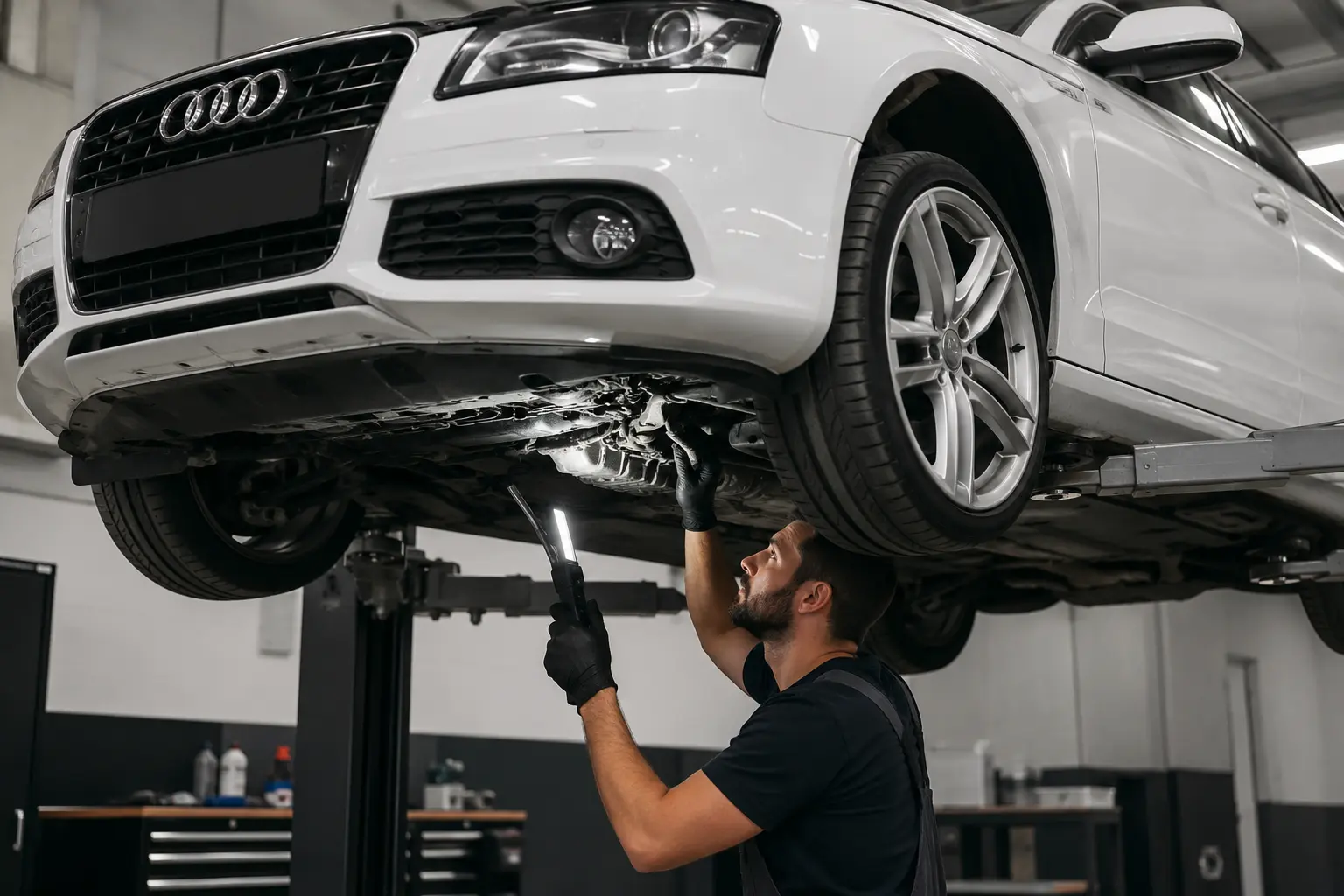
Topping up can switch off a low-level warning temporarily, but it does not explain why the level fell. If the warning returns, check how quickly it came back, how much fluid was added, what product was used and whether recent work opened the system. A slow heat-dependent leak can leave no puddle. Coolant may escape only when hot, under pressure, while cooling down, after parking or under engine load.
A return after recent repair can also point to trapped air, an incorrect fill level, incomplete bleeding or a disturbed connection. If the level remains correct, the sensor and wiring still need attention. Keep the coolant container or invoice if available. Mixing an unknown specification to silence the warning can create another problem and make the next repair more complicated.
Should you top it up again?
If the tank is empty, coolant is escaping quickly or the engine has overheated, arrange assistance. Do not keep adding coolant and driving to see how far it gets. If your owner’s manual permits a top-up, follow its cold-engine instructions and use the specified coolant. Never choose a product by colour alone.
Tell the workshop how much you added and how long it took for the warning to return. Keep the bottle or take a photo of its specification. This helps distinguish a continuing leak from a filling or level-detection problem.
Tell us how soon it returned and whether the coolant level has dropped again. We can discuss booking a cooling-system check. If the engine is overheating or the dashboard says stop, arrange recovery rather than driving in.
How the fault is diagnosed
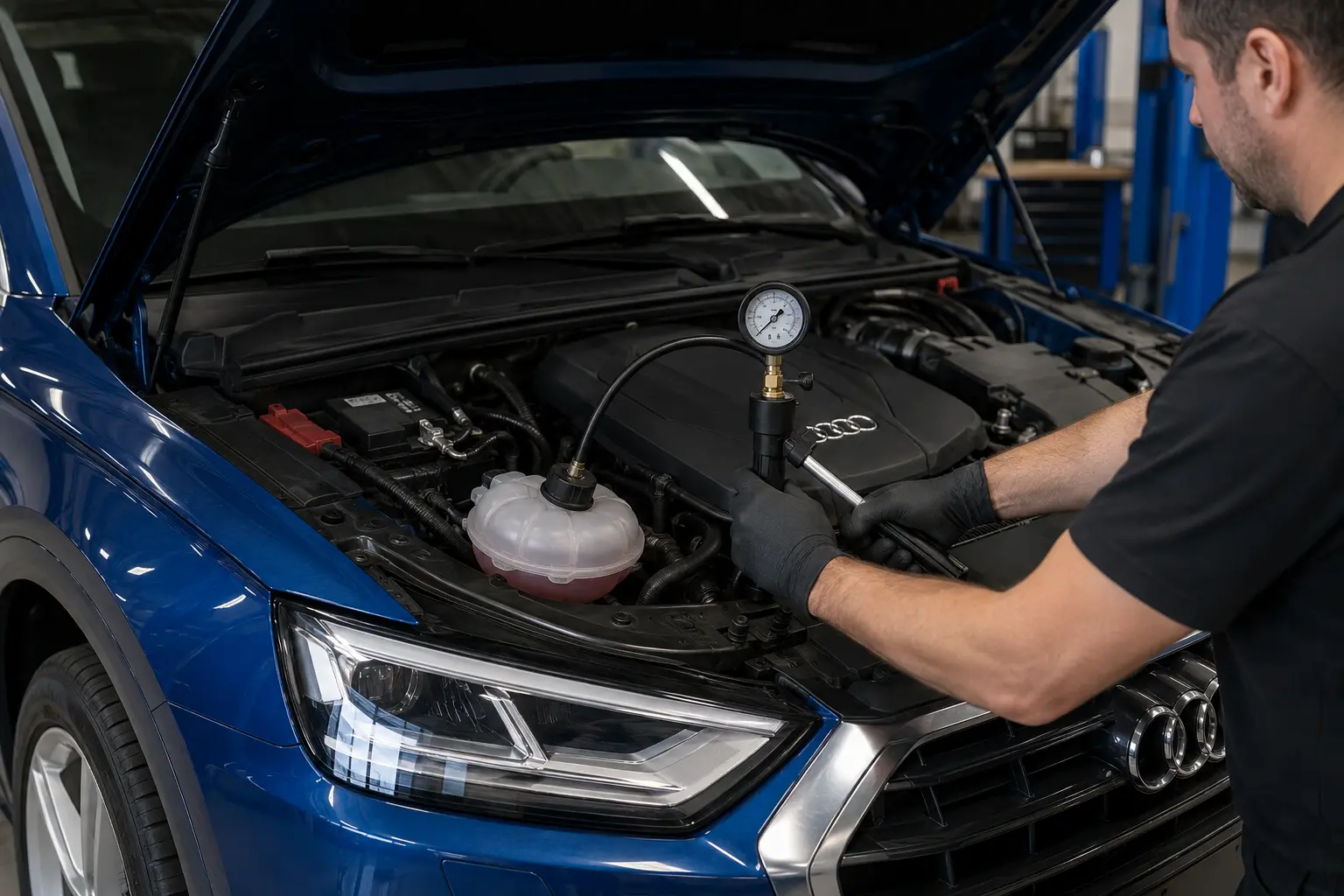
The first job is to find out whether coolant is actually being lost, the engine is overheating or the warning is being triggered by a faulty reading. An Audi diagnostic check helps narrow this down. A scan alone cannot locate every leak; the physical cooling system also needs checking.
Understand when it happens
Your model, year, exact message and recent repair history help choose the right checks. A warning on a cold start may need a different investigation from one that appears in slow traffic.
Check for coolant loss
The cold level, tank, hoses and visible residue are checked. Pressure testing, where appropriate, can help find a leak that is difficult to see. Some faults need checks under the conditions in which they occur.
Check readings and circulation
Fault codes and temperature readings are compared with the car’s behaviour. Sensor wiring, fans, pumps or thermostat operation are investigated when the evidence points that way.
Confirm the repair has worked
After the confirmed fault is repaired, the system needs the correct filling procedure, a leak check and a temperature and warning recheck. Clearing a message by itself does not verify a repair.
Ask what the test found and how it explains your warning. For example, a stored sensor code should be checked against the actual coolant level and wiring before a replacement is recommended.
What may need repairing
The repair follows the confirmed fault. It may involve a leaking hose, flange or connector, an expansion tank or cap, a radiator, a heater-system leak, a pump, thermostat housing, coolant module, applicable turbo coolant line, sensor circuit or damaged wiring. A filling or bleeding problem may need correction without replacing the component first suspected.
A water pump, thermostat, expansion tank or level sensor should not be replaced simply because it appears in a fault list online. The estimate should state what was found, how it was confirmed, which related seals or one-time-use hardware are required, which coolant approval applies and how the system will be refilled and checked.
When testing confirms internal engine damage or damage caused by severe overheating, the work moves beyond a routine cooling repair. An Audi engine repair assessment can then define the mechanical scope separately rather than hiding it inside a coolant-warning quotation.
What changes the repair cost
Use these prices to plan the first check and likely repair budget. The diagnostic fee covers the agreed checks; replacement parts and additional testing are itemised before work begins.
| Work | Price | Scope |
|---|---|---|
| Cooling-system inspection | From AED 200 | Initial assessment of the warning, coolant level and visible leaks. |
| Coolant leak repair | AED 300–2,000 | Guide range for accessible leaks; location, parts and coolant required affect the total. |
| Radiator replacement | AED 800–2,500 | Guide range; the radiator specification and access determine the estimate. |
Prices exclude 5% VAT. Repair ranges depend on the model, fitted system and parts selected; specialist assemblies can fall outside these ranges. The written estimate confirms the total and what is included.
Will you need to leave the car?
A visible hose leak may be identified during the first inspection. A hot engine needs time to cool before the system can be opened safely. Pressure testing, a small intermittent leak or a temperature fault may require leaving the car for several hours, and occasionally overnight, to observe the conditions in which coolant is lost.
The price depends on what caused the warning. Cost changes with the Audi model, model year, engine version, leak location and the access required to reach it. A visible hose connection and a hidden coolant module do not carry the same labour.
A visible hose leak and an intermittent sensor fault need different amounts of testing. Ask about the diagnostic charge when booking.
Model, engine and the location of the failed part affect the parts bill and labour. Confirm the proposed parts and warranty in the estimate.
The quote should account for the correct coolant, any required seals, filling procedure and checks after the repair. Overheating damage may require a separate assessment.
Ask for a written estimate after diagnosis. It should separate the confirmed repair, related access, coolant, hardware, testing, VAT position and anything that remains conditional. The Audi service-cost guide explains wider maintenance and repair budgeting.
Questions Audi owners ask
Can I drive with the Audi coolant warning light on?
Stop safely and switch off if the dashboard says to stop, the warning is red, the engine is overheating, steam is visible or coolant is escaping quickly. Arrange assistance. A normal gauge does not prove it is safe to continue. Follow the exact owner’s manual and seek advice before driving on.
Why is the warning on when the coolant tank looks full?
The visible level can be correct while the level sensor, connector or wiring is faulty. A circulation, bleeding or temperature-control problem can also trigger a warning without lowering the tank at that moment. Compare the cold level with the fault record and live data.
Why does the coolant warning come on and then disappear?
An intermittent level signal, wiring fault, heat-dependent leak or changing operating condition can make the warning appear and clear. Restarting can remove the active message without repairing the cause. Preserve the exact conditions and scan the vehicle before codes are cleared.
Why did the warning return after topping up?
Coolant may still be leaking, the system may contain trapped air, the previous fill may be incorrect, or level detection may be faulty. Record how much was added and how quickly the warning returned. Repeated topping up should not replace diagnosis.
Does the warning always mean the water pump has failed?
No. A pump is one possible cause on an applicable engine, but low level, external leaks, thermostat control, radiator airflow, fans, sensors, wiring, filling errors and wider engine problems can produce related warnings. Test before replacement.
Can a faulty coolant-level sensor trigger the warning?
Yes. The sensor, tank contacts, connector or wiring can produce an incorrect low-level signal. The diagnosis still has to confirm that the coolant level is genuinely correct and that no intermittent leak is being missed.
What coolant should be used in an Audi?
Use the coolant approval specified for the exact model, year, engine and VIN in current official information. Do not select it by colour alone and do not mix an unknown product blindly. Keep the container or invoice for any coolant already added.
Can low coolant damage an Audi engine?
Low coolant can reduce the system’s ability to carry heat and can lead to overheating. The risk depends on how low the level is, whether coolant is circulating and how the temperature behaves. Do not continue driving when the engine is overheating.
Why is there no visible leak even though coolant is disappearing?
Some leaks appear only when hot, under pressure, during cooling, after parking or under load. Coolant can evaporate from a hot surface or collect in an undertray. Internal loss is possible, but it should be tested only when the evidence supports it.
About the author
Abu Hashim is an Audi specialist in Dubai with four years of workshop experience involving TFSI and TDI engines, S tronic gearboxes and MMI electronics. He writes the guides on audispecialist.ae to help Audi owners across the UAE understand what could be wrong, which checks are needed, what repairs may cost and when a replacement is unnecessary.
Sources and vehicle-specific limits
Dashboard wording, warning behaviour, coolant approval and repair procedures vary by Audi model, model year, engine, market specification and software. The owner’s manual for the exact vehicle and current vehicle-specific repair information take priority over general guidance.
- Audi online owner manuals for vehicle-specific warning and safety instructions.
- Audi erWin information for vehicle-specific repair, wiring and diagnostic data.
Three details that help us
- Your Audi model and year. An A4, Q5 or A6 can have different engines and cooling systems.
- A photo of the exact warning. Take it only when safely parked. Include the temperature display if visible.
- What happened before it appeared. Mention any top-up, recent repair, visible leak or temperature rise.
You can start with the warning photo if that is all you have. Do not open a hot coolant tank to take another picture.
Book a coolant warning check
Contact Audi Specialist in Al Quoz 4, Dubai, with your model, year and a photo of the warning. Ask about the diagnostic charge and the next available appointment. If the car is overheating, tell us before arranging a visit; it may need recovery.