
If your Audi shows a red oil-pressure warning or tells you to switch off the engine, stop safely and switch it off. Do not drive to the workshop, leave it idling or restart it simply to see whether the warning returns. Inadequate oil pressure can damage the engine even when the oil level looks correct.
Read the exact message. An oil-pressure warning, an oil-level message and an oil-service reminder need different responses. If you cannot tell which you have, keep the engine off and send a dashboard photo for advice.
Once safely parked with the engine off, send the warning photo and your Audi’s model and year. Tell us about any rattling, knocking or recent oil service. Contact us before arranging to drive in.

What to do immediately
- Move to safety and switch off
Stop as soon as traffic conditions allow. Use your hazard lights where appropriate. A warning about engine oil pressure is not a reminder to finish your journey and book a service later.
- Keep the engine off
Do not rev it to make the warning disappear or run it to record a noise. If it has already stopped, avoid repeated starting attempts. On a plug-in hybrid, do not assume electric driving mode guarantees the engine will stay off.
- Record what has already happened
Photograph the message if it remains visible without restarting. Note whether the engine was cold or warm, whether the warning appeared at a stop and whether there was any unusual noise or visible oil loss.
- Discuss recovery and inspection
Tell the workshop it is an oil-pressure warning before arranging transport. The recovery operator needs the model and drivetrain details to choose a suitable loading method.
Follow the Audi owner’s manual for your exact vehicle. If checking the electronic oil level requires conditions that are not already met, do not run an engine with a pressure warning just to obtain a reading. A workshop can establish the level by an appropriate method.
Oil pressure versus oil level
Oil level
The amount of oil available in the engine. A dipstick or electronic level system checks quantity under specified conditions.
A level message may ask you to add oil or check the sensor. Read its wording and follow the stated procedure.
Oil pressure
The pressure in the lubrication circuit while the engine operates. A correct quantity does not prove that oil is being supplied properly.
A low-pressure warning requires the engine to be switched off and the cause checked.
Pressure switches and pressure sensors also differ. A switch reports whether a threshold has been reached; a sensor can provide a measured value. Pierburg’s sensor explanation describes these separate functions. Not every Audi provides a numerical oil-pressure reading through a diagnostic app.
A service-due message concerns scheduled maintenance. Resetting the service interval does not repair an oil-pressure fault. Colour helps identify urgency, but the exact instruction takes priority over a general red-versus-yellow rule.
Low oil pressure with a full level
A full dipstick or normal MMI oil-level display answers only the quantity question. Pressure can still be inadequate because of a supply restriction, pump or drive problem, pressure-control fault or internal engine wear. Alternatively, the pressure signal may be wrong.
That distinction must be tested. Replacing a sensor because “the oil is full” risks overlooking a lubrication fault. Recommending an engine replacement from the warning alone makes the opposite mistake.
A quiet engine does not settle the question either. Noise may help identify damage, but waiting for knocking before taking the warning seriously can make the eventual repair much larger. Keep the engine off while arranging the next step.
When the warning appears matters
| Warning pattern | What to report | What the pattern cannot prove |
|---|---|---|
| At warm idle | Whether it appeared at traffic lights after a longer journey | That pressure is safe because the warning disappeared at higher engine speed |
| After an oil change | Service date, oil specification, quantity and filter details from the invoice | That the new oil or filter must be correct because the service was recent |
| During a bend or braking | The driving situation and any known low-level message | That topping up is the only repair needed |
| With rattling or knocking | Whether the noise began before or with the warning | Which internal component is damaged without further inspection |
| Gone after a restart | When it occurred and whether it has happened before | That restarting fixed the cause |
Warning only when the engine is hot
Oil behaviour and engine operating conditions change as the engine warms. A fault that becomes apparent at warm idle needs to be assessed under the correct test conditions. The technician decides whether and how the engine can be operated for testing; do not recreate the fault yourself on another drive.
Warning after an oil change
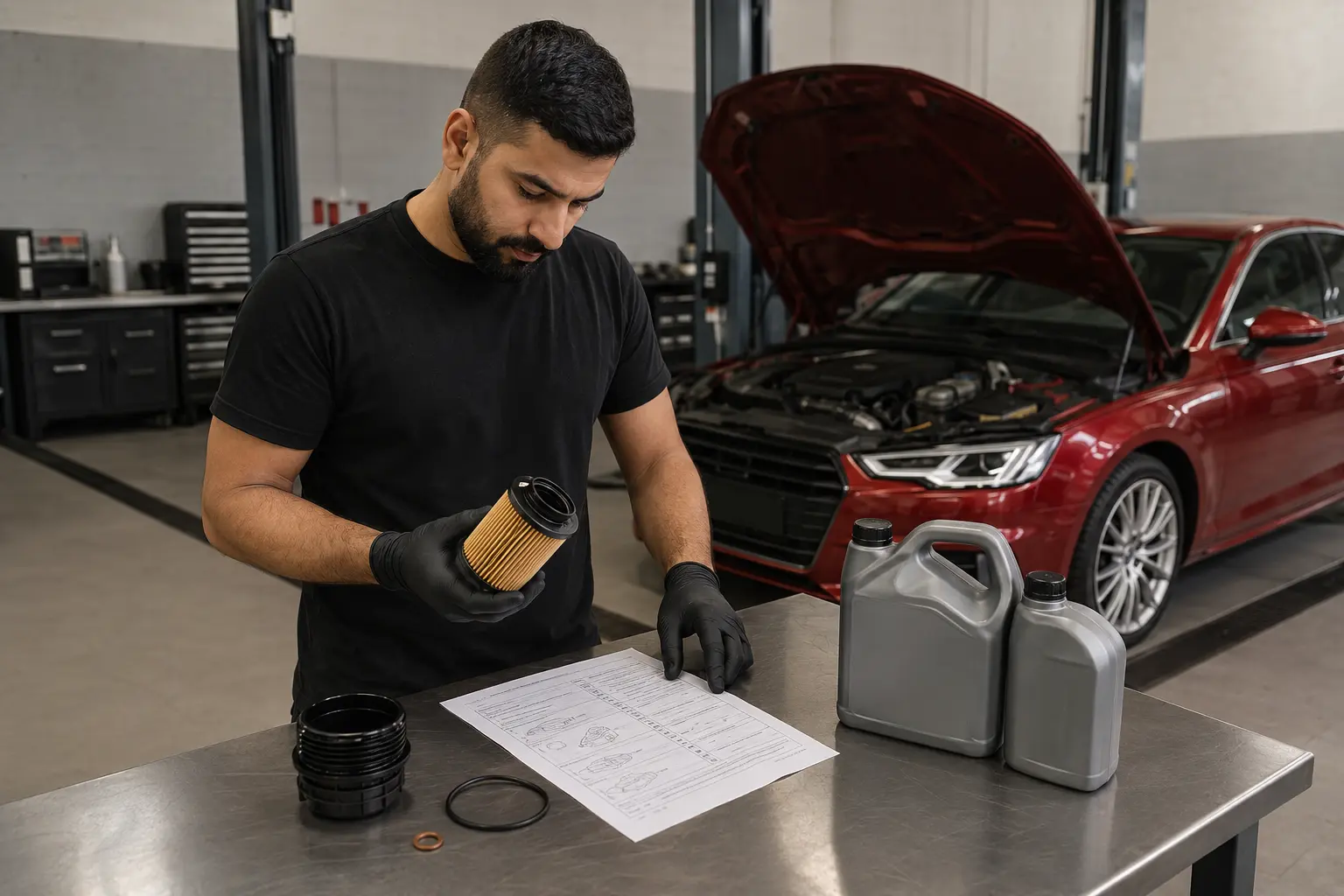
Start with the service record and installation checks. The workshop should confirm the specified oil approval, fill quantity, correct filter and housing components, and inspect for leakage. A disturbed connector is also worth checking. Recent service is a useful lead, but it does not exclude an unrelated mechanical fault.
What can trigger the warning
These are diagnostic possibilities, not a ranking of the most common failures on every Audi. The engine code, service history and measured results determine which apply.
Oil supply and condition
Insufficient oil, leakage, an unsuitable lubricant or contamination can affect lubrication. A restricted pickup or a filter and housing problem may interfere with supply. Check the correct approval for the engine; switching to thicker oil to silence the warning is not a diagnosis.
Pump and pressure control
The pump, its drive and the pressure-control arrangement depend on the engine. A drive fault, worn pump or valve problem can affect supply or regulation. A pressure warning does not identify which of these has failed.
Internal wear or damage
Excessive internal clearances can contribute to low pressure. The significance of debris, unusual noise or wear needs to be considered with pressure measurements and inspection findings. EXOL’s technical overview discusses these lubrication-system causes.
Sensor, switch or wiring
A damaged pressure switch, sensor, connector or circuit can report an incorrect condition. HELLA lists connector contact problems, internal faults and a blocked inlet among oil-pressure switch failure causes. A fault code naming a sensor still needs electrical and pressure checks before replacement.
Tell us which work was done and send the invoice details if available. Mention whether actual oil pressure was measured. Keep the engine off while we discuss the inspection and transport arrangements.
How oil pressure is verified
A meaningful diagnosis compares actual pressure with the signal that triggered the warning. It should not end with a code scan or an assumption based on the engine’s sound.
- Identify the engine and warning
Record the engine code, exact message, stored faults and circumstances. Preserve fault information before clearing it. Check applicable repair information for that specification.
- Inspect before running
Confirm oil quantity by a suitable method, look for leakage and review oil and filter fitment. Severe noise, visible damage or suspected starvation can change whether any running test is appropriate.
- Measure using the prescribed procedure
Where safe and required, connect a calibrated pressure gauge or approved measuring equipment at the specified test point. Record the oil temperature and engine speed with the result. Compare with the engine-specific limits and stop testing if pressure is inadequate.
- Compare pressure with electrical evidence
If measured pressure is correct under the relevant conditions, test the switch or sensor signal, wiring and control logic. If pressure is genuinely low, investigate the oil supply and mechanical cause.
- Verify the repair against the complaint
The pressure result and warning behaviour should be checked again under the applicable procedure. A cleared code or a brief warning-free start is not enough evidence on its own.
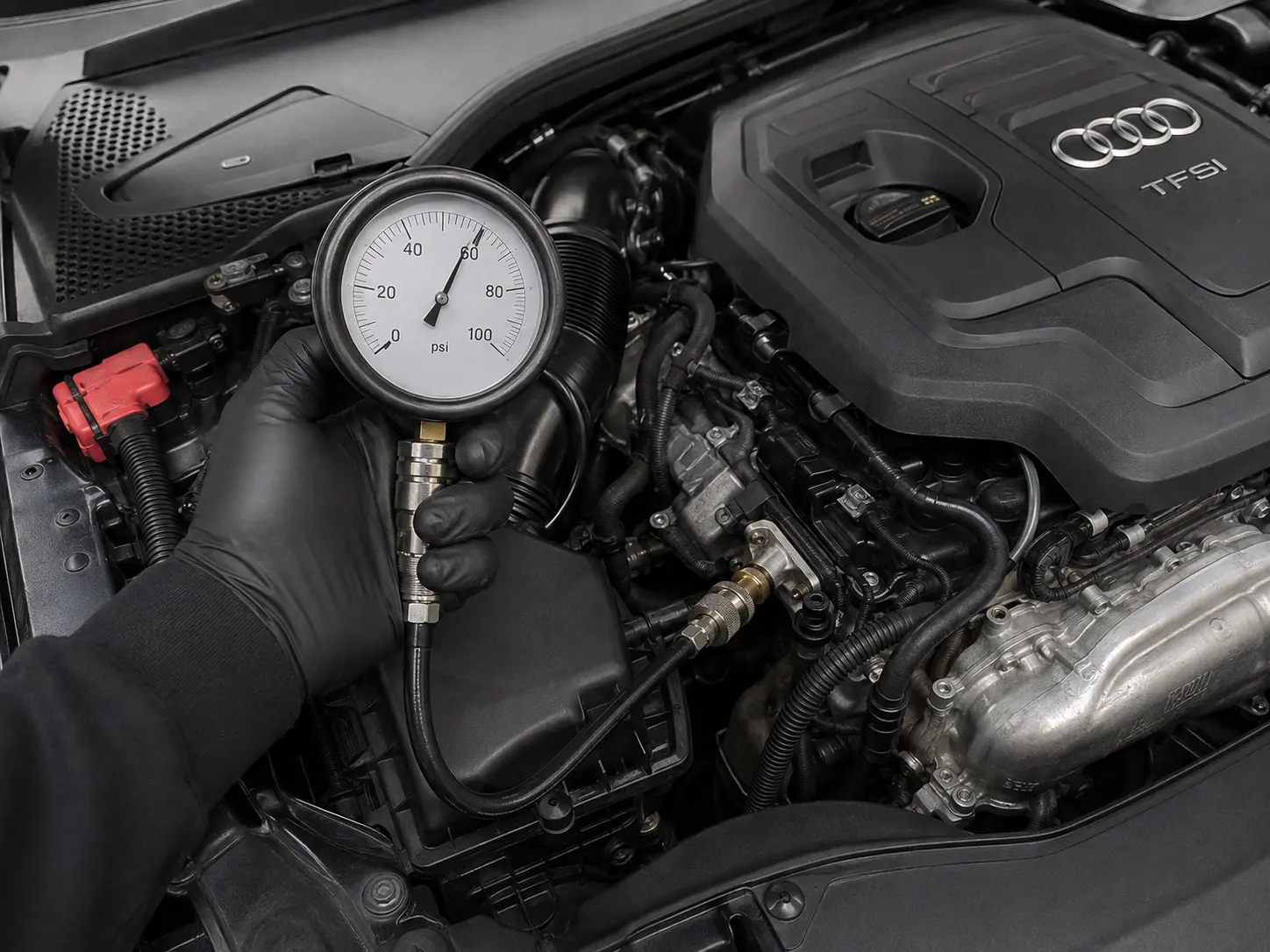
Ask for the measured result and the specification it was compared with. One internet pressure figure cannot cover every TFSI and TDI engine, especially where pressure is electronically regulated.
What repair might be needed
Use these prices to plan the first check and likely repair budget. The diagnostic fee covers the agreed checks; replacement parts and additional testing are itemised before work begins.
| Work | Price | Scope |
|---|---|---|
| Initial warning assessment and scan | From AED 150 | Review of the warning, stored faults and service history. |
| Advanced diagnostic investigation | From AED 300 | Starting diagnostic budget; gauge access, pressure testing and any dismantling are scoped separately. |
Prices exclude 5% VAT. Repair ranges depend on the model, fitted system and parts selected; specialist assemblies can fall outside these ranges. The written estimate confirms the total and what is included.
Will you need to leave the car?
Allow for leaving the car when an oil-pressure test is needed. The technician first checks whether it is safe to run the engine, then establishes the correct test conditions and access to the measuring point. A visible leak or installation problem may be found sooner, but the pressure warning still needs proper verification before the car is released.
A confirmed circuit fault may need a connector, wiring, switch or sensor repair. A verified oil or filter installation problem needs correcting, followed by pressure verification. A supply fault may require access to the pickup, pump, drive or control components. Internal damage requires a separately explained repair scope.
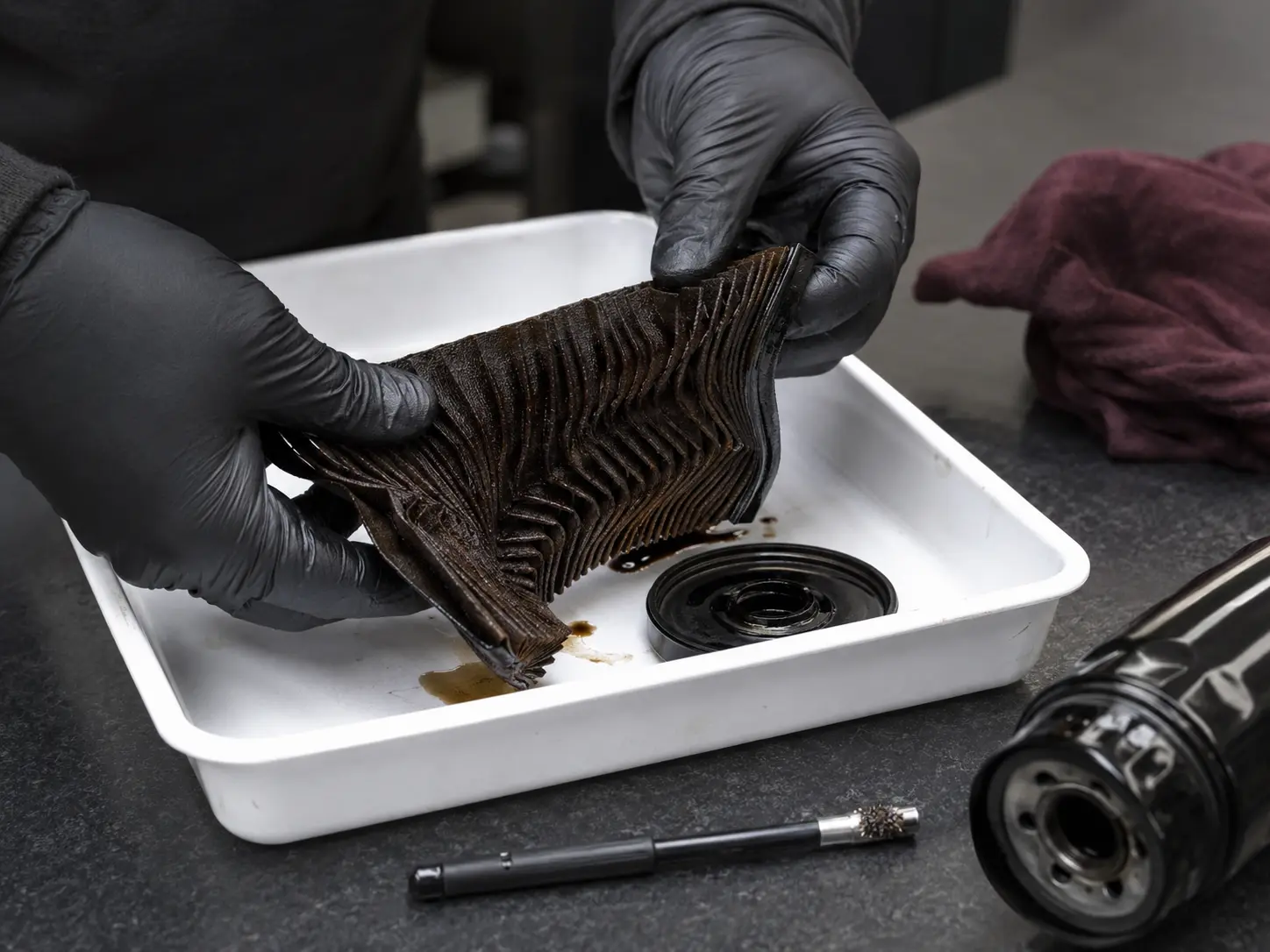
The cost depends on the confirmed cause and access, not simply on the warning light. Ask for the diagnostic charge first, then an estimate separating parts, labour, oil and filter work, and further inspection if required. A pump repair and an internal engine repair are different decisions and should have different supporting evidence.
If damage is confirmed, our Audi engine repair page explains the repair options. If routine maintenance is the only work required after the warning has been properly investigated, see Audi oil and filter servicing. Neither service should be selected from the dashboard symbol alone.
Questions Audi owners ask
Can I drive a short distance?
Do not plan a short drive with a red low-pressure warning or an instruction to switch off. There is no universal safe distance. Stop safely, keep the engine off and arrange advice and suitable transport.
Does the warning mean the engine is ruined?
No. The warning does not establish how much damage, if any, has occurred. Prompt shutdown helps limit further risk. The cause, pressure findings and condition checks determine whether the repair is minor or involves internal work.
Can a faulty sensor cause the warning?
Yes, but that must be established by testing. A normal oil level or absence of noise is not proof of a faulty sensor. The repair should address the confirmed fault and verify pressure afterwards.
Should the oil light appear before starting?
Some vehicles show the oil warning during an ignition-on check before pressure builds. A warning that remains after starting or appears while running is different. Follow the exact vehicle instructions; do not extend a normal startup check into permission to run with an active warning.
Arrange an oil-pressure check
Contact Audi Specialist in Al Quoz 4, Dubai, with the model, year and warning wording. Tell us if you have already switched the engine off, noticed a leak or heard a new noise. We can discuss the diagnostic appointment and whether recovery is needed before the car comes in.
Author profile: Abu Hashim, Audi specialist in Dubai.